
As access to trans youth care shrinks, New Jersey communities and lawmakers are fighting to protect that access.
This is what it looks like when a hospital forces a child to detransition.
Emma, the mother of a trans child, told this story at a hearing of the New Jersey Assembly Health Committee this Thursday. (She asked me to change her name to maintain her privacy.)
“On March 9, I received a devastating call from my daughter’s endocrinologist. He said he was given a script and told to read it, and instructed to tell me that they were no longer treating transgender youth. My daughter would get 3 months of medication and no more after that. When I asked what would happen to my daughter if her estrogen was abruptly stopped, he said “I don’t know. We have never had to do this before.” He said he had to make the same call to 50 patient’s families that day.
While that doctor has since resumed care, her surgeon has not. For the past 4 years, the same surgeon at the same New Jersey hospital has implanted my doctor’s hormone blocker, a medically necessary treatment that prevents unwanted puberty. The surgeon’s nurse called me, [saying she was calling] from the bathroom… in a low whisper, she said the lawyer for the hospital would only allow them to remove the implant, [and that] they are no longer allowed to insert them. I asked if I should call other surgeons at the hospital, and the nurse told me “no surgeon at the hospital would do it.” The lawyer would not allow them either. They were afraid of lawsuits. When asked to recommend a surgeon who would do the procedure, they didn’t respond.”
Emma said she was later told that the hospital would not allow its doctors to refer their patients to other doctors, which meant they were being abandoned by caregivers.
“My daughter was due for her hormone blocker in February, and we have still not been able to find a surgeon in New Jersey,” Emma said.
As attacks on trans medicine ramp up, stories like this are becoming the norm. The doctors that trans kids are forced to rely on are being told to choose between their patients and their careers, and most are choosing their careers.
Emma’s child is being detransitioned because her doctor’s employer is scared of a future lawsuit—not because of concerns about their health or even because of changing laws about trans youth healthcare.
This pressure campaign against doctors, clinics, and hospitals led to the creation of New Jersey’s trans shield bill, the one which Emma was there to support.
Join The Needle's mailing list:
New Jersey’s Healthcare Shield Bill
This is where New Jersey’s proposed shield bill comes in. The bill, which passed healthcare committees in the state Assembly and Senate this week and appears likely to pass both houses, would protect providers in a number of ways which the current executive order does not. When the main legal threat is coming from outside the state, this is crucial.
As explained by the lawyer Khadijah Silver, who was involved in drafting the legislation, “It protects in-state private actors from out of state government and private actors who would seek to stop them from delivering or receiving the range of health services in the law”. In other words, it provides legal protection for trans and fertility care in the state, regardless of where the legal challenge is coming from.
The bill would prohibit doctors, clinicians, any entity under the state, or any entity affiliated with the state from providing information to investigators which pertains to legally administered trans or fertility care. This would prevent clinics from being coerced to provide medical documents about such services, which would in turn, prevent those clinics from being sued or prosecuted for doing their jobs.
Shield bills of some sort protecting trans and/or reproductive care from outside interference are increasingly common in Democrat-run states, with nearly all having some level of protection.
One feature that makes the New Jersey bill significant, only recently added to the Assembly version, is how all these restrictions from outside interference are also applied when being investigated by the federal government.
This is fairly unique, as it shows how legislators recognize the federal government as actively hostile to the interests of the state government, a notable escalation. It shows that the drafters are placing the outcomes for trans kids above the normal adherence to federalism.
Legal Background
Shield bills for doctors providing trans care are crucial because they protect doctors and clinics from lawsuits and legal threats for doing their jobs. This need is especially pressing at a time when doctors and clinics are being investigated for providing trans care, both civilly and criminally.
Two weeks ago, a Texas court issued criminal subpoenas to NYU Langone, Rhode Island Hospital, and an unknown number of other hospitals. The only subpoena released publicly shows that investigators want a list of every patient, doctor, and clinician involved in trans youth healthcare, as well as all related documents. The nature of this investigation remains unclear.
This and other investigations are creating a chilling effect for trans healthcare providers, even in places where their actions are perfectly legal. This is how kids are being medically detransitioned, even in places where their care is legal.
In 2023, then-governor Murphy signed an executive order to protect this care. That act ordered that no government entity under the governor’s direction investigate doctors or clinics for engaging in care that is legal in the state.
In practice, this had little effect. The vast majority of the threat these doctors face is coming from either out of state, or from the federal government. For example, the recent subpoenas against NYU and the like came from Texas, and as a result, the Governor’s order would be unable to protect them. This is why the doctors treating Emma’s kid were scared of lawsuits, despite their work being perfectly legal where they operated.
Relying on an executive order for these protections also has another key downside: it can be revoked at any time. If a new governor wanted to erase this policy, they could do it in an instant.
The Fight So Far
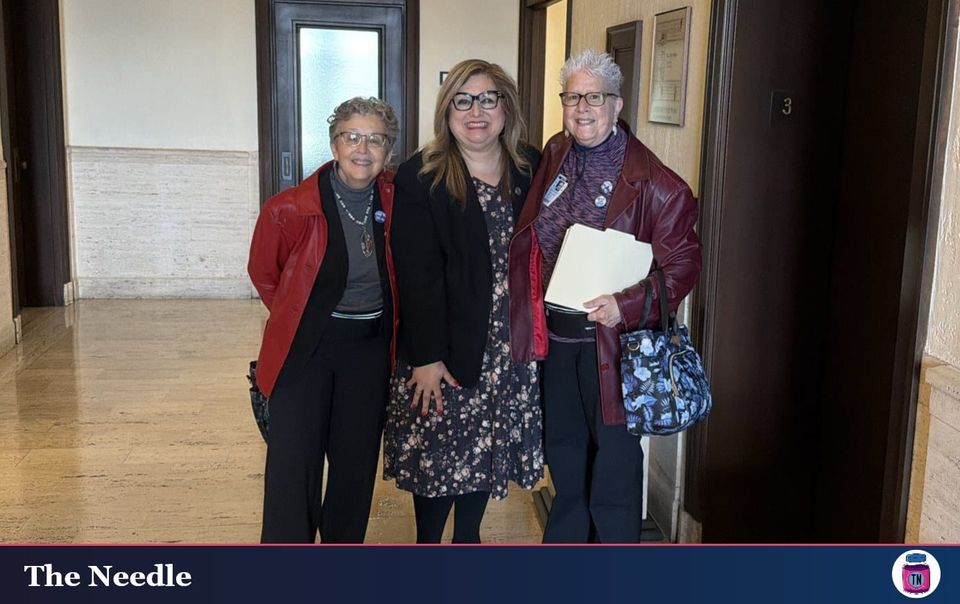
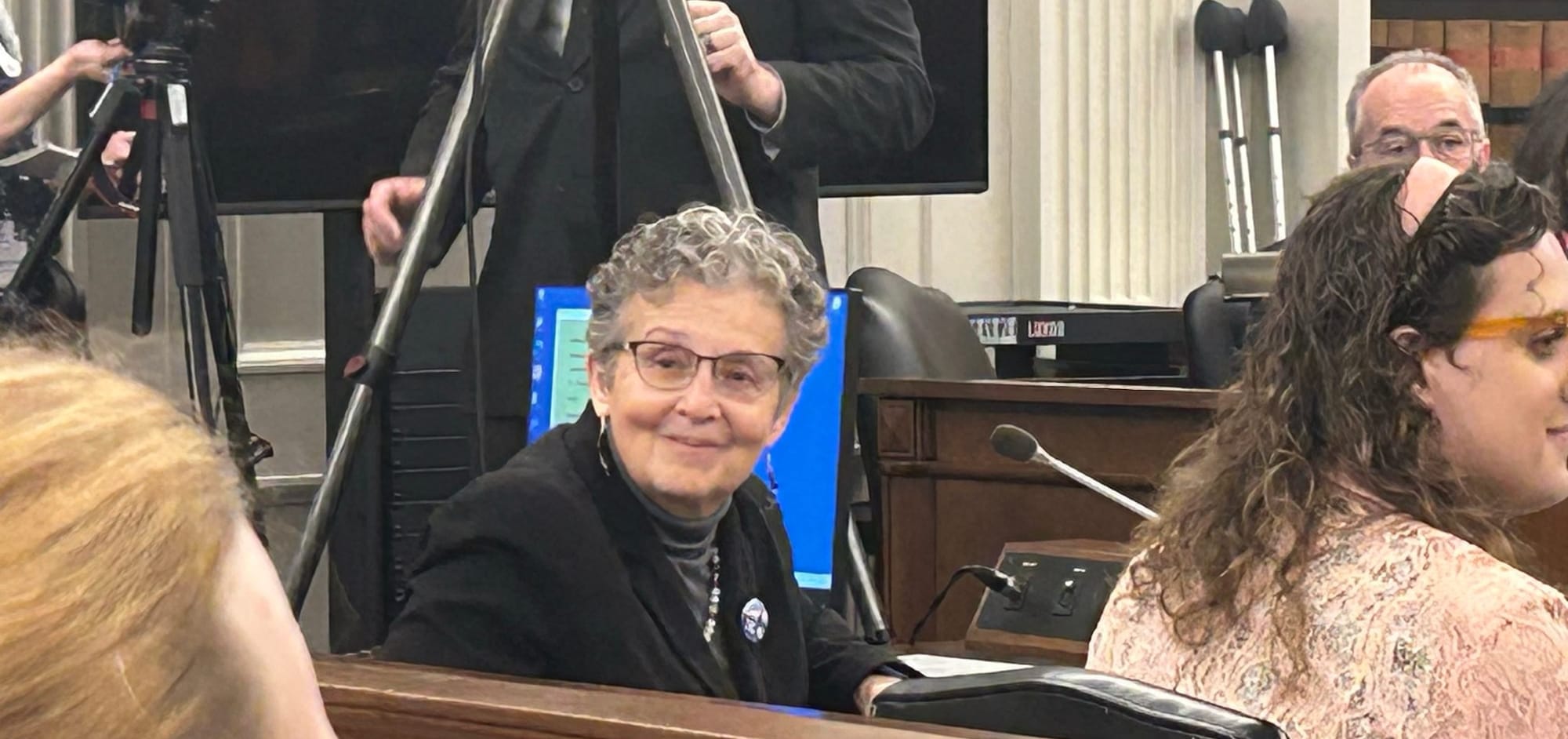
The fight for this bill has been a long time coming. Louise Walpin, a key member of Transgender Rights Coalition New Jersey, had to wrangle all number of smaller groups together, and get them to work together.
“There were about 20 people. They were separate groups of people all doing the same thing. I look at it as if I was the fulcrum of the wheel.”
She was a veteran of this sort of thing. She was a major force behind the fight for gay marriage in New Jersey, having been given the first gay marriage certificate ever issued in the state. The organizing experience gained in that fight has been invaluable in pushing this bill.
She used this experience to great effect, helping dozens of speakers craft their messages for the lawmakers.
“TRC-NJ held a prep meeting before each hearing for people to get general info and ask general questions. We told them to email me their testimonies if they were ok with getting feedback and editing. I think with the exception of 1 or 2 testimonies, I read and made suggestions [to everything] you heard.”
As I sat in the Assembly committee hearing the bill, I could tell how people of all backgrounds were disciplined and on message when arguing why this bill was important, no matter what message they were hammering in.
“I look at [the] focus of the speech to make sure [the] messaging is clear and there aren’t too many themes”, Walpin assured me.
The effect of her work became obvious when contrasted against the testimony of those opposing the shield bill. They were horribly disorganized. Many didn’t even bring scripts to read from, instead rambling about whatever they thought was in the bill. Most seemed to think the bill was about free speech rights (it wasn’t), and most were hard to follow at all. It was sometimes embarrassing to watch, sometimes hilarious, but mostly, it was boring, with the audience dutifully looking at their phones any time an opposition speaker came up (myself included).
The role of message discipline in shaping public opinion was obvious. The anti-trans side struggled to get their own side to clap at the end of each testimony. By contrast, every pro-trans speaker finished to thunderous applause.
The Language of the Bill
As the bill has changed over the course of the session, one change has leapt out many people. In recent drafts of the bill, all explicit mentions to trans care have been removed. Whereas once the bill was listed as mainly being about gender affirming care, the current draft is listed as “an act concerning reproductive rights”.
While on the surface, this sounds like the trans protections are being stripped out, in reality, the phrase is being used to put the bill on safer legal ground.
Khadijah Silver spoke to The Needle to explain why this was done, why this will not weaken its protections for trans patients, and why this actually makes those protections stronger.
The first thing you need to understand is that existing legal protections for reproductive rights have been firm for decades, with legal precedent stretching all the way back to the 1960s. By contrast, similar legal protections for trans healthcare are barely a decade old.
By writing the draft to be about reproductive care, and then defining trans care to be a subset of reproductive care, it allows trans care to be protected by a vast corpus of legal cases that would not otherwise be available. While trans supporters might be able to defend the bill in court, such that the legal protections for both categories end up being similar, that would require court cases, and court cases cost money. At a time when trans rights defenders are short on cash, it makes more sense for us to attach ourselves to this existing category, and save the cash for more pressing matters.
If that sounds like legalistic gobbledygook, that’s because it is. However, it will still be useful to us.
The way language works in law is very different from how it works in normal speech. As such, the bill can sound like it does one thing, and at the same time, do something quite different. This is how a bill labeled as being about reproductive care can actually be about trans care, how it can be championed by a group called Transgender Rights Coalition as being about care for trans people, and how every speaker at the hearings knows full well that this is a bill about trans rights.
The Fight Ahead
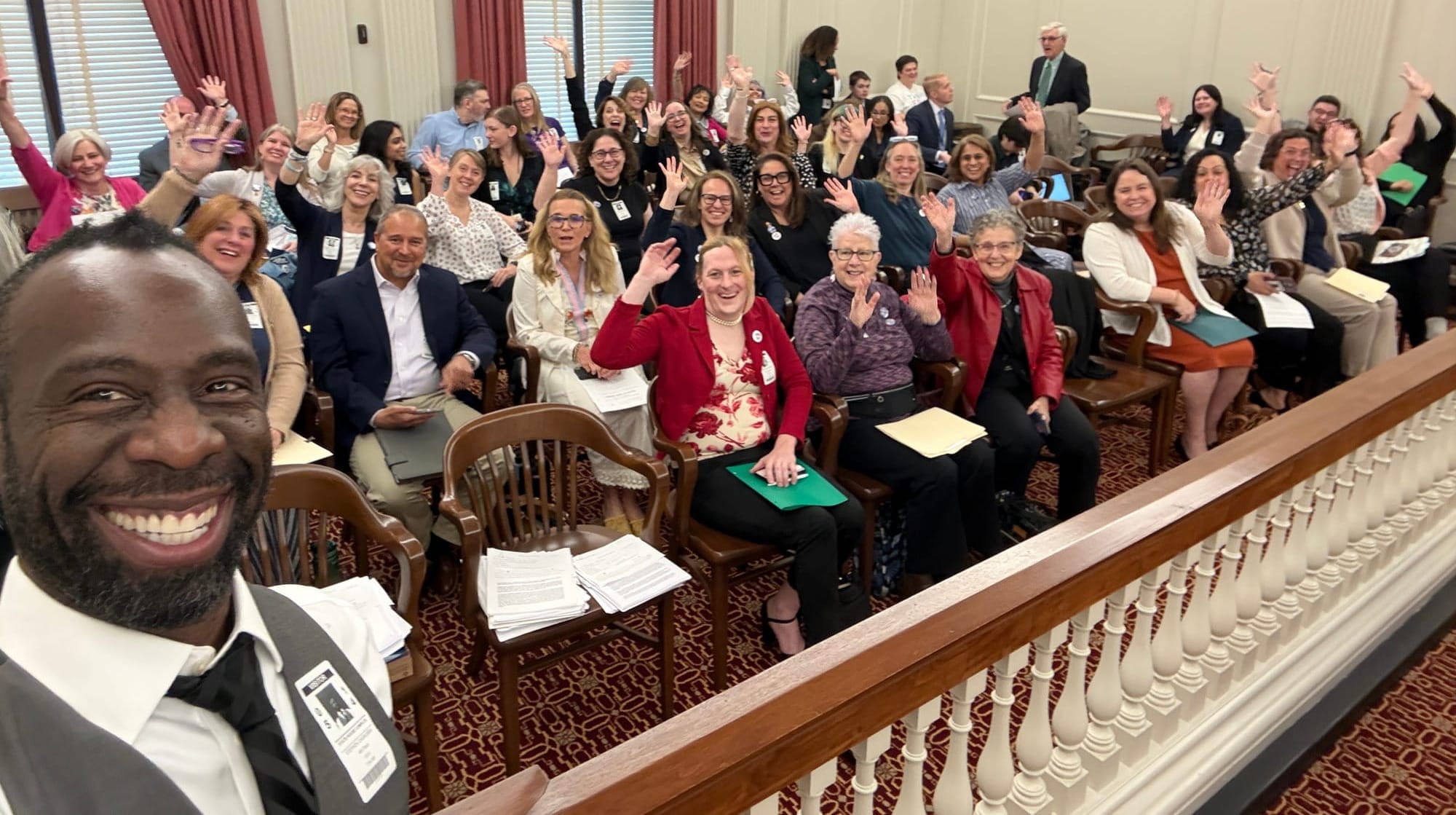
Last Thursday, when the Assembly voted to advance this bill, I saw the crowd breathe a collective sigh of relief. The last major hurdle to the bill becoming law had been passed. Many people involved in pushing this think it’s just a matter of time.
For kids like those Emma came to speak about, this will be a game changer. With the threats to doctors and clinics lifted, trans kids will be one step closer to the bodies they need to have dignified lives.
It is this better future that we must fight for.