

Despite a nearly month-old ruling stating that attempts to make trans kids’ healthcare impossible via regulatory fiat are legally invalid, no hospitals have returned to providing care in that time.
By Artemis T. Douglas and Jane Migliara Brigham
Last month, a U.S. District Judge issued a ruling that the Kennedy Declaration seeking to make youth trans healthcare bureaucratically impossible was legally invalid, and preventing any similar policy from being enacted.
In the following weeks, not a single hospital has reopened its trans youth healthcare program, despite being legally allowed to do so. The result is that the court’s rebuke of HHS Secretary Kennedy has had no effect on the ability of trans youth to actually obtain their healthcare.
If the court can strike down the justification which hospitals used to halt access to trans youth healthcare, and access to that healthcare is not reopened, of what use are the courts?
In other words, what teeth do the courts have to protect trans people’s rights and dignity?
Join The Needle's mailing list:
This rebuke from the courts is among the biggest setbacks to the administration’s agenda on the subject of trans healthcare. The legal victory on behalf of trans kids was immense, and applies to the whole country, including the federal level.
Since the start of the new administration, at least 40 hospitals and clinics have shut down their preexisting trans youth health services. Since half of all trans kids live in states where it is not possible to legally obtain such services, hardly any trans kids are able to obtain the hormones they need.
Some state governments have protections of their own, explicitly protecting trans healthcare as part of state law. Colorado and New York are both states with such provisions in state law.
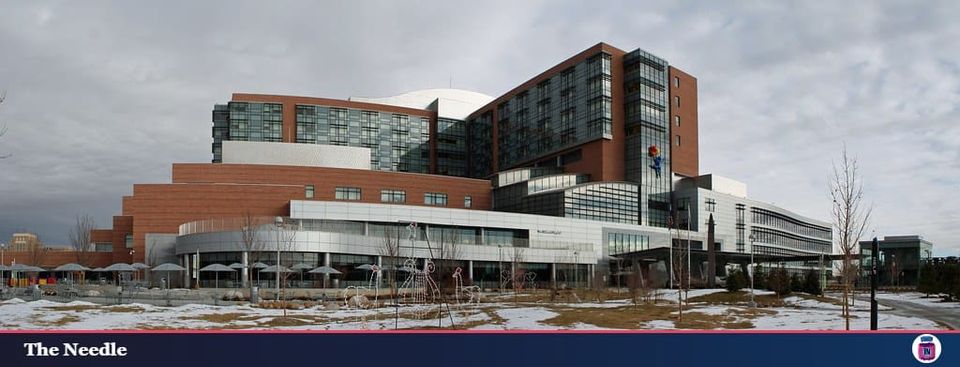
In the case of Colorado, The Needle reached out to the University of Colorado Health System and Children’s Hospital Colorado, both of which were earlier cases of hospitals who caved to the Trump executive order on youth transition.
These hospitals shuttered their programs possibly in violation of Colorado state law nearly a year before Secretary Kennedy’s declaration, and have yet to reinstate youth transition care even after the newest court ruling. Neither responded to The Needle’s requests for comment.
As for New York, State Attorney General Letitia James has ordered hospitals which caved to re-open their programs in compliance with state law.
Despite these orders having force of law, and these orders being two months old, no hospitals have complied, or have even publicly stated a reason or justification for their non-compliance with state law.
Where hospitals are unwilling to follow state law in defense of trans youth, state AGs have struggled to force them to follow state law.
As far as The Needle is aware, no hospital that caved in response to federal threats has made moves to re-open the clinics they’ve shuttered, or announced plans to do so.
There are limited cases of clinics reopening their care due to pressure from state AGs enforcing state laws, such as the case of Children's Minnesota. However and all of these predate the striking down of the Kennedy Declaration.
Despite the fact that this ruling is one of the largest setbacks this administration has faced on the topic of trans healthcare, by all public evidence, this has not led to a single person gaining access to healthcare where they otherwise would not have it.
This begs the question: What do we do when court and legal actions in our favor do nothing to improve our lives on the ground?
Effectively, the Trump administration– including Secretary Kennedy, is using the bully pulpit to unilaterally end care for trans youth (and trans adults when they can), despite what the law and courts may say about it.
Because there is no force of law behind this campaign, the hospitals which have complied are displaying either cowardice, complicity, or some combination thereof.
Editor's Note: The article has been updated to emphasize that one hospital resumed care before this ruling came out, but that they did so in anticipation of the ruling, and not because of it. It still remains true that the actual court ruling has not led to any openings.