A trans folklorist explores the werewolf as a trans symbol
The original thesis is an engaging read, well worth the time to do so.

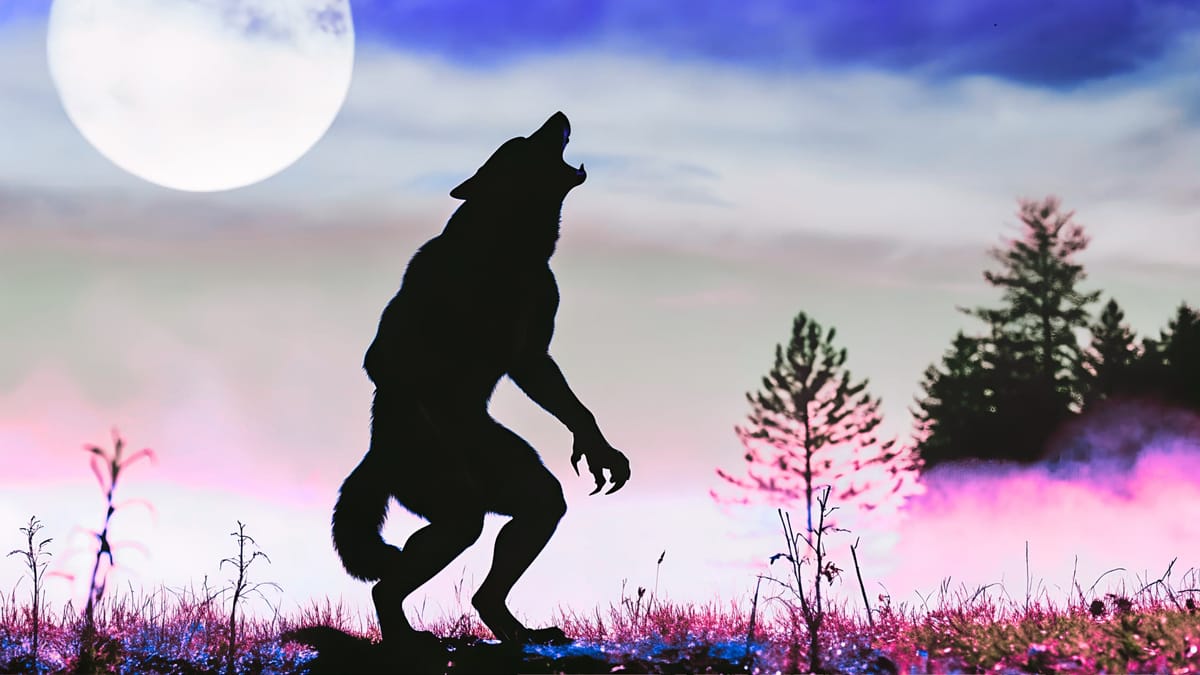
An academic thesis explores the trans werewolf as counteracting the popular image of transness, especially trans masculinity, as monstrous in media.
On Nov. 19, 2025, the University of Oregon published an academic thesis written by Kieran Blokhuis, exploring the trans werewolf as seen on Tumblr.
The thesis asks questions about the who, what, and why of the werewolf in media, especially in trans media and self-expression. Specifically, the scholar asks, “who is the trans werewolf?”
In answering their own question, Blokhuis defines the scope of the term ‘werewolf’ for the purposes of his thesis.
“In this thesis, “werewolf” will be used to discuss the idea of a human who has the ability to physically transform into a wolf, though the method of transformation may differ between sources. The symbolic emphasis of this transformation may also vary — the werewolf as a victim, the werewolf as a perpetrator, lycanthropy as tragedy and as gift — but this work will continue with the assumption that werewolf narratives involve a physical transformation from human into at least partial wolf by some means, and that the experience of being a werewolf is symbolic of something.”
The thesis uses a quite interesting methodology. Drawing on fandom as a source, Blokhuis uses fandom-based wikis for multiple media universes to define what a werewolf is and how a werewolf operates.
“According to fans, werewolves “retain little qualities of the human self. They behave aggressively and do not appear to acknowledge humans they may know” (Ginger Snaps Wiki, accessed 2024). The werewolf “acts on pure instinct. No conscience, predatory and aggressive” (Buffyverse Wiki, accessed 2024). Even in charitable portrayals of the werewolf in contemporary popular culture — media in which the werewolf is either not exclusively antagonistic or in which a werewolf may even fill a protagonist role — “the full moon will cause their abilities and emotions to be so heightened that many lose control of themselves, which can cause death and destruction if not handled properly” (Teen Wolf Wiki, accessed 2024). The figure of the modern werewolf, as seen in these examples, is a force of nature. It represents a loss of control, a succumbing to one’s “primal nature,” and a temporary or permanent forfeiture of humanity. The physical shift from human to wolf or wolf-hybrid is fraught with the dangers of undergoing a mental and moral shift from human to monster. The werewolf is an Other on every level. The newly-turned werewolf character is isolated from other humans as they struggle to cope with this change. This character is also now quite literally “of two minds:” until this is later “balanced” by either controlling or succumbing to one’s monstrous nature, the “inner wolf” is divorced from the human whose body it shares. No being is more discordant than a werewolf which has not come to terms with itself.”
Now, this definition is interesting.
It seems available and conducive to a queer (and specifically a trans) read of werewolves and the option of using a werewolf as a vehicle to explore the lived realities of being trans in this cissexist world.
That’s something Blokhuis follows through with, and does so well. Leaning on folklore methods and bringing in critical theories like intersectionality, Blokhuis creates a framework for understanding the monstrosity of the trans werewolf.

If you support our coverage, consider subscribing to The Needle as a Gold tier supporter, at $15 a month- you'll get access to all articles!
However, Bolkhuis doesn’t only use intersectionality as previously defined. No, Blokhuis creates their own hyper-tailored version of the framework wherein the original definition’s reference to “violence” is replaced with a reference to “experience”.This is an interesting choice.
Blokhuis’ stated reasons for this change to using intersectionality as a toolset for analysis of experience, rather than violence, include concerns about the “dominantly white community”, alignment with “contemporary definitions of intersectionality” and to “look at community members’ experiences, both positive and negative, as a result of holding these identities.”
To be frank, I’m not sure it works the way the author intended. I appreciate that Blokhuis took the time to explain their deviation from the common framework and definition for ‘intersectionality’ and, further, that he focused on the possibility of positive experiences from holding specific identities.
However, it falls somewhat flat in execution. I’m not sure that changing the definition of intersectional analysis to be about positive experience rather than violence works as a form of intersectional analysis.
It could work as something else, for sure. Based on my cursory understanding of the folklore discipline, the shift to an experience-based lens makes a lot of sense. I’m just not sold on calling it “intersectionality.”
However, this could be my own disciplinary bias speaking. As someone whose undergraduate education was situated between Women’s Studies and Journalism/Media Studies, and whose current graduate education is in philosophy and politics/international relations concurrently, the way political scientists in women’s studies use “intersectionality” is much more specific.
There are other limits to the methodology from my perspective as a scholar at a similar level, but from a different set of disciplines. However, those limits could be as simple as disciplinary crossfire and not an actual limit within Blokhuis’ discipline.
Overall, I found the entire thesis to be an engaging read. Worth the time to read in full and engage with, even if I have hesitations around some of the framing choices made within it.
💡
💉Take Your Shot 💉
If you’d like to read Kieran Blokhuis’ thesis in full, it’s available from the University of Oregon’s thesis archive, HERE.
If you’d like to read Kieran Blokhuis’ thesis in full, it’s available from the University of Oregon’s thesis archive, HERE.
Platinum subscriptions are $24 dollars a month. For a limited time, you can get your first three months of Platinum for 60% off.
Members Discussion