
An interview with Kieran Blokhius, folklorist
“Trans people are happy being trans. It is not a mistake. It is a community. We have our own unique cultural expressions.”

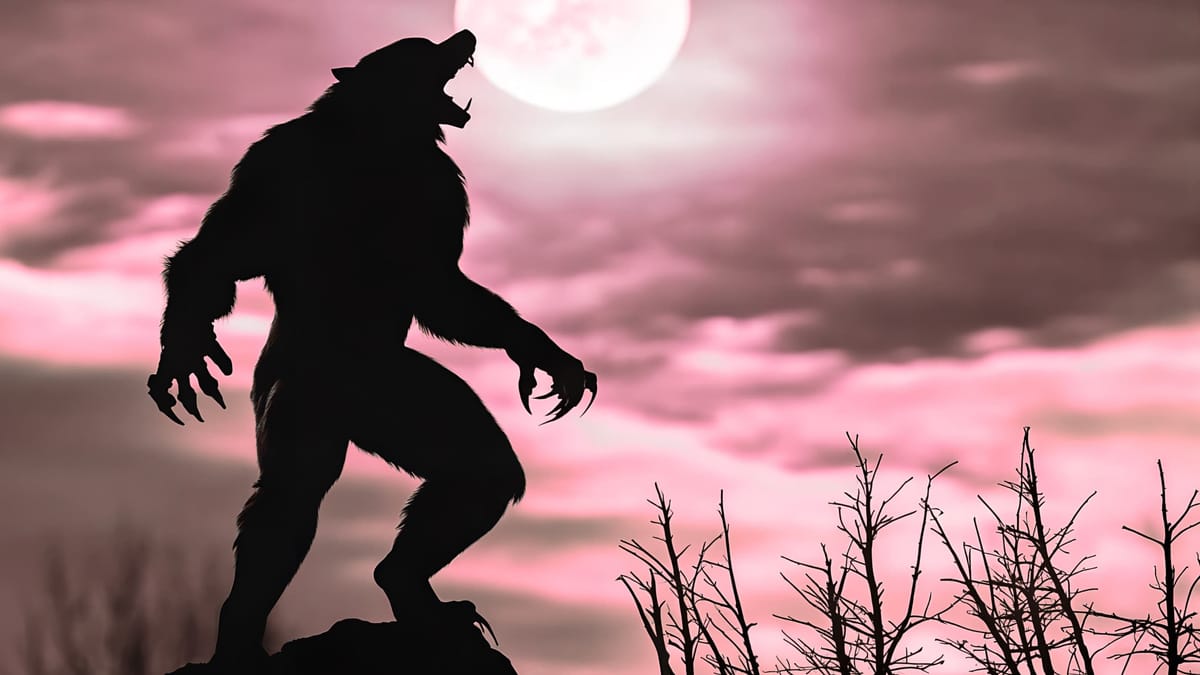
The Needle interviewed Blokhius about his thesis and to better understand his work as a trans-focused folklorist.
On Nov. 19, 2025, the University of Oregon published an academic thesis written by Kieran Blokhuis, exploring the trans werewolf as seen on Tumblr.
The thesis asks questions about the who, what, and why of the werewolf in media, especially in trans media and trans self expression. Specifically, the scholar who wrote it asks, “who is the trans werewolf?”
In answering their own question, Blokhuis defines the scope of the term ‘werewolf’ for the purposes of his thesis.
“In this thesis, “werewolf” will be used to discuss the idea of a human who has thebility to physically transform into a wolf, though the method of transformation may differbetween sources. The symbolic emphasis of this transformation may also vary — the werewolf as a victim, the werewolf as a perpetrator, lycanthropy as tragedy and as gift — but this work will continue with the assumption that werewolf narratives involve a physical transformation from human into at least partial wolf by some means, and that the experience of being a werewolf is symbolic of something.”
For a review of the thesis itself, see The Needle’s earlier culture coverage.
Review: A trans folklorist explores the werewolf as a trans symbol
The original thesis is an engaging read, well worth the time to do so.
 Artemis T. Douglas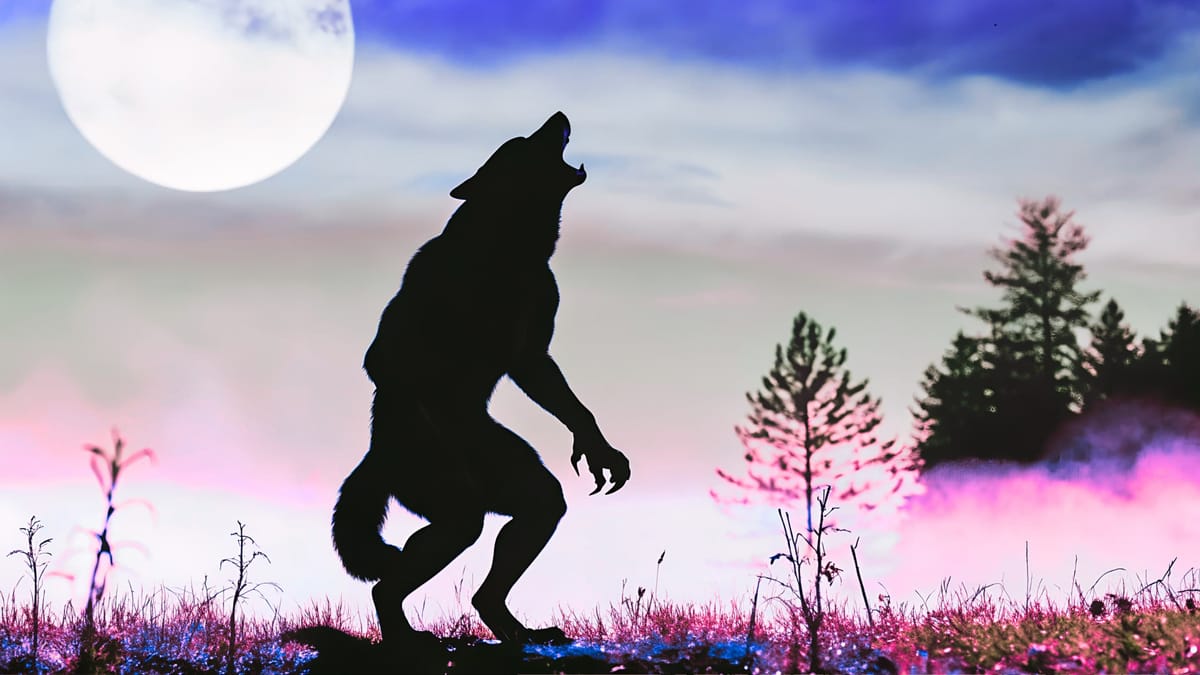
The Needle spoke to Blokhius about his thesis and work.
Blokhius explained that they, at the time of the interview, had just graduated from the University of Oregon. Further, he said that he had been focusing on, “doing my thesis on trans werewolf art on social media, specifically Tumblr as a symbol of transness. Initially I looked into the trans werewolf as just a trans symbol, going through the research. I found a lot of overlap with neurodivergence, a lot of overlap with other generalized disabilities. Yeah, but mainly I position this as the werewolf as a trans symbol.”
The Needle asked Blokhius to explain what folklore is as a discipline. Blokhius said:
quote
“Here’s the problem. When I explain folklore, I think I do it in a way that makes sense to people who are not folklorists. Folklorists get very mad when I define it this way. But I would define folklore as the topic of cultural anthropology using more of a lens of analysis of English. Folklorists like to set themselves apart from other disciplines because a lot of people worry that it decreases the need for folklore if it can be summarized by using other disciplines as comparisons. But to me the importance of folklore is that it is a bridge. I've taken classes with professors who were initially from other disciplines, a religion professor for example, who said “I've been looking for a term for this for 25 years”, and it's been in folklore the whole time. So yes, folklore and public culture is very English, very anthropological, but I think it's very important as a bridge between other disciplines.”
The Needle also asked Blokhius to explain where he placed the thesis in the broader social context; not just Trump, but everything that made and empowered Trump’s presidency, as well as more systemic assaults against trans life.
“I have always taken an interest in how things that are not understood are explained. I started my schooling in psychology because I wanted to understand how that link worked. That didn't end up being the right fit for me. I found out that what I was actually looking for was cultural anthropology, and then further narrowing that in grad school into folklore and public culture. My interest initially in undergrad was on the way that things which people didn't understand were explained using these grand symbols.
I took a lot of interest in Eastern Europe in the Middle Ages. The ways that use of mind altering substances, natural disasters, and mental illness were all explained as supernatural occurrences. And as people have gained more understanding of why these things happen, I was curious about the continued use of those symbols. So now that we know what mental illness is for example, why do we still commonly use vampires in media to represent mental illness? Why is there still a link there?
And through looking at those links and how and why the symbolism has continued in the way it has, I've taken a lot of interest in the way that these associations work; what parts of culture are influencing and informing these links, and how these are adapted. In my thesis, I mentioned there are a lot of similarities between the Hollywood version of the werewolf and the trends in werewolf art that we see on Tumblr. There are lots of similarities and also a lot of key differences. That places the trans community in a context that most people outside of the queer community wouldn't see it in.
And this gets into the second part of the question. This thesis was not written necessarily because of any current events or any specific current events. Obviously, that became very relevant as I was working through my thesis, but it wasn't inspired by any of that. It was just inspired by the fact that I realized most cisgender people don't see trans people as happy being trans. There's always - especially for binary trans people - there's an assumption that you would be cisgender if you could, which I have never found to be true. Well, I've met maybe two people where that was the case. But the majority of people that I associate with are happy to be trans.
They would not change it if they could. They would not have chosen to be born cis. And that is the conversation that I would really like to open; that trans people are happy being trans.
It is not a mistake. It is a community. And I think that that is less a response to current events - even though it's becoming so relevant - and more trying to further a conversation in academia that I think has been a big part of the process. It's been stalling for a long time.“
One of the final questions The Needle asked Blokhius was to do with culture. Specifically, what they meant by the cultural element of transness in their work. Blokhius said,
“I think it goes back to something I mentioned before, which is that I've watched and been subject to transness being treated as a diagnosis before it was treated as a community.
And that is where my interest largely falls is that this, [being trans] is, you know, technically a diagnosis, but this isn't something to be fixed or treated. We have our own unique cultural expressions. That was something that I really wanted to dive into in my thesis; that there are a lot of marginalized communities who have ways of expressing who they are and how they exist and how they navigate the world in ways that would not be seen as notable to anyone who isn't looking for it.
But if you're in that community, you can find those links, and you can see how even intersectionality in very specific lenses becomes its own culture that has its own unique expressions. Even though it seems like such a small community that you might not think they would have enough people even necessarily if you're looking from the outside to form such a unique expression of who they are as a group.”
The final question The Needle asked Blokhius was, “What’s next for you?” Blokhius said,
This post is for subscribers on the Silver Needle, Gold Needle, Platinum Needle, Silver, Gold, Silver Needle, Gold 2, Gold Needle, Platinum, Platinum Needle, Platinum 2, Diamond Needle and Diamond tiers only.
Subscribe now and have access to all our stories, enjoy exclusive content and stay up to date with constant updates.