
Anti-trans hate groups petitioning FDA for registry of trans women, crackdown on transition, newly revealed document shows
In the short term, this is not as dangerous as an outright ban on estrogen. If implemented and then combined with other methods of suppressing trans people, it might be far more destructive in the long term.



The proposed registry is part of a lobbying effort for sweeping policy changes that could be made by the FDA itself without any new laws.
By Artemis T. Douglas & Jane Migliara Brigham
0. Introduction
The FDA has been petitioned to implement a set of policies that, if taken up, would create a federal registry of trans women, federalize anti-trans misinformation, and fast track a pathway to criminalizing estrogen use in many contexts where it is currently legal.
A policy petition cosigned by 15 anti-trans organizations, dozens of doctors and researchers, and others, was addressed to the Food and Drug Administration (FDA). The petition document called for registries of anyone who uses estrogen as a cross-sex hormone, a restriction that falls almost exclusively on trans women.
The petition contains a number of proposed restrictions on the use of estrogen as a cross-sex hormone, including the establishment of a patient registry, mandatory monitoring of the health of patients, mandatory warning labels on estrogen, and mandatory psychological and mental evaluations before a person is allowed to medically transition.
It makes no distinction between children and adults.
One of its components, if implemented, would be a fast track to later make possession of DIY estrogen a criminal act.
This level of surveillance and monitoring would go beyond that placed on testosterone. Despite testosterone being a controlled substance, and estrogen not being one, these policies have the potential to make estrogen more prohibited and controlled than many criminalized drugs.
This petition document was discussed– but not fully released– in three obscure press releases in December, but has not been picked up on in the news until now. A copy of the petition is publicly available via regulations.gov.
Those press releases include one dated Dec. 18 by the “Center for Bioethics and Culture”, another on the same day by “Do No Harm Medicine”, and one dated Dec. 22 by “Democrats for an Informed Approach to Gender”. All of these organizations are hate groups.
The petition was acknowledged by the FDA on Dec. 23. It is signed by 15 anti-trans organizations, including notable hate groups such as Genspect (both its US and international branches) and Women’s Liberation Front.
At least 2 more of these organizations have links to Genspect. Most of the remaining groups have only existed as legal entities since 2024 or 2025.
Many of the doctors who are signatories also have ties to anti-trans organizations.
The FDA has not issued a press release regarding this petition, nor did any of its media representatives respond to The Needle’s requests for comment.
As of writing, every one of the 61 viewable public comments on this proposal are in support of it.
While the full petition document cites anti-trans logic and studies to make its case, the more novel (and concerning) aspects of the “Citizen’s Petition” fall within what the signatories are asking for in terms of policy changes. In effect, these policies have the potential to be more destructive than an outright ban on the use of estrogen in transition medicine.
The document can be read in full below, or by clicking HERE.
/new
Authors’ Note: Keep reading after the embedded document for a full breakdown of the document, its signatories, and its implications.
1: Policy Recommendations
The most notable part of this proposal are the policies which it proposes. Each proposal is fully within the purview of the FDA.
All of them combined would create a system to monitor the physical and mental health of every transitioning trans woman in the country, and create a list of all of them in the process while potentially making it illegal to DIY.
Each suggested policy is its own component, and they could be implemented all together, or only some of them could be implemented. While seemingly less likely, the FDA could in theory refuse to implement any of these policy recommendations.
The most concerning set of recommendations would be done through the use of a Risk Evaluation and Mitigation Strategy (REMS) on the use and distribution of estrogen.
1.1 Risk Evaluation and Mitigation Strategy (REMS)
An REMS is a common way to monitor drugs which have a potential to be abused, but which are still accessible to patients under limited conditions.
REMS guidelines are context-dependent. Depending on the factors considered, a REMS can include mandatory clinical observation before and after a drug is taken, mandatory administration in the presence of (or at the hands of) a doctor, additional certification and training requirements on prescribing providers, administering providers, and dispensing providers, and other possible restrictions.
According to Allucent, a company that specializes in bringing new and experimental drugs into regulatory compliance, an REMS program has four components.
“
REMS Requirements
Medication guide or patient package insert
Patient-friendly information to promote safe and effective use
Communication plan for healthcare providers
“Dear Healthcare Professional” letters, additional information about the REMS, and other educational materials directed toward the healthcare provider
Elements to assure safe use (ETASU)
Provider/Pharmacy certifications, dispensing/administration information, patient monitoring, patient enrollment into registries
REMS implementation system
How ETASU will be enacted, along with requirements for monitoring and evaluating ETASU implementation by healthcare providers, pharmacists, and others
“
While all of these restrictions are excessive in the case of an essential drug such as estrogen, by far the most concerning is the potential for an “Elements to Assure Safe Use” (ETASU) requirement.
An ETASU can further require a registry of patients on the drug, among other restrictions on the prescribing and administering of the drug.
“ETASU can require any or all of the following, depending on the drug’s risk: HCPs who prescribe the medication must be certified or undergo specialized training; pharmacies or other drug dispensers must also be certified; dispensing/administration of medication in limited distribution networks; only dispense/administer drugs with evidence of safe-use conditions; and patients taking the drug will be monitored and enrolled in patient enrollment registries.”
The last section is the most concerning: “patients taking the drug will be monitored and enrolled in patient enrollment registries”. This is an extreme violation of standard medical privacy practices, which has historically only been used in extreme circumstances.
This is why it is so concerning to see the policy of a patient enrollment registry being proposed for estrogen as it is used as a cross-sex hormone, since this would be, in effect, only applicable to many trans women and some transfeminine non-binary people.
It’s a ‘create a list of all trans women’ policy. This would be doable by regulatory fiat, and would not require the will of Congress to make it happen.
If this happens, protected identifying information that was covered by privacy laws could be disclosed by private companies or others without knowledge or consent of the patients.
For example, the HHS issued guidance in 2023 that communications between a drug manufacturer and a patient to facilitate the communication component of a REMS are not subject to federal health privacy laws.
“Government-mandated communications to individuals are not considered marketing under the Privacy Rule, even if such communications are paid for by a third party whose product or service is being described. As with communications to individuals concerning government and government-sponsored programs, government-mandated communications to individuals are not commercial in nature.
Thus, a covered entity may use or disclose an individual’s protected health information without the individual’s authorization to send the individual educational or other information concerning a prescribed drug that is required by a REMS, even if the communication is funded by the drug manufacturer.”
Enforcement of an REMS falls under the Federal Food, Drug, and Cosmetic Act.
The subsection of this law that applies to failure to follow an ETASU has provisions that could make the sale of estrogen, except sales to a hospital, clinic, or health group for their internal use, a crime if the ETASU wasn’t followed.
A legal explainer issued by Regulatory Focus explains that widespread or commercial failure to follow an ETASU leads to a drug being off-branded, which is when these elements of enforcement come into play. It’s not something that happens overnight, but it is a fast-track to civil and criminal enforcement mechanisms. If off-branding is invoked, it starts with civil and monetary penalties.
“It is a prohibited act under the FDC Act to introduce a misbranded drug into interstate commerce or to do an act that causes a drug to be misbranded while held for sale.{8} Thus, a violation of a REMS requirement can result in FDA exercising one of its administrative options, like issuing an Untitled Letter or Warning Letter, or seeking civil monetary penalties”
Unfortunately, enforcement doesn’t stop with solely civil penalties.
“If FDA considers the conduct more egregious, FDA can refer the matter to the Department of Justice (DOJ) to pursue civil remedies, criminal prosecution or both. For example, FDA can initiate a seizure action against the drug subject to REMS or enjoin a drug company required to comply with REMS from continuing to market its product. And criminal charges may carry significant penalties against corporations or even potential jail time for individuals responsible for the violation.” [emphasis by The Needle]
Existing law allows for drugs to be seized if they are taken in violation of an ETASU. In the case of this document, that means estrogen could be seized if there are ongoing issues with compliance to the proposed REMS. This would include failure to comply with whatever restrictions are set up. That could mean using DIY estrogen, or it could mean using prescribed estrogen outside of a doctor’s direct supervision.
According to MMS, a company that helps companies navigate medical regulatory and reporting requirements, the “seizure action” that can be issued by the FDA for a drug subject to an REMS due to non-compliance does in fact mean seizing the drug itself.
Since estrogen use is widespread among trans women, and trans people are distributed throughout the entire population, it is unclear how that would play out in practice.
In comparison, there is a long-acting injection formulation of testosterone used for cis men with low testosterone due to hypogonadism currently subject to an REMS. This REMS did not create a patient registry, however, whereas the proposed policy for trans women’s use of estrogen would create a patient registry for all trans women on estrogen.
1.2 Post-Market Patient Registry
Outside of the REMS proposal, the signatories also recommend a post-market patient registry to be created, with the burden placed on drug manufacturers.
Historically, non-REMS post-market patient registries that don’t contain patient identifying information by design can later be cross-referenced with medical claims data to individually identify, monitor, and contact every patient on the registry.
“Registries—real-world databases that can be used to track how patients respond to particular medical devices—are one useful source. After products are FDA cleared or approved, and after patients use them or have them implanted, device registries collect information such as how an implantation method affects outcomes or how a device performs over time. The linking of registry data to other data sources such as medical claims also allows for effective long-term monitoring.”
In short, the patient registry could be its own issue, even in the possible case that a REMS isn’t implemented by the FDA.
According to policy expert and legal scholar Dr. Giovanna Esposito, "The FDA has a huge swath of bureaucratic discretion in even a normal administration. In this Trump era of executive overreach, the threat to trans healthcare infrastructure cannot be understated. This is first and foremost a way of getting all our names on a single list."
1.3 FAERS - The FDA Adverse Events Reporting System
The document also demands that estrogen used by trans women be added to the FDA’s Adverse Events Reporting System, known as FAERS.
Quoting from the proposal:
Mandate Enhanced Adverse Event Reporting: In addition to a robust REMS, establish a formal system for rigorous post-market surveillance of this off-label use, issue guidance to clinicians on their obligation to report all serious adverse events to the FDA Adverse Event Reporting System (FAERS), and require manufacturers to establish a patient registry as part of a REMS to capture real-world safety data.
FAERS is a public database where any member of the public can view or submit complaints about a drug that is involved with an REMS program.
“The FDA Adverse Event Reporting System (FAERS) database contains adverse event reports, medication error reports and product quality complaints resulting in adverse events that were submitted to FDA. The database is designed to support the FDA's post-marketing safety surveillance program for drug and therapeutic biologic products.”
According to the Johns Hopkins Bloomberg School of Public Health, the vaccine-related version of FAERS, VAERS, has been “often misused to sow misinformation.”
“VAERS is a publicly available, searchable database of reports that have not been verified. It simply contains whatever people have voluntarily reported. Moreover, the CDC and FDA do not restrict what people can report, as long as it happened at some point following a vaccination.
That means events that happen even years later and have no obvious connection to a vaccine, such as feelings of anger, end up reported in the system, says Talaat. “It’s very open and public and searchable. Since it’s so transparent, people don’t really understand what it’s for. They think it’s things that are vetted and have causal relationships with the vaccine.”
Further, according to an explainer issued by McGill University’s Office for Science and Safety titled “Don’t Fall for the ‘VAERS Scare’ Tactic”, people against certain medications– like vaccines– have used these public reporting portals to sow misinformation that is used to further restrict those medications.
The McGill explainer, dated to 2021, after COVID-19 vaccines were first publicly available, stated that:
“VAERS is being misused by anti-vaxxers to terrify the public. It’s a shame because VAERS plays a vital role in detecting important but rare reactions caused by vaccines. The weaponization of VAERS by anti-vaccine activists serves as a reminder that having access to more information does not always lead to better decisions. Information needs to be correctly interpreted to guide us in the right direction.”
The same abusive reporting potential exists with FAERS due to its open design. In an environment where transphobes and mass media have been attempting to paint trans people, and especially trans women, as inherently violent, this is a security risk.
There is nothing stopping a member of the public from reporting to the FDA through FAERS that estrogen made a trans woman commit an act of violence, and having that statement becoming a public record.
The absurdity of this system is easy to demonstrate. In 2004, a doctor submitted a report to VAERS that a vaccine turned him into the Hulk (the one from Marvel comics). According to reporting by Time Magazine, the FDA administrators would have been barred from removing this obviously false report from their dataset had the doctor himself not consented to it being removed.
“Laidler, an Oregon-based anesthesiologist concerned about unfiltered, unedited misinformation circulating about lifesaving vaccines, posted his made-up Hulk story to make a point.
“Because the reported adverse event was so…unusual, a representative of VAERS contacted me,” Laidler wrote in a blog post at the time. “After a discussion of the VAERS database and its limitations, they asked for my permission to delete the record, which I granted. If I had not agreed, the record would be there still.”
Uncounted other false reports linger on the site, and that’s a potential problem.” [Emphasis by The Needle]
It should be emphasized that the only way to take down fake content from this system is if the person who posted it agrees to take it down. In the above case, a representative had to ask permission to remove the fake info. Laidler had to then approve the removal.

In this case, the process was comparatively simple, as the poster of the fake report and the subject of that report are the same person.
This system breaks when one person is reporting on the adverse effect of a medication which is taken by another person.
To use the FAERS reporting website, under which estrogen would be placed in this proposal, you do not have to be reporting on yourself. In fact, most information on the page is addressed to potential reports made by doctors.
A small subset of doctors signed this very petition, calling for expansion of their profession’s control over medical transition.
As it happens, the form for reporting an adverse health event to FAERS has no requirement that the person filling it out provide any identifying information whatsoever. In other words, anyone can claim to be anyone else. You could even falsely claim to be the trans woman suffering the ‘adverse effect’ in question, and the FDA would have no choice but to leave it up.
To put it in personal terms, if anyone in the public makes a report about you because of an ‘adverse event’ of taking estrogen, or another drug listed under FAERS, but that person does not consent to have it removed, whatever they said about you remains within the dataset indefinitely.
Information submitted to VAERS and FAERS alike can only be removed from the dataset if the original submitter is contacted and consents to having their report removed. Anything else remains in the database and publicly searchable for as long as the database exists.
If the FAERS reporting mechanism is applied to trans women’s use of estrogen, the potential for laundering anti-trans hate and disinformation under the guise of legitimate public evidence is immense.
Putting it in direct terms, tracking estrogen given to trans women in a functionally identical database as VAERS creates a massive potential for abuse, and the creation of further anti-trans misinformation.
Since anyone can submit to the database, and the database is implemented for the reporting of estrogen taken specifically by trans women, then the FDA’s public health datasets can and will inevitably become a central repository for misinformation, doxxing, and other harmful uses of information– in a fashion designed to target, surveil, and harm trans women specifically.
1.4 Transmedicalism
Among what is being proposed is a series of administrative changes mandating more doctor oversight of trans women on estrogen.
These changes would end informed consent for trans women seeking estrogen, and return the system to one where doctors had the right to prevent medical transitions based on dubious clinical criteria. In reality, this kind of system has historically meant doctors gatekeeping trans women who weren’t straight and/or who they didn't find hot.
In other words, transmedicalism.
The document explicitly suggests “the Finnish model” over the informed consent model used for adults in most of the United States.
Finnish transmedicalism is notable for not only asking invasive questions, mandating invasive psychotherapy, and otherwise using clinical cover to abuse aspiring transsexuals (people who want to transition medically) to limit the number of practicing transsexuals (people who do transition medically), but also for assigning teenagers ‘homework’ that included masturbation and forcing them to tell doctors about their sexual fantasies.
Under transmedicalist regimes, unwillingness to comply with such invasive requirements can mean being barred from medical transition.
This level of invasiveness is common to transmedicalist clinics, and not unique to Finland.
For example, in Dec. 2025, the Irish parliament (the Dáil) had a heated debate about moving to a GP-led informed consent model for HRT in Ireland.
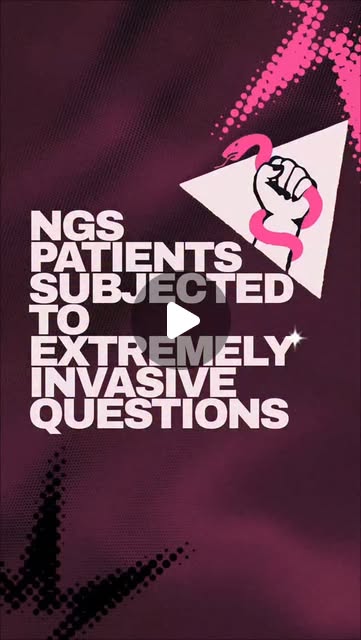
This debate occurred after an audio recording of the invasive questions issued by the main clinic in the country, National Gender Service, was made public.
Transgress the NGS on Instagram: ”*TRIGGER WARNING* The above is a recording sent to us from a previous patient of the NGS. The answers have mainly been edited out, what you are hearing is just *some* of the questions that this person was subjected to. This is nothing new. This is commonplace for the NGS. Trans people wait 10+ years to be accepted as patients of the NGS, only to be harassed with this intrusive and traumatic line of questioning. You are expected to ‘prove’ your transness, potentially failing a test you don’t even know you’re taking. The international recommended best practice for trans healthcare is a model of informed consent. This means that trans individuals should be able to go to their GP and openly discuss gender-affirming care, like HRT. Once you are informed of the risks and benefits, YOU can choose whether you would like to proceed. Your doctor then collaborates with you, and you keep your own autonomy and dignity. As you can see above, this is not the model of care we currently have in Ireland. We are still pathologising and gatekeeping trans healthcare. We are still subjecting trans individuals to these traumatic questions, and we are still denying people life-saving healthcare that they are entitled to. If you haven’t already, use the link in our story to email your TDs asking them to support the motion on trans healthcare tomorrow. Then join us at the Dáil @ 5.30pm to demand the healthcare we deserve. In solidarity,
The Transgress Team”
830 likes, 51 comments - transgress.ie on December 2, 2025: ”*TRIGGER WARNING* The above is a recording sent to us from a previous patient of the NGS. The answers have mainly been edited out, what you are hearing is just *some* of the questions that this person was subjected to. This is nothing new. This is commonplace for the NGS. Trans people wait 10+ years to be accepted as patients of the NGS, only to be harassed with this intrusive and traumatic line of questioning. You are expected to ‘prove’ your transness, potentially failing a test you don’t even know you’re taking. The international recommended best practice for trans healthcare is a model of informed consent. This means that trans individuals should be able to go to their GP and openly discuss gender-affirming care, like HRT. Once you are informed of the risks and benefits, YOU can choose whether you would like to proceed. Your doctor then collaborates with you, and you keep your own autonomy and dignity. As you can see above, this is not the model of care we currently have in Ireland. We are still pathologising and gatekeeping trans healthcare. We are still subjecting trans individuals to these traumatic questions, and we are still denying people life-saving healthcare that they are entitled to. If you haven’t already, use the link in our story to email your TDs asking them to support the motion on trans healthcare tomorrow. Then join us at the Dáil @ 5.30pm to demand the healthcare we deserve. In solidarity,
The Transgress Team”.

Until 2023, Finland had a legal requirement for sterilization via bottom surgery (without the possibility of storing genetic material) in order to change one’s legal gender. This is the system which the document’s signatories are framing to be more rational than the current one.
In a way, if your goal is to limit the number of transsexuals– and trans people more broadly– forcing trans people to undergo sterilization makes a kind of sense. It’s not hypocritical or dumb, but deliberate.
From the petition:
"The current “affirmation” model, under which estrogen is recommended for natal males, lacks necessary safeguards. To prevent "box-checking," a rigorous diagnostic process is required. The Finnish model provides a template, mandating exploratory psychotherapy as the first-line treatment and requiring co-morbid psychiatric conditions to be well-controlled before any medical referral.”
The signatories further admit that it would slow down and limit the ability for people to transition medically, which they view as a benefit.
They position the model they want as lengthy and arduous, that it “often takes over a year and involves multiple meetings” prior to receiving any sort of HRT. They present this as a good thing that “stands in stark contrast to the rapid “affirmation” model in the United States and represents a true, non-circumventable safeguard against any overzealous medicalization.”
They call for mandatory screening of a patient's mental and psychological health as a mandatory check before any estrogen is prescribed, and recommend that this be done by a mental health provider, rather than the patient’s primary care provider.
To do this, they allege harm based on the co-occurrence of transsexuality and autism.
The language of the document says that being autistic makes it harder to diagnose if someone has a “persistent, identity-based gender dysphoria”. It also claims that a patient being autistic casts doubt on their ability to provide informed consent for transition.
“Despite this longstanding uncertainty, irreversible hormonal interventions continue to be prescribed to a population in which social cognition, abstract reasoning, and risk appraisal may be compromised.”
This is blatantly false, even by the standards of its own incorrect framing.
The petition also calls for information on all these changes to be given to doctors, so that they are motivated to take more control over the medical transitions of their patients.
1.5 'Dangerous Drug' Warning Labels
Another portion of the proposals would require manufacturers to put warning labels on all boxes of estrogen-based drugs. This would cast estrogen as a dangerous product.
The specific warnings they want wouldn’t apply to estrogen used for menopausal cis women. It would only be targeted at those women on estrogen who happen to be transsexual.
“Mandate a Boxed Warning: Require a boxed warning on the labeling of all relevant estrogen-containing products detailing the specific, severe risks associated with their off-label use in natal males for gender affirmation, consistent with the authority under 21C.F.R. § 201.80(e).”
In reality, roughly half of all adult humans have estrogen-dominant hormonal systems, and all adult humans (barring certain edge cases) have at least some estrogen in their bodies at any given time. The document essentially says that a substance which occurs naturally in the vast majority of humans is hazardous to half the population, but is perfectly healthy for the other half of that population. It is an absurd leap in logic.
2: Potential Goals and Impact
This document is part of a lobbying effort to increase surveillance on trans women and further restrict access to medical transition.
It is notable that this document only appears on the website of the FDA (to whom it is addressed), or on websites owned by hate groups.
It is also notable that when The Needle reached out to every organization that signed onto the petition for which contact information could be found, none responded, despite being given several business days to do so. The same is true for all branches and representatives of the FDA which we contacted.
The Needle’s team has come to the conclusion that the public was not intended to be broadly aware of this document. It is for this reason that we have decided to release it to the public.
It is unclear how likely these policies are to be enacted.
Given that both the signatories and the FDA have attempted to keep as low a profile on this as possible, while still farming in-group engagement via the public comment mechanisms, we have no way of knowing how seriously these proposals are being taken.
2.1 Secretive Process
The existence of this petition has been unusually quiet. Typically, anti-trans hate groups prefer to have their proposals be as widely viewed as possible, so as to take advantage of the media which will be placed upon them.
This petition uses an entirely different method. There are very few publicly available sources that prove its existence, and the people responsible for creating it have made no attempt to make it any more prominent, despite its inflammatory content.
This behavior is not consistent with bullying, it is consistent with lobbying.
2.2 Alignment with FDA Goals
These positions regarding medical transition are in line with the stated FDA agenda.
As previously reported by The Needle, the FDA and the HHS are already attempting to end transition care for those under 19 through executive rulemaking. The specific ways that those efforts function is by threatening to revoke federal hospital funding if they continue to provide transition care to minors.
This proposal doesn’t ban it outright, or play with the purse strings directly, but it does align with the overall goals of the current FDA: to end transition medicine, and violently enforce a rigid gender hierarchy where only cis men and cis women are allowed to exist.
2.3 More Insidious Than A Ban
This is, in many ways, more dangerous in the long term than an outright ban on transition. By keeping a potential pathway open on paper, but adding anyone who uses it to a central list, it solves a problem which transphobic government officials have been struggling to address: that no registry of trans women exists as of yet. This policy would make such a list possible.
Several states have attempted to make such lists, such as Texas, Kansas, and Indiana. However, all that they have been able to assemble are lists of people who have changed the gender marker on their driver’s license within a given time period.
While this type of list is certainly a way to find some number of people who are trans, it is an imperfect method.
After all, not all trans people are so easily marked out by their paperwork. For example, in the 2015 United State Trans Survey, the most recent one for which this info is available, “Forty-nine percent (49%) [of respondents] did not have an ID or record with the name they preferred, and 67% did not have an ID or record with the gender they preferred.”
To bigots looking to assemble a list of trans people, changes to name and gender on existing legal documents are an incomplete means to create such a list.
By proposing the creation of a list of people who use estrogen as a cross-sex hormone, they would be creating as perfect a list of transitioning trans women as is readily possible.

If you support our work, consider subscribing to The Needle as a Platinum tier supporter, at $24 a month- you'll get access to all content AND credited as a supporter! For a limited time, you can get 60% off your first three months!
From here, the possibilities are grim. In an earlier article by Jane, she compared the effort of the Kansas legislature to make sure trans people’s IDs were as obviously trans as possible to Nazi Germany-era policy regarding Jewish identification documents.
A central objective of any government seeking to “remove transgenderism from public life” will be to identify those who would need to be removed.
Since the federal government has never attempted to make a list of all trans people, it would have to do so from scratch. The policies in this proposal would further that goal.
Other mechanisms for identifying minority groups, such as the census, require self-attestation. Given how normal it is for trans people to omit that they are trans on surveys, that would be a flawed method of data gathering.
If the proposal were to be implemented, this would be forced identification of every transitioning trans woman by using the manufacturer and medical claims data which already exists today.
If estrogen were to be subject to an REMS, it would make medical transition outside of the official pathway subject to massive civil liabilities, and potentially, individual criminal liabilities.
The combined proposal is, in its function, a similar approach to how Florida made HRT next-to-impossible to access. However the proposed plan would go further, affecting manufacturers, doctors, clinics, pharmacies, and individual trans women, all at once.
And it does that while compiling a list of trans women that could either directly include (or be cross-referenced with other databases which contain) personally identifying information.
In the short term, this is not as dangerous as an outright ban on estrogen. If implemented and then combined with other methods of suppressing trans people, it might be far more destructive in the long term.
2.4 Similarities to Regulations on Testosterone-Based Transition
While very different in implementation, some aspects of what the signatories are demanding for medically transitioning trans women are already partially in place for medically transitioning trans men, albeit through different means.
For trans men, there is already fearmongering and misinformation about the effects of their transition on fertility. There is already a tightly controlled access regime for actually getting it, including requiring years of psychotherapy beforehand, close monitoring of blood levels, and other restrictions.
In addition, testosterone packaging also has warnings about “women taking this medication”, and lists the very effects which trans men seek to enact onto their bodies. This is similar to what the petition proposes for trans women on estrogen.
The Needle spoke to a trans man by the pseudonym Paul Smith about what this looks like in reality.
“Before I even fully came out, I’d heard about my step mom’s nephew, who is also trans. She told me, almost as a warning, that in order for him to transition medically, his doctor made him take five years of therapy “to be sure this is the right move.”
I was also told that this is not an uncommon practice. I recall a friend who told me about how a nurse tried to convince him out of transition despite that he had been out as trans for years and had been on testosterone prior.
She asked him questions such as “Are you sure you wouldn’t be happier as a woman? Are there some other issues that are making you feel like you have to be a man?”
The province in which I live, we have informed consent, which while it is the best system, it does still require letters of referral from your family doctor, or a doctor at a clinic (we have a shortage of family doctors right now), meaning that the doctor giving you the referral still has to believe that this is the right move for you–and on various matters regarding mental health (gender dysphoria arguably fits here).
I have had doctors dismiss me/not give me referrals because they ‘didn’t believe’ me.”
Editor's Note: the way which informed consent is used in this quote is different from the usage in the United States.
Even though trans men’s HRT is a controlled substance, there generally isn’t a regulatory requirement for a doctor to observe a trans man taking his dose of testosterone, nor is there a requirement for a clinical observation period where they must be in the clinic watched by a doctor for a set time after every dose.
Some trans men have reported that clinics will observe them in the clinic after each of their first few doses, but that after a while, it becomes an at-home self-administered setup.
In a way, these proposed changes would make estrogen a de facto controlled substance, and would make the accompanying restrictions far more severe than those currently placed on testosterone.
3: Signatories
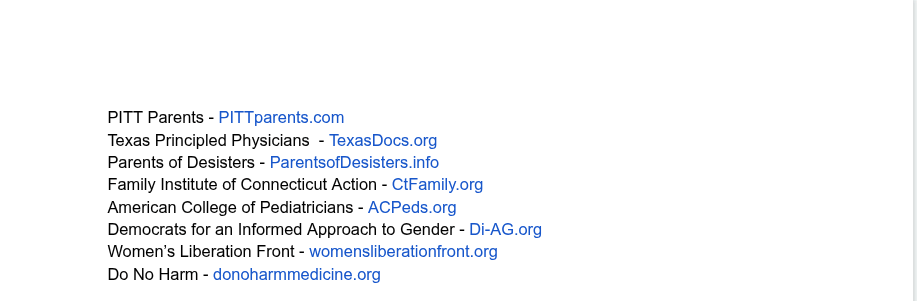
The policy proposal is signed by 15 organizations and over 100 individuals, many of whom are doctors or researchers. While the list of organizations includes many mainstays of anti-trans lobbying, such as Genspect and the American College of Pediatricians, a number of them are pop-up organizations which date back no further than 2024.
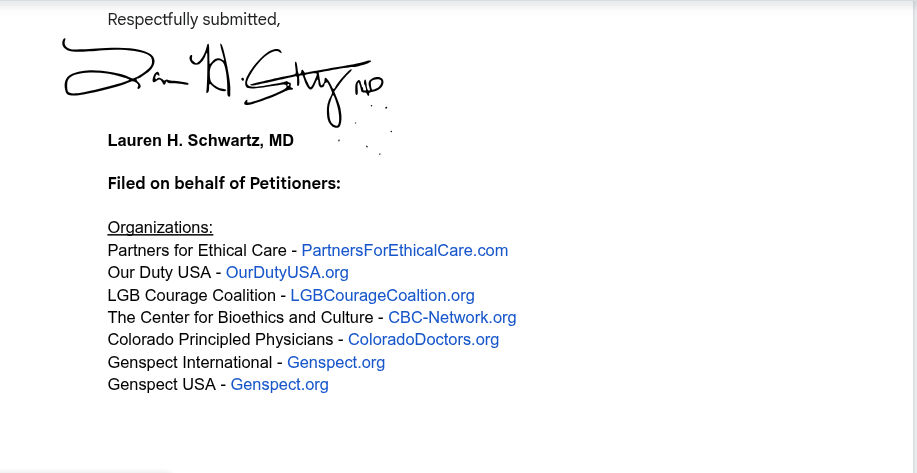
LGB Courage Coalition’s web domain has only been registered since Feb. 2025, according to a WHOIS lookup via ICANN.
Texas Principled Physicians only has a single-page website for a landing page that shows their full website is still under construction.
The two “PITT” organizations– PITT Parents and Parents of Desisters– appear to be tied to each other since they both use emails starting with exactly “PITT”, and one of them has a public email address based on Genspect’s domain, which means both are likely tied to Genspect itself, if not extensions of it.
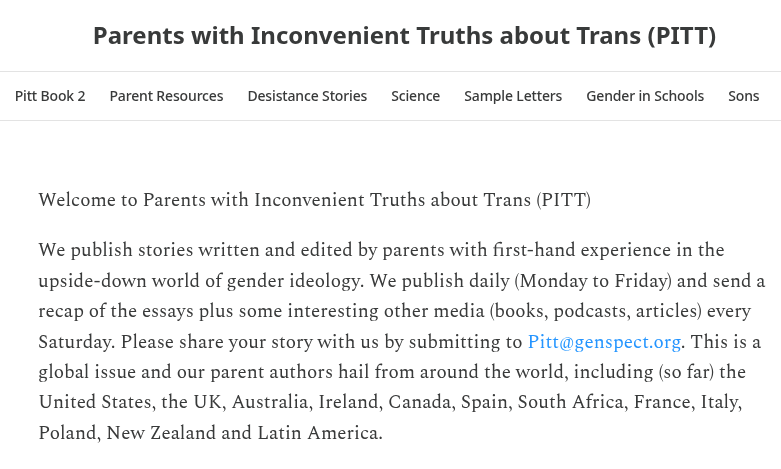
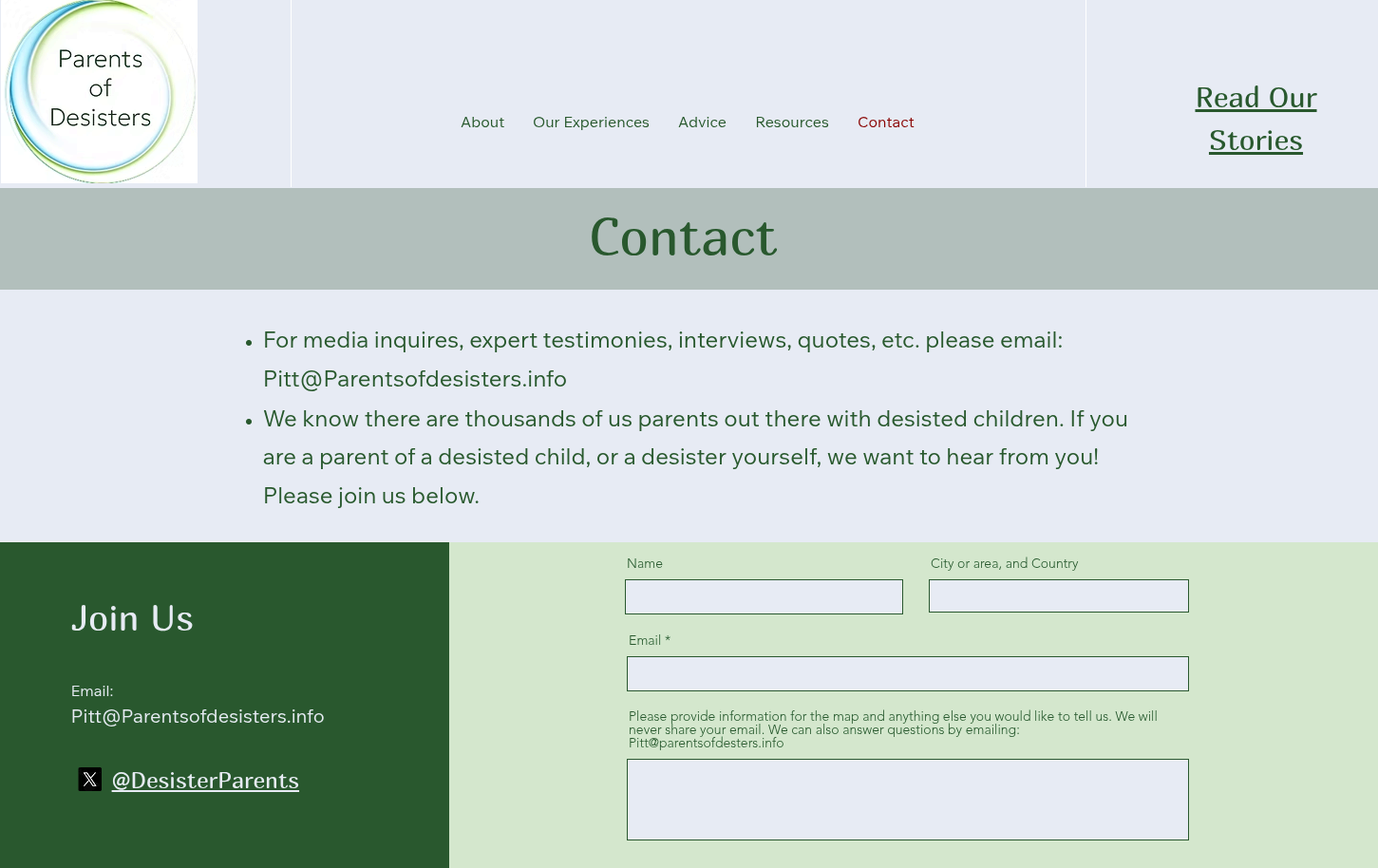
What this means is it appears that the document’s signatories were selected to make it appear more credible and supported than it otherwise would.
One signatory is called Our Duty USA, and it casts trans people as a threat to vulnerable (as well as autistic) children.
Our Duty’s website uses inflammatory language about trans people in describing their “information sources”. The organization also claims the debunked “social contagion” theory of transness known as ROGD, or rapid-onset gender dysphoria is a real threat.
Another signatory is Women’s Liberation Front, or WoLF. They are among the few more-established signatories on this document and are listed as a hate group by the Southern Poverty Law Center.
WoLF spent over $1 million on lobbying in 2024, according to their IRS filings. WoLF lobbies in favor of v-coding, and has previously created a media style guide to guide newsrooms to use their framing.
The signatories also include throwaway or dogwhistle pseudonyms such as “Brain Tumor Brandon”, “Parent of Male Taking Estrogen”, “Lost Boy Mom”, “SS”, and “Doctor Chad”.
Of the signatories, only Genspect, WoLF, and the Center for Bioethics and Culture have any publicly-known significant funding. Many of the rest had no receipts in 2024, meaning no contributions. Those that were formed in 2025 have no publicly available data yet, and therefore cannot be assessed.
If you support our coverage, consider subscribing to The Needle as a Platinum tier supporter, at $24 a month- you'll get access to all content AND credited as a supporter! For a limited time, you can get 60% off your first three months!
4: Cited ‘Evidence’
The argument the signatories put forth accuses the existing medical consensus for trans healthcare as circular and self-feeding.
However, the same accusation could be levied at the studies they cite to make their own argument.
4.1 ‘Evidence’ Created and Influenced by Hate Group Affiliations
Some of these studies were funded by the Society for Evidence-Based Gender Medicine (SEGM), and SEGM-affiliated authors wrote others. The overall argument primarily rests on one study which was written in part by an SEGM-affiliated author, as well as an author affiliated with Genspect Ireland.
SEGM and Genspect are, of course, both known anti-trans hate groups.
One of the cited studies was not only funded by SEGM through its former partnership with Canada’s McMaster University, and the study’s authors further stated SEGM determined their research questions.
The primary study the document cites was co-authored by several researchers. That’s normal. What is concerning is that, as mentioned above, one of those researchers was actively affiliated with Genspect and another was actively affiliated with SEGM.
Specifically, the author affiliated with Genspect, M. Lal, “contributed to the conception, design, acquisition, and initial manuscript draft” and the one affiliated with SEGM, J. Cohn, “contributed to the design of the work”. J. Cohn is also a signatory of the petition.
4.2 Dr. Lauren Schwartz
While not listing an affiliation with a known anti-trans hate group in the text of the academic study, the primary signatory of the document sent to the FDA is also the primary author of the same study that had Genspect and SEGM all over it: Lauren Schwartz, MD.
Schwartz’s own website lists her as a “policy advisor” and “mental health advocate”. There, her listed work outputs include the same study cited in the document sent to the FDA, as well as a prior document on ‘Do No Harm’ letterhead sent to the FDA in Sep. 2025.
She also spoke at a 7 hour-long panel event held by the Federal Trade Commission in June of 2025, titled “The Dangers of “Gender-Affirming Care” for Minors”.
Schwartz also uses her website to list her affiliations as a member of anti-trans hate group Genspect, a fellow for the anti-trans ‘medical standards’ group ‘Do No Harm’, and a fellow for the American Psychiatric Association.
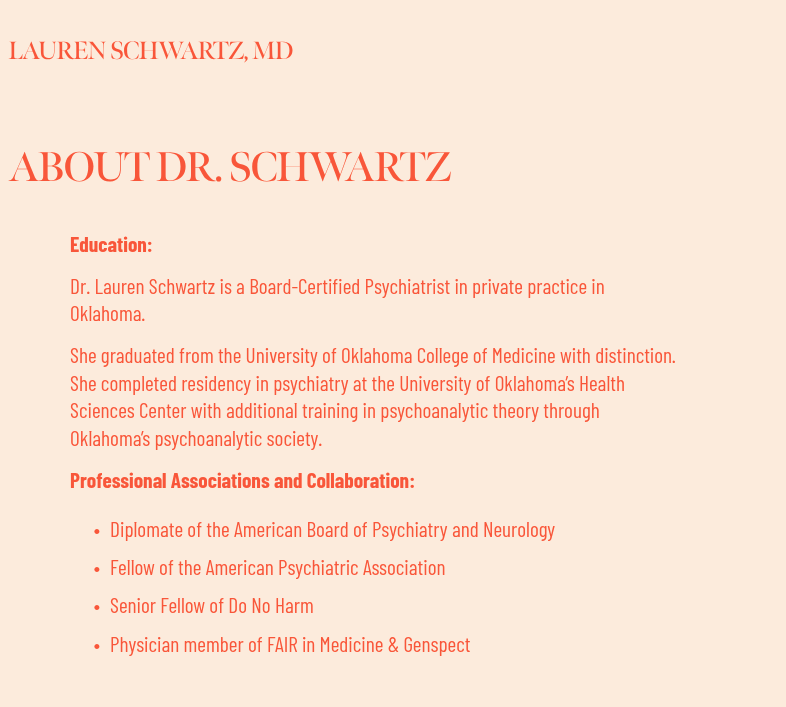
Schwartz's willingness to cite being a member of Genspect on her personal website but not in the academic study where another Genspect-affiliated researcher listed their affiliation with Genspect raises questions of academic transparency and credibility.
The Needle contacted Schwartz to raise those questions. She did not respond to The Needle’s request for comment.
This is not Schwartz’s first attempt to use her 2025 study to convince the FDA to crack down on trans women’s estrogen.
The earlier attempt was only signed by her and Kurt Miceli, Do No Harm’s Chief Medical Officer. The earlier petition claimed that estrogen causes– among other conditions– “cognitive decline”.
“The evidence is clear and compelling. The off-label use of estrogen in natal males for socalled “gender-affirming care” carries risks of thrombosis, stroke, cancer, cognitive decline, and increased mortality that are severe, life-altering, and, in many cases, permanent.”
In reality, the risks here are examples such as bringing a trans woman’s risk of breast cancer to about the same as a cis woman’s. This is what you would expect to happen. After all, you are more likely to develop breast cancer if you actually have breasts.
Further, the informed consent model covers the permanence of changes induced by HRT for trans women. You can’t get estrogen under the current model as a trans woman without being informed and consenting to the “risks” of changing your biological sex characteristics– which is the whole point of HRT.
Both of her attempts to get the FDA to crack down on HRT for trans women cite many of the same studies– and use her 2025 study as the primary piece of evidence– and ask for mandatory labeling of estrogen as somehow hazardous for “natal males”.
The more recent second attempt discussed in this news story expands the requested policies and the number of signatories, but seems to rely on the same set of logic.
That is, the original petition which is listed on her website (archived here) and is dated Sep 12. 2025, petitions the FDA commissioner to implement the “dangerous” warning labels component of what is again requested in the newer petition co-signed by far more signatories.
4.3 Do No Harm’s Additional Comment to the FDA
In the capacity of ‘Chief Medical Officer’ for Do No Harm, Kurt Miceli wrote an additional comment to the newer petition document which was dated to Feb. 10.
In that document (archived here), Miceli makes an argument that providers are aware of the supposed risks, but that they provide transition medicine anyways.
Miceli does this in a way that appears to be designed to undermine the legitimacy of those providers’ inclusive practices. Miceli claims that, “Advocates of so-called “gender affirming care” also recognize these significant risks.”
This statement also argued that the harm of estrogen in “males” was too high, phrasing the complaint so as to ignore the existence of trans women. The framing doesn’t recognize the existence of trans women, or that HRT materially changes our sex, but rather fearmongers about unrelated things like increased breast cancer risks.
Trans women have higher breast cancer risks than cis men because trans women tend to have actually developed breasts. There’s another population that has higher breast cancer risks than cis men due to breast development– cis women.
If you support our coverage, consider subscribing to The Needle as a Platinum tier supporter, at $24 a month- you'll get access to all content AND credited as a supporter! For a limited time, you can get 60% off your first three months!
5: Resistance
Importantly, this effort appears to be largely inflated. As covered above, many of the signatories are linked to each other, or the evidence indicates that they are different versions of the same organization.
Drew Updike, a public health expert and medical doctor who self-describes as “an advocate for ensuring access & choice of gender healthcare” spoke to The Needle about this petition.
"This petition to the Commissioner of the FDA is a disingenuous attempt by pseudoscience peddlers and their 'professional' anti-LGTBQ+ organizations to make medically indicated, gender-affirming treatments more difficult to access and choose across America.
In the states where these treatments can currently, legally be prescribed, safeguards already exist; providers of gender healthcare engage in extensive risk/benefit conversations with their patients, as part of their licenses to practice medicine and prescribe medications within those jurisdictions.
Beyond this petition being an affront to the sanctity of the patient/provider relationship, I find it professionally problematic that - amongst the signatories - is a member of my state medical society Board of Directors.
As state boards are considered by many to exercise the highest standard of thoughtful consideration as it pertains to advocating for all patients and physicians within the practice of medicine, by self-identifying as one who does not espouse that commitment and propagates discrimination towards those who live by an, "identity inconsistent with their natal sex," such persons have betrayed that trust.
An indelible trust between patients and providers becomes only further estranged by singling out one group of people, one type of care, to be under the management of ideologues who have found themselves in a position of power for the remaining 2+ years."
Further, this is not the only attempt to administratively undermine transition medicine that has faced resistance by practicing physicians. As previously covered by The Needle, there was internal resistance within the American Society of Plastic Surgeons after its executive board issued new guidance against all transition medicine for youth.
It is unclear to what extent doctors would be willing to comply with these regulations should they be enacted. This uncertainty could be used to leave pathways to medical transition open.
6. Conclusion
It is very important to once again note that these changes have not yet happened. DIY HRT is still legal, and it is possible to stockpile it. An unused vial of estrogen that is kept at room temperature away from light sources can stay good for two to five years.
Community and mutual aid networks exist. It is more important than ever to plug into the community– online if necessary, offline whenever possible.
Further, there are ways to leave both the more hostile red states and the somewhat safer blue states. See the prior articles by The Needle on ways to leave the United States, HERE and HERE.
If you don’t know where to source your own estrogen, talk to your local community or trusted friends.
The odds of a trans person in your area knowing where to get estrogen for DIY purposes aren’t 100%, but they are high. The more trans people you know in person, the higher that chance becomes.
If you appreciated the work behind this article, please consider signing up for our email list.
While there, please consider signing up for one of our paid subscription tiers. They start at $5 dollars a month.
💡
💉Take Your Shot 💉
As of writing, the FDA is still open for public comment on this petition. Anyone can leave comments of their own. That includes you. The link to do so is HERE.
As of writing, the FDA is still open for public comment on this petition. Anyone can leave comments of their own. That includes you. The link to do so is HERE.
Members Discussion