
Brazil: Rio's Pride Parade Isn't What It Should Be, But There's Some Value In Fun
So, I went to Rio de Janeiro, Brazil's 30th Pride Parade in November...

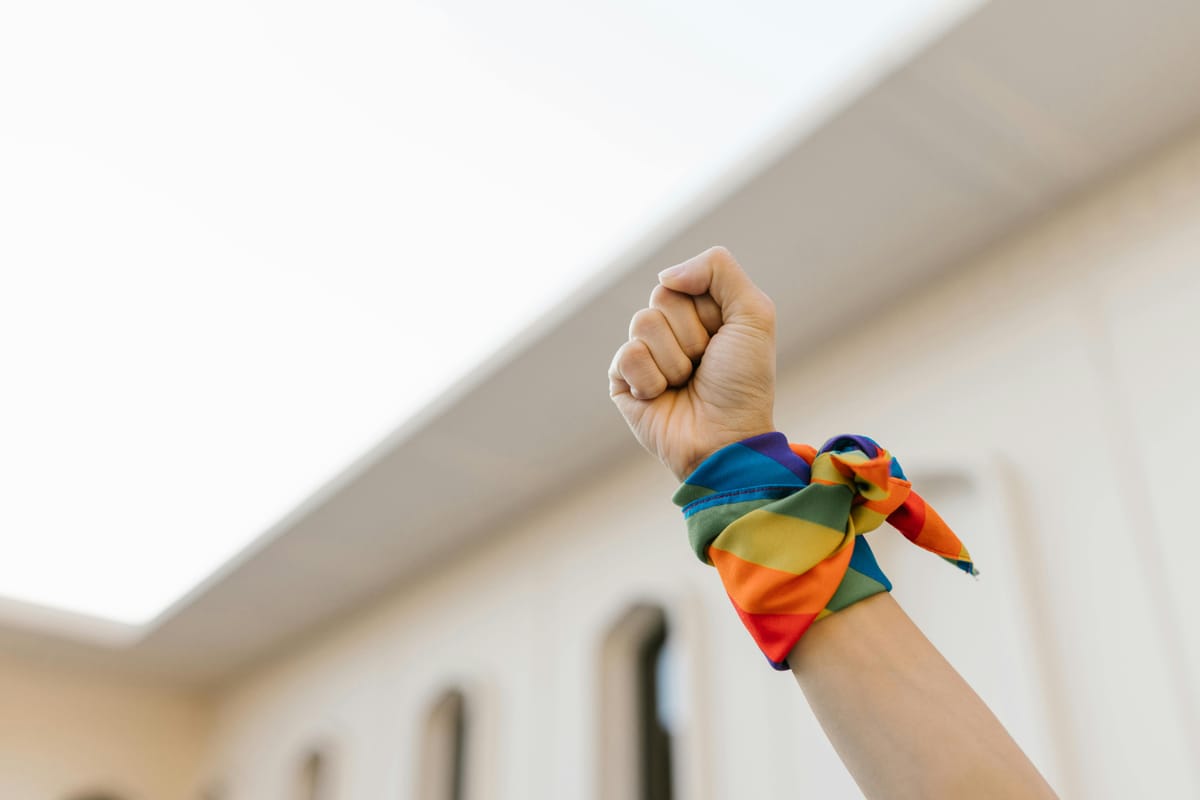
So I went to Rio’s pride parade. This was very hard to write. In fact, it took me more than a week, just because my feelings on pride parades in general are very negative most of the time. So much that most times, I try to convince myself to go, and then I try to convince myself not to go, but I always end up going. Last year, it was because I was lonely and I wanted to be around others. This year was due to The Needle.
Unlike the U.S., pride parades in Brazil don’t happen exclusively in June. The one in São Paulo does, and some other places as well, but the one in Rio happens in late November, and it’s been like this for thirty years.
The first pride parade was just a small march that happened after the 17th ILGA conference. The next year there was a bigger demonstration in São Paulo, and things went from there. This year’s parade was the 30th anniversary.
Unlike in the US with the Stonewall Riots, here in Brazil, the pride parades started out of overall dissatisfaction with the government and society’s dislike over LGBTQ people, and not out of the camel's back finally breaking because of all the abuse. But we only have the parades here because Marsha P. Johnson decided to act and show everyone that we can’t get our rights peacefully.
Which is where some of my distaste for pride parades come, especially with how we do them in Brazil, and how they’ve been for a while.
Still, here we are, decades after the Stonewall riots and the first pride parade in Rio. It was easy to see that this year’s was big. And I mean really big. The parade was set where it usually is, Copacabana – which is a neighborhood not just a beach – and I got there via subway. I could see that the whole neighborhood was already chock full of people. You had the people living there doing their thing, not really bothering anyone. It was Sunday; people were either at bars drinking and getting ready to see a football game, or they were at home with their families.
There were only a few people on the beach I noticed, maybe cause they knew of the parade.
And you had the people that came to the parade. One of the things I did was ask people why they were there. I didn’t tell them I was working for a news site, but I did tell them it was for a blog, and if you think about it, isn’t a news site just a blog run by journalists? At least I’m more ethical than the New York Times. Early on, the responses I got were varied. “Because I deserve to be here.”, “I’m gay/lesbian/trans/bi/pan/because I like to kiss men in the mouth.”, “I never went and I always wanted to.”. Things that I expected. Not the reason why I went or started going, but I get it. I respect it.
As I walked along the parade before it officially started, I saw a few politicians – city council members – selling their bread, as I like to say. They were doing the usual promises and that big talk they all do about “Being in the city council to make the voice of the LGBTQ population be heard! To be there for the minorities!” It’s all talk. Most leftist politicians in Rio are ready to throw us to the wolves when it comes to their ambitions. It’s not all of them of course, but most. Still, they come to the parade to try and get some votes next election season. To be honest, at least they do more than most leftists and try and to engage with a minority, even if it’s just for votes.
Still, that’s only part of the reality of the parade here. I got to it only a few minutes before it started, so the organizers made it pretty clear. One thing you need to know about how Brazilians do these things is that we love a party, and the pride parade is a huge one.
The parade organizers had organized several singers and bands to make shows during the parade, all doing it while ridding trucks we call Trio Elétrico. Imagine a mixture between a moving company’s truck and a small show, that’s it. And those were everywhere in the parade, each with different artists coming and going as they started and ended their shows. The artists were popular acts, such as singer Daniela Mercury (who’s bisexual, by the way) and more local ones like drag queens. It’s a huge party, a fun party. Not what I think we should be doing, but I can respect that.
In Brazil there’s a saying that goes “Laugh to not cry.”. You would rather make fun of the situation than to fall into despair - into the sadness of it all - and we use this for everything here.
Transport system doesn’t work and you have to go on a four hour trip back and forth from work every day? Make a joke about it.
Two guys in a motorcycle stole your phone you were still paying off? Make a meme about it.
The government is okaying the destruction of the Amazon Rainforest? Shrug, make a joke about it, and don’t think about it.
Two trans girls you met got beat up during a night out? It’s okay. Go out the following weekend to this or that club, and have a fun time.
Your religious leader, a guy in his seventies, got hurt because some Evangelicals threw stones at him? Make some light-hearted jokes about him being hard headed.
That’s how it goes here. We would rather laugh or make a party out of something than start fighting. That’s pride parades here.
It’s a huge party. It always is, but I wanted to know why people came, and that’s what I did. As the parade kept going, I kept talking to people and asking why they were here. This time I got more varied answers as I traversed the parade.
I talked to people that were there for the first time after a lifetime of doubts; some asked god to fix them, some tried not to think about it, some tried to fix themselves, but it didn’t work. Some of them had come to accept that, some were still in the process.

If you support our coverage, consider subscribing to The Needle as a Gold tier supporter, at $20 a month- you'll get access to all content! For a limited time, you can get half off your first three months!
There’s the people that been coming to the parade since they figured things out, some were old, some were my age, some were younger, but they liked to do this. It was their special occasion in the year. Part of the holidays if you think about it.
Another type were the people that don’t really put much thought onto their identities, but liked to go because they can. They are queer. They deserve to be there too. These folks contrast with the others that are all about the queer life and queer joy. They are there too because they are queer/LGBT. They deserve it.
Then there’s the straight folk that are there to show support to their family, their spouses, their friends, and many of them saw their loved ones flourishing. That’s something I heard a lot.
And of course there were the NGOs and political groups that do actual work to make the lives of LGBTQ people better, or at least less bad.
So over all, good stuff, lots of happy people. Many people were there just to celebrate their lives, the fact that they can survive, and that things are better.
You might have noticed that I don’t like the pride parade despite going all the time, but this actually made me like it a bit more. I’ll be honest, I think we shouldn’t be celebrating. We shouldn’t celebrate the victories we get, because there’s more to get.
I think we should be organizing and fighting and avenging those that didn’t make it. I’m talking about things that would get people in trouble. Stonewall was a riot, after all.
But at the same time, I talk to people and come to understand that life is fucking hard, and we deserve to celebrate. But it’s not just celebrating.
Year after year, things get worse. They rarely improve, and I’m not talking about just queer people. I’m talking about life in Brazil in general. But people survive, and they find ways to thrive. There’s something that I often hear people saying, “Everyday is a fight”, because it is. Every day is a fight against a country that doesn’t care, but people find ways to survive, because what’s the alternative? You might not be getting this. Brazil is not the USA or Europe. Brazil it’s a country free of these things. Here, people fight to survive and thrive, because surviving alone is not enough. People want to live.
And while we can’t have that, maybe having a party isn’t that bad.
I still have complicated feelings about it, but I have a few less now.
The final round up of the parade is that for a few hours on a Sunday, hundreds of thousands of people came to Copacabana to party and celebrate to the sound of over one hundred different artists. The expectation is that next year’s parade will be just as big. Next year is also an election year. Brazil will decide on it’s new president and state governors. So maybe, just maybe, these thousands of people will be able to do something and make life better.
Or maybe not. That’s usually what happens.
Still, the parade will happen nonetheless.
💡
💉Take Your Shot 💉
If you'd like to support the Pride Parade, this organization- Grupo Arco-Iris puts it on in São Paulo and Rio de Janeiro. Their instagram is here.
If you'd like to support the Pride Parade, this organization- Grupo Arco-Iris puts it on in São Paulo and Rio de Janeiro. Their instagram is here.
SPONSORE
If you liked this article, please consider signing up for our email list.
While there, please consider signing up for one of our paid subscription tiers. They start at $9 dollars a month.
Members Discussion