
KOSA hearing shows broad support for censoring children’s access to the internet
This hearing shows that parental groups and tech lobbyists agree on the broad strokes of what children’s access to the internet should look like.

by Jane Migliara Brigham
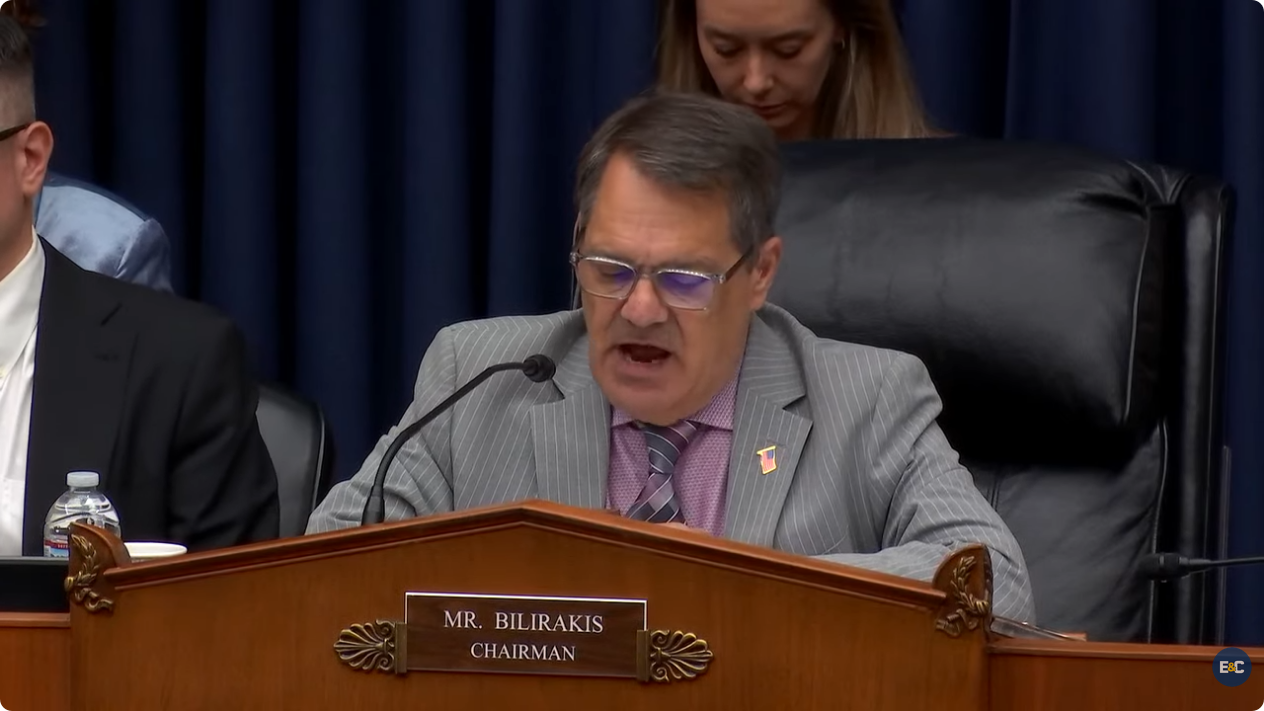
Today, the House Energy and Commerce Subcommittee on Commerce, Manufacturing, and Trade held a hearing to discuss the Kids Online Safety Act (KOSA), and 18 related bills with the shared aim of censoring what minors can access online.
The committee demonstrated broad bipartisan support for the mission to limit what minors can access on the internet. While there was discussion as to the merits of the 19 bills being discussed, there was no objection to the principle that parents ought to have more control of their children in some way.
The centerpiece bill of the hearing was KOSA, a bill which would hold tech companies legally liable for harms caused to children who use their platform. If enacted, it would give the Attorney General and the Federal Trade Commission broad powers to limit what types of content can be hosted on social media platforms, and a great deal of discretion when determining what content is allowed.
This bill has been around congress for several years now, with the House and Senate each having their own versions of the bill. Notably, the House version of the bill was made less restrictive by removing the "responsibility of care” provision, which would have made platforms liable for prohibited content posted by its user base.
As multiple speakers emphasized, this was done because they believed that the older version of the bill would not stand up to constitutional scrutiny around First Amendment protections. Representative Bilirakis, Chairman of the Committee and sponsor of KOSA, said that this was necessary to ensure that the bill would actually be able to be enacted into law.
Much of the opposition to the House version of KOSA was due to the fact that the censorship it called for was too lenient. Pulling from my thread on the matter, Representative Jan Schakowsky of Illinois stated that:
I've heard too many heartbreaking stories of parents losing a child due to Big Tech’s unsafe platforms. Their voices demand action. The House Republican version of the Kids Online Safety Act doesn’t do the job.
The implication of this is that the government and parents need even more power to censor what children (and those suspected of being children) can access online.
Her proposed solution is to pass the exact same version of KOSA supported by the Heritage Foundation, architects of Project 2025. They believe that “the argument that children have a constitutional right to access all content ignores long-standing legal precedent and societal norms.”
As their X account made clear, a key objective in their support of the bill is the ability to prevent children from seeing trans content online.
Whether Representative Schakowsky knows about these objectives, or even cares about the harm that would be done by their implementation, is not clear.
Outside of KOSA, there were 18 other bills up for discussion at the hearing. The type and severity of the restrictions they advocate for varied greatly, ranging from simple things like allowing parents to sue for wrongful deaths facilitated by social media platforms, to draconian actions such as allowing parents the right to be granted free tools to monitor all communications made on social media platforms.
The primary motivation for opposing a given piece of legislation was that it would be prohibitively difficult for tech companies to implement, and that complying with the given bill would be prohibitively expensive.
Only rarely was the concern addressed that these internet censorship bills could be used by the government to censor speech it does not like.
One expert witness, Ms. Kate Ruane of the Center for Democracy & Technology, worried that KOSA in its current form could be used to censor speech, using the examples of “LGBT content” and information about climate change. However, she remained hopeful that if the right changes to the bill were made, then the government would be unable to use it as a means of censorship.
Congresswoman Yvette Clark of New York said that since much of the implementation of these bills would be done by the FTC, it was imperative that the Democrats who were fired from the board of the FTC be reinstated. She did not specify whether this fact would influence her vote on the bills.
As there is broad bipartisan support for more controls on what children can see online, it is likely that some of these bills will pass out of committee.
To read my live coverage of the hearing, you can read my thread below:
The hearing begins in a few minutes
— Jane MIgliara Brigham (@jane.theneedlenews.com) 2025-12-02T14:52:08.624Z
💡
💉Take Your Shot 💉
To call your representatives to oppose any and all internet censorship bills, you can lodge a complaint by calling the following numbers:
Main Office: (202) 225-2927
Majority Office: (202) 225-3641
You can also call your representative through 5Calls.
To call your representatives to oppose any and all internet censorship bills, you can lodge a complaint by calling the following numbers:
Main Office: (202) 225-2927
Majority Office: (202) 225-3641
You can also call your representative through 5Calls.
SPONSORED
If you liked this article, please consider signing up for our email list.
While there, please consider signing up for one of our paid subscription tiers. They start at $9 dollars a month.
Members Discussion