
“Somebody’s Daughter” talks punk, the Do-It-Yourself spirit, and playing the biggest trans music festival in the country
You can't promise that the world's going to get better, but you can promise that for a couple of hours, you're going to have a good fucking time. And there's something to be said for that.
The festival puts a specific focus on the local trans music scene, which is vast and growing.
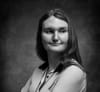
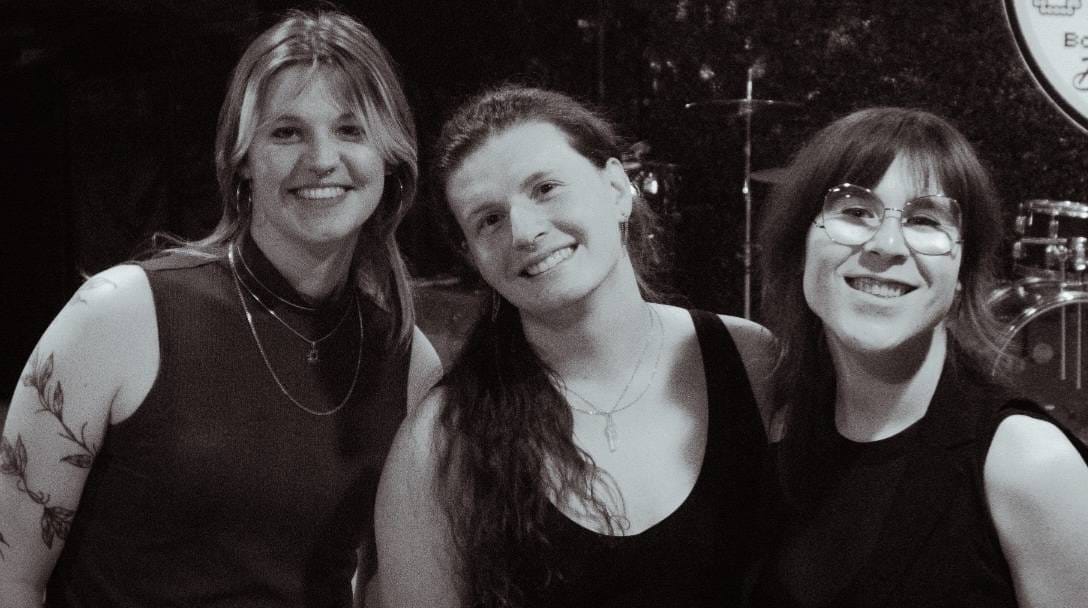
Somebody’s Daughter is a punk band in the Washington DC DIY music scene. They came up playing alongside bands like Ekko Astral and Pretty Bitter, in a music scene where new music is a part of life.
I reached out as part of a series on Liberation Weekend, a trans music festival to raise money for the cause of trans liberation. The festival puts a specific focus on the local trans music scene, which is vast and growing. It is also the largest festival of its kind anywhere in the country, and possibly anywhere in the world.
The main beneficiary of the funds is Gender Liberation Movement, a protest and direct action group fighting to keep trans people safe, as well as a number of local DC organizations.
If you want to hear what Somebody’s Daughter is bringing to this festival, you can listen to it here.
This interview has been edited for length and clarity.
Jane: You all want us to start by just telling me your names?
Miley: I'm Miley. I do guitar, bass and vocals in Somebody's Daughter.
June: I'm June, I do keys and a little bit of guitar and also vocals in Somebody's Daughter.
Lydia: I'm Lydia. I play drums with Somebody's Daughter.
Jane: What can you tell me about the DIY scene in DC?
Miley: I think it's a really special time to be transgender in Washington DC, the last five years or so. I might just be saying that because I am transgender living in DC for the last five years, but it feels like with the DIY scene and the music scene, it feels like there is something brewing. There's not just a lot of creativity happening in music, but in photography and in journalism and all these other different aspects. It's just an exciting time to be here, and I think that all coalesced into wanting an event to celebrate that. I think that's what Liberation Weekend coalesced into.
Jane: So are the last five years noticeably different from the time before that?
Miley: That was, I guess, a ballpark. I only moved here in 2021. So I guess I wouldn't say I'm qualified to say.
Jane: When you came to the city, was this something that you already knew about, or was it something you came across once you got here?
June: I can talk to that, since I'm a newcomer to the scene, and to DC proper, because I grew up in the DMV. I've always been around DC, but it wasn't until I moved here after college and met Lydia in a Harris Teeter in Noma, that I was invited into the scene. That's when I learned there's this whole underground DIY thing that's going on. Being exposed to that, learning about it, and then eventually being welcomed into it has been really awesome.
Miley: And I feel like there's new people being brought into it all the time too. You go to a show, and you see a new face, and then you start seeing that person every week. They start showing up to all the shows. It's always cool to see new people discovering their community week to week. That happened to me. I lived here for two or three years before meeting this community. Once you meet one person, you meet ten people, and then you start seeing familiar faces everywhere and really get tied together in the community, which is nice.
Jane: Is this something where people are seeking this community out, or something that develops over time as people become part of the community, DIY scene, art scene, etc?
Miley: I think it's both. There are people here in the community before us. But by participating, you are helping build the future. And when new people find the community, it's a thing that snowballs
Jane: I know that a lot of people are saying that the DIY art scenes in a lot of cities are the best they’ve ever been. The same is being said about DC. Do you feel that way too?
Miley: It's hard to say because I only know what I've experienced, which is what's happening right now. I mean, it feels special. And maybe it only feels special because it's what I'm doing right now, and that's why I think it's the best it's ever been. But it's hard to say.
Lydia: I think there is also something to be said about the authenticity of it all. At a time when more and more AI slop is being forced upon us, and so much of what's being put out there is inauthentic, there is nothing that can replace the feeling of going to a show and getting thrown around in a pit, meeting people, and seeing the guitarists do some crazy stuff on stage. I think there's just something that feels so raw about the experience of going out to a show with other people. The show you see is the only time it'll ever be like that, because every show is different from every band.
Jane: It’s also an increasingly rare experience. Because there's not really much of that going on in the suburbs or wherever. If you want to see that, you very much have to go out and see it. So you're getting the people who really want to have those experiences and who actively seek them out instead of, I don't know…, doom scrolling on a Friday night.
Miley: Definitely. It’s a privilege to live in a city where these opportunities exist, these venues exist, these people exist. It's not something that everyone has the opportunity to go to every week, and so I think it adds to the specialness of it, and the feeling of joy and love for being a part of the community.
Jane: Yeah, these are the kind of experiences that you need to be in the physical space with another person to get. And people know that they could be doom scrolling or on Netflix, and the fact that they’re there with other people who get them is like a very special thing. People cherish that.
I see a similar thing going on in New York City. I have to drive an hour and a half to get to where the shows happen. And it's something I cherish, because I have to put in so much just to be able to see other trans people at any given week.
June: I think it's a wonderful privilege to be able to see other trans people at all, especially in a creative sense. If you had told me growing up in Southern Maryland that I'd spend every weekend having fun making music, celebrating queerness with other trans people, I wouldn't believe you. I would have said I'll be dead by then.
Jane: I want to switch gears into artistic backgrounds. What kind of backgrounds did you have coming into this, in terms of music and art? And does that affect the way you do things today?
Lydia: For most of my time I had mostly played jazz. And it was only until a couple years ago that I started playing more rock and punk. And so for me, going from a play style that is so heavily focused on communication and improvisation and bringing that into something a bit heavier, I guess that really informs how I approach writing music and playing with the band.
I'm sure they've noticed that we have a lot of just like jam breaks. Every time they're just a little bit different. Every time we play a song it's a unique rendition of that song. And that's something from having that jazz background that I like, being able to improvise and jam and make something new every time.
June: Growing up I took piano lessons and sang in choirs. When I went to college, I also got a music degree in classical voice singing. So most of the music I've done throughout my life until joining this band has been either opera or Broadway. And so it was a really interesting shift, (and an intentional one on my part) because towards the end of my degree I was getting sick of singing and performing music by older people and never creating anything for myself. Some of that feeling has definitely been assuaged by joining this band.
It's been a ton of fun. I think the background that I have, a musical theory minded brain, can also be helpful when making music in a not 18th century style. But it can be really interesting to bring it along, such as how I was taught to think about music in terms of structure and thesis. I think it has helped bring an interesting sound onto some of the stuff that we do.
Jane: And I want to go into that. How does that more classical background apply to the more aggressive music that you're playing today?
June: You know, I've been asking myself that this whole time.
Miley: If I can jump in, I think we all agree about participating in writing music. One of my favorite things about being in this band is sharing new stuff that we've been working on. I think to June's credit, her background helps. When something new is brought to her, she immediately understands the structure of the song.
I took guitar lessons as a kid and very ad hoc taught myself how to do most of what I'm doing. And so I'll bring something, and then she understands the musical structure behind whatever I'm doing, and knows how to add to it, and how to add structure and depth and texture to it. And so it's a really useful background when building music together.
Jane: So you have the classical side, which tends to be very like set in stone as far as following what's on the score. You have Lydia, who's approached with jazz, which is the exact opposite of that. And then you're playing in a style and setting where everything is supposed to be as aggressive as possible. It's a blending of influences.
Miley: Which is one of my favorite things when making music and when performing.
Jane: Awesome. So, Miley, what's your background? You didn't mention much.
Miley: Because there's not much to it. I would say most of my musical background comes from listening to music and going to shows. So I spent a lot of time going to punk rock shows and and and moshing and stuff, and falling in love with the energy of that experience. That’s what drove me to want to get better at it myself, and to find people who are interested in creating as well. I lack a lot of training, which is why I'm very privileged to be with these two.
Jane: So your background is in the musical culture which you're playing in now.
Miley: To an extent. We have these other influences that are definitely still present. But lots of our music is aggressive and loud and makes you want to dance.
June: I will say, to my credit, I can understand structure and all the parts that go into songs, but I'm not as practiced in finding what will actually connect to the audience. And that is something that Miley and Lydia do very well; finding out what is going to be the most fun thing for somebody listening to the song at this very moment.
Jane: That makes sense, because there's a punk background for playing to the crowd, the jazz background for playing to the other band members, and there is a spontaneity to both of those.
Awesome. So I want to hear more about your involvement with the broader scene, not just as a band, but as people in a community.
Miley: There's just so many new people jumping in and wanting to create music here in DC, even within the last year. When you have people that are going to the same shows as you, you start to meet them. And so it’s easy to get people excited about their friends who are creating something special and new. Because the new perspectives and new people creating are what keeps the energy alive.
Lydia: It also benefits from organic networks of support among people. I know that if I need help with something, I can reach out to and that there will be people who are willing to take care of each other. If I have, for example, extra surgery supplies, I can offer them up and someone can benefit from that.
I think that's also what's so special about Liberation Weekend. It’s really focused on direct material support, both with Gender Liberation Movement, and No More Dysphoria. I think it's really important to make sure that the people in your community, the people you care about, have health care, are housed, have what they need to not only survive and thrive. I think it's really like just making those connections so that we can make that happen for the people around us, and put things together to make sure that happens for other people as well. I think that's really special and really important.
Jane: So it's essentially that same DIY spirit, but just scaled up a bit to the level of a festival?
Miley: Yeah. The musical aspect builds the infrastructure for those relationships that Lydia was talking about, where meaningful things can be shared amongst people, like healthcare and housing support. But those relationships are built on this community which is founded on music.
Lydia: Yeah. I don't think buying a ticket to a DIY basement show is itself some kind of revolutionary activity or whatever. But when you connect with people, and you find ways to provide actual support to people that you offer yourselves, you become something bigger than yourself. I think that's where a lot of the really positive impact happens: just from getting out there and being involved and building community networks with people around you.
Jane: Just using that trans solidarity in this format.
You mentioned authenticity as a central thing. That's been big in punk scenes from the very beginning. But I feel like in Washington DC, that is just extremely in your face, considering you all live next to the politicians. When I went to Liberation Weekend last year, I could turn left from Black Cat, and take that road almost directly to the White House. That punk emphasis on authenticity means a lot more in the current moment than it historically has, since it’s more pressing.
Miley: I think that dichotomy in Washington has been the central thesis of punk music in DC for since before we were born. They were thinking the same things that we're talking about now: making this type of music and being defiant while you are next to the central power of this country. And that dichotomy has always been very palpable, and it adds to the sense of authenticity that you're talking about.
Lydia: Just about every time I go down H Street, there are National Guard soldiers patrolling the streets. And it's not only the National Guard. Just about every federal agency has agents out on the streets, either directly kidnapping our neighbors, or helping people do that kidnapping. And so there's something just very surreal about walking to the show venue and passing by these agents of unimaginable violence.
Especially with how DC was where these crackdown ideas really started out, and then expanded into other cities. Back in August, when a lot of these troop deployments started happening in the streets of DC, there was discussion as to whether talking about it on stage or on social media is in any way performative. I think it was Pretty Bitter who put it really well when they talked about how, if you’re speaking up about something, even if it's to a crowd of people who mostly agree with you, If you can give just one person the courage to also stand up and add their voice, that makes it all worth it. I think it's important to give people the courage to realize that they are not alone, and that there is power in the people, in the community, and in solidarity. And that music is a great way to go about building that.

If you support our coverage, consider subscribing to The Needle as a Gold tier supporter, at $15 a month- you'll get access to all content!
This post is for paying members only
Subscribe now and have access to all our stories, enjoy exclusive content and stay up to date with constant updates.