
When TikTok Bans the Trans Flag Emoji, the Platform Becomes the Message
To the corporations, we are nothing but data points and income streams that can be exchanged as part of a deal. To many of the trans users who rely on these platforms for their only understanding community, losing access to said platforms means losing access to their whole social world.

The internet will only be a place of free mass communication if the means of communicating aren’t co-opted by fascism.
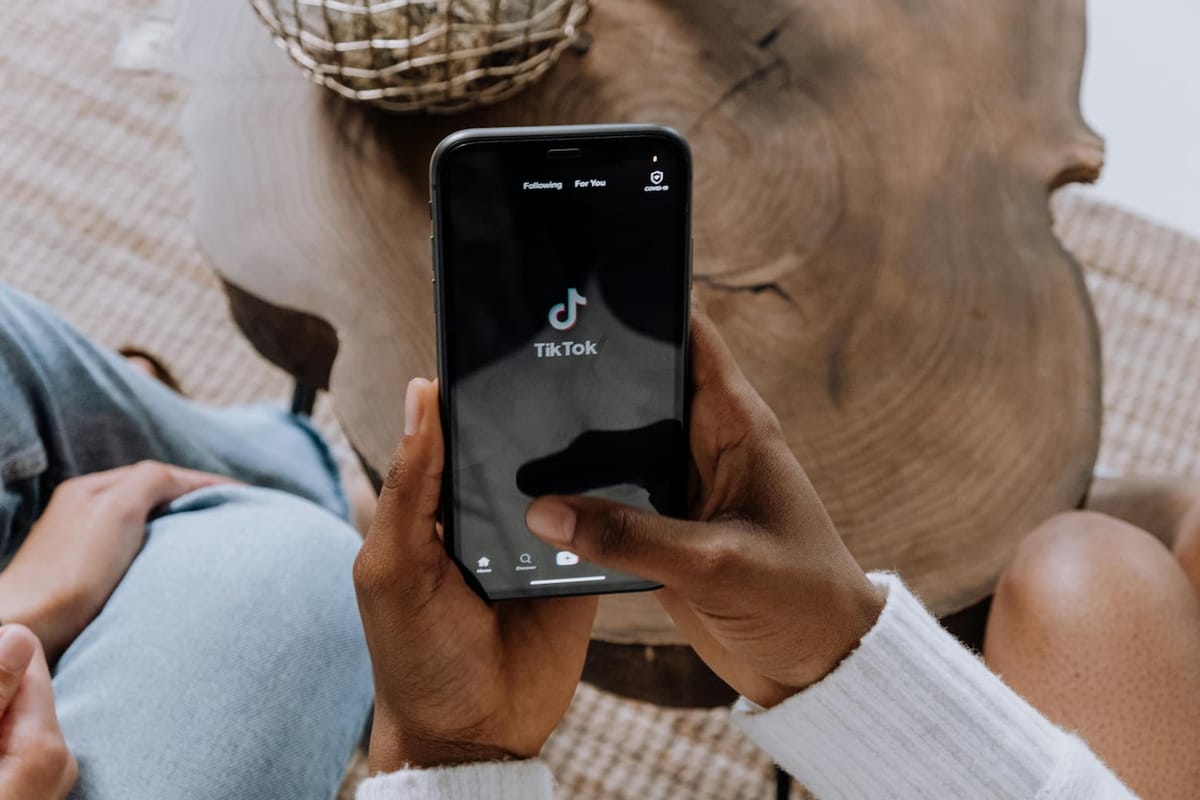
Yesterday, TikTok users reported that they were no longer able to use the trans flag emoji when writing on TikTok. In its place, users were only able to post the white flag and a trans symbol, which far fewer people recognize.
Sympathetic interpretations have said that this could be an error where the trans flag emoji, which is made by combining the white flag and the trans symbol, is unable to be merged together. However, that would not explain why this error has not appeared with other emojis.
Given that the American version of TikTok is set to be owned and controlled by a coalition of Trump-aligned oligarchs, the inability of users to post the trans flag, the primary marker of a people who the trump administration views as one of its primary enemies, is almost certainly a deliberate choice. If it was an accident, it probably would have been fixed by now.
Many other websites have made a habit of censoring trans content and users or coming down harder on trans users than they would on cis people for similar infractions. This is most well known with Twitter, but has also been a feature of websites like Tumblr and Bluesky, where moderators have arbitrarily banned trans accounts over personal grievances.
TikTok is no stranger to censorship. Many of the new phrases popular among its users were created and popularized to speak about serious issues without having their videos hidden by the algorithm, such as ‘unalive’ to refer to death, ‘corn’ as a euphemism for porn, etc.
Online spaces where queer people (and transsexuals in particular) can speak freely about their lives without the interference of outside forces are getting more and more rare. As fascism grows, the corporations that own most of the platforms we use to speak to one another online become eager to censor the voices of the regime’s enemies in exchange for favors or to appear loyal.
To the corporations, we are nothing but data points and income streams that can be exchanged as part of a deal. To many of the trans users who rely on these platforms for their only understanding community, losing access to said platforms means losing access to their whole social world.
This is the tragedy of a life lived online. It allows us to connect with people whom we would never be able to meet otherwise, but leaves us at the mercy of whoever controls the platforms we use. We are free to connect to the whole world, but only on the terms set by the platform.
This is the key difference between in-person communication and online communication. In person, we are free to communicate with each other directly, with no formal limits on how we can talk to one another. Online, all communication is mediated by the censorship imposed on us by platforms and the unelected corporations that control them.
When our messages can only be delivered on a given platform, the platform itself becomes the message, and anything we say gets filtered through the demands of the platform. We are molded by the medium we use to speak.
Given that much of social media is made up of a handful of US-based corporate-owned platforms, we can expect more censorship in the future.
The internet will only be a place of free mass communication if the means of communicating aren’t co-opted by fascism.
The best solution to this are platforms that are user-owned and operated. Mastodon and Atproto are promising examples of this, with interconnected networks that are (mostly) controlled by small groups of users.
One notable success is Blacksky, a black-run Atproto server that uses similar infrastructure to Bluesky, but is not dependent on the much larger Bluesky network, meaning that it cannot be forced to censor by corporate control
Another promising project is Northsky, another Atproto project which is trans owned and operated, that seeks to give users a place to go when Bluesky becomes too hostile to trans users. I should be clear that I have friends involved in this project, and have a vested interest in seeing it succeed.
As corporate platforms grow hostile to us, the need for mass communication free of censorship grows greater. This will not be provided for you; you have to Do It Yourself.
💡
💉Take Your Shot 💉
If you want an internet free of corporate interference, consider getting involved with projects like Northsky or Blacksky. Northsky is currently looking for beta testers and funding to get it started. You can sign up here.
If you want an internet free of corporate interference, consider getting involved with projects like Northsky or Blacksky. Northsky is currently looking for beta testers and funding to get it started. You can sign up here.
Members Discussion