
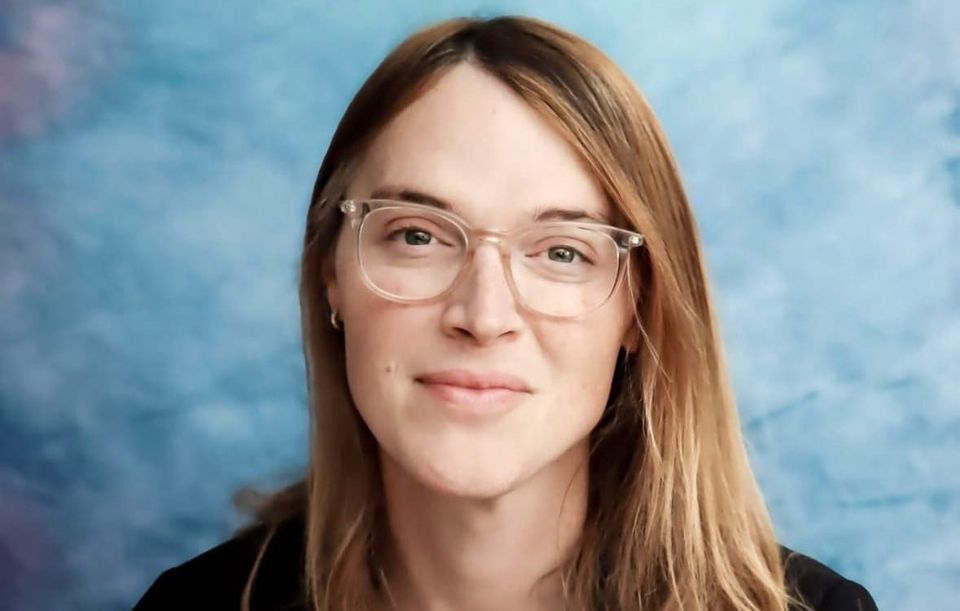
Last year, The Needle ran a series on trans politicians for office, giving sit down interviews for each of them. Joanna Whaley, running for Michigan State House, is the only one of the group who made it through the primary election. We caught back up with her to discuss her primary election victory, what has happened in the last year, and her plans for the future.
Jane Migliara Brigham: Wanna start by introducing yourself?
Joanna Whaley: Sure. I'm Joanna Whaley. I’m running for the Michigan House of Representatives to represent the Downriver area, which is south of Detroit, Michigan.
I've got a wild journey into politics. Before coming out as a trans woman, I was an evangelical pastor for 20 years and went through 15 years of conversion therapy. And in that process, I found my way out of the closet, but as a result, I was fired from my job for coming out as trans. You can imagine, that was pretty wild being a mega church pastor and coming out. Then I started doing LGBTQ rights advocacy within religious spaces, which eventually led me into politics.
For more on her background, you can read the interview The Needle did with her last year, which goes more into detail on this.
 Jane Migliara Brigham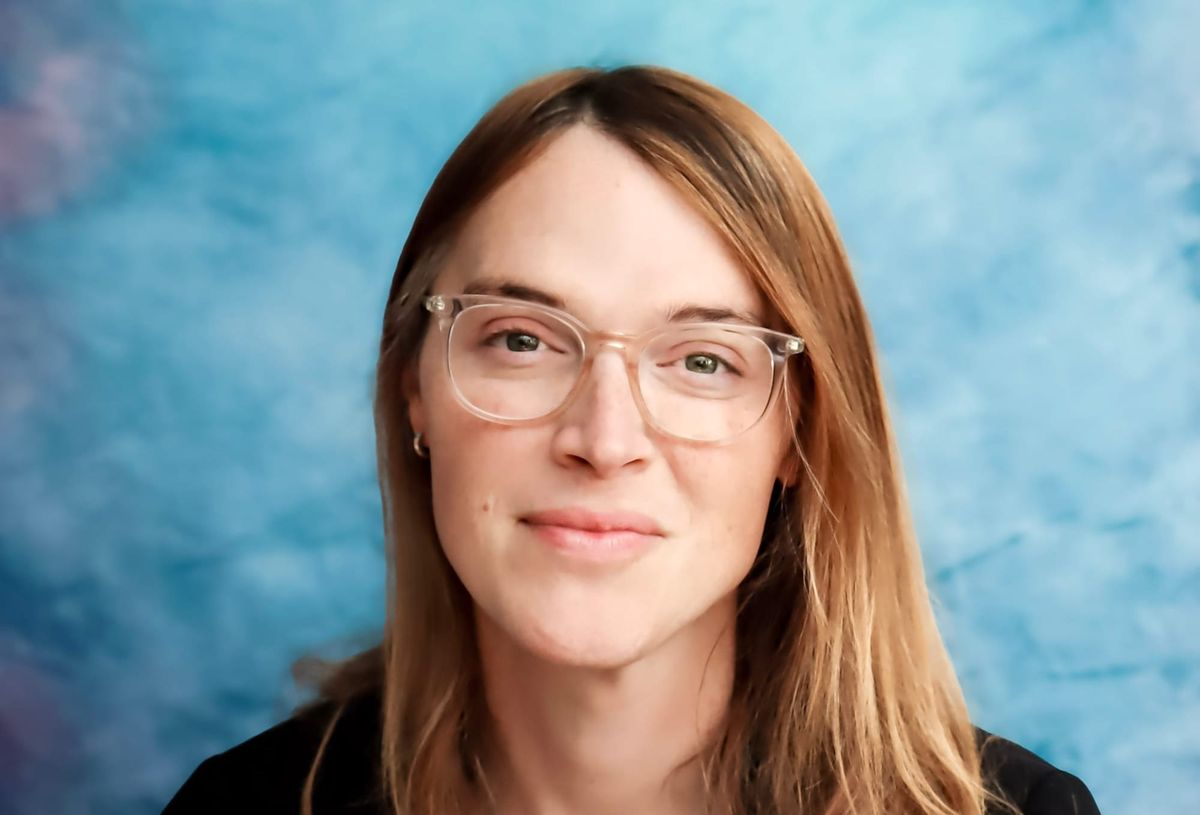
Jane Migliara Brigham: What’s happened since the interview we did last year?
Joanna Whaley: Quite a lot. Back then, we were just in the beginning of our campaign, and now we’ve won the Democratic Primary. We've been running hard ever since, staying on our message, and dealing with hateful threats. We've secured over 70 endorsements at this point, the most notable one being Congresswoman Sarah McBride. She has been a voice and friend in this process, helping to guide and navigate me through some of the more unique aspects of being a trans woman running for office.
Hopefully we can make state history in November by electing the first trans woman to state office. We did make history in August when we won the primary. So we're gonna keep pushing hard to move our state forward.
Jane Migliara Brigham: A few months ago there was a big news story about how your opponent was trying to remove you from the ballot because of your name change. Can you go into that?
Joanna Whaley: Yeah, absolutely. I was on an early morning call with my staff one day, and got an email from the county clerk that my name was being challenged on the ballot. I was expecting this to be coming from the Republican side of the ticket, but it was coming from my Democratic primary challenger. He wanted my dead name to appear on the ballot. He had previously been the State Representative, and is a very big, well-known name in our community.
Honestly, it royally backfired. We tripled our cash on hand within a week. The ACLU got involved. We had an army of lawyers that proved that my name was changed legally, and that my name, Joanna, would reappear on the ballot. That really caused a lot of stir and controversy here in the Democratic Party, and in our community as well. But we made a decisive decision on August 4th, that that's not the type of politics we want moving forward. We want politics that isn't petty.
Jane Migliara Brigham: So why did he want to do this? Pure pettiness?
Joanna Whaley: I can't speak for why he wanted to do this. I do know that this is an old school trick that politicians tried in the past; but what we're looking at right now, especially in politics right now in America, is people are done with old school petty politics. They are ready for leaders, and they're ready for people who are serious, who aren't going to try to win on technicalities but win on their platforms.
Jane Migliara Brigham: I want to segue into that. Michigan saw a number of left-wing Democrats defeat their more centrist opponents. The most prominent example of this was Abdul El-Sayed. Do you see yourself as part of this wave?
Joanna Whaley: Oh absolutely. We had a three-way primary, and I was definitely the most progressive of the three. The two men I was running against were middle of the road candidates when it came to policy. Democrats are becoming less and less inspired by that type of politics. We are not inspired by incrementalism. We need leaders who are willing to step up and be bold and fight for bold change now, because we're heading towards a cliff, and we need leaders who are going to steer us away from the mess.
Jane Migliara Brigham: And speaking of change, what material gains do you think you can provide for trans people in your term?
Joanna Whaley: The thing about our campaign is that I'm not running on any specific trans policy. I'm not gonna make any big sweeping promises to the trans community, other than that there's someone from your community in the halls of government that will have their eye on things, and will be able to uh step up and defend us when dehumanizing policy comes across the House floor. We're finally going to have a representative in our seat that gives a damn about trans people, because we have not had a state representative, even in the Democratic Party, that has cared for trans folks.
I will be working with partners across the state that work for LGBTQ rights that work for trans rights. I'll invite them into my office and ask what I can help with the most.
I hope to, if anything, help other trans folks see that they have a path to leadership if they feel called into that.
Jane Migliara Brigham: But do you have a specific goal in mind for this, either in policy or in public opinion?
Joanna Whaley: …There's a lot of hot button issues that are going through our federal government and all of that. But we've got to make sure that we protect trans health care here in the state.
I do think we need to expand some of the restrictions on conversion therapy in the state. There are some major loopholes that are putting a lot of people at risk. So these are some of the more specific policies.
When it comes to trans health care, I want to expand and protect it here in the state, especially from federal interference.
Jane Migliara Brigham: When you say you want to expand trans healthcare, do you have specific policies in mind for that?
Joanna Whaley: Yeah, well, I'm fighting for what's called MiCare, which is a single payer health care proposal here in Michigan. It would be Medicare for All at the state level. If we can't get the federal government to act, then we have to do something in the state. MiCare would fully cover trans health care, from hormone replacement therapy to gender reassignment surgery. The government should not get between doctors and their patients. We need to trust patients, and we need to trust families when they're making these decisions with their doctors. Moving towards a single payer health care program here in Michigan would protect health care for trans folks across the state.
We would also work with our state Attorney General to make sure that our university hospital systems are complying with state law and providing care.
We have healthcare systems in the state preemptively bend their knee to Trump to end gender affirming care for certain demographics and ages, so we've got to make sure that our healthcare systems are adhering to state law.
Jane Migliara Brigham: Say that you could fully rework the trans healthcare system from scratch; no state interference, no federal interference. You can design anything you want for this trans healthcare system. What would it look like? What policies would that entail?
Joanna Whaley: It entails getting the government and getting health care insurance companies out of the exam room. If a kid or an adult is showing up and talking to a doctor about their dysphoria, um, we need to allow the doctors to follow the patient's needs without restrictions. If I'm getting everything I want, I want single payer health care. At the end of the day, we need to trust families and patients and their doctors with their decisions, and get politicians and executives out of the exam room. That would be my dream.
Jane Migliara Brigham: I want to drill down on the issue of trusting families with medical decisions. A lot of rhetoric around the rights of trans youth centers on the right of supportive families to choose what is best for their children. However, this ignores the cases of unsupportive families, where the interference to the rights of the trans child is coming from the parents themselves. What is to be done in these cases?
This is a common issue. I've only ever heard politicians allude to this problem, but I've never heard a single politician address it directly. I'm gonna pose it to you right now.
This is the scenario: Imagine a trans kid in an unsupportive family. They are under 18. The parents are firmly against letting the child medically transition. That kid goes to a health care professional and says ‘I want hormones’. Does that child have a moral right to hormone replacement therapy?
Joanna Whaley: This is the sticky one, right? This is one of the reasons that a lot of folks are trying to bring these topics up, right? It's about parents' rights. You're gonna hear about that all the time. But there are a lot of healthcare decisions that parents have the right to refuse.
But let's say we have a young kid who's struggling with dysphoria, looking to transition, and the parents are saying no. If this patient's health continues to decline, there are things that can be done. If let's say a kid walks into a hospital with a debilitating illness, and if parents continually refuse treatment to the detriment of their child, there are options to compel parents into certain actions. At the end of the day, we do have to protect a patient's rights and a family's rights.
I do think that we have to think about what it means if a child is asking for care and a parent is refusing. There are options within healthcare, and we need to make sure we expand those.
Jane Migliara Brigham: Can you detail what the options would be for a child in that circumstance?
Joanna Whaley: Well, let's say we take away gender dysphoria, and insert a different medical thing there, like diabetes, right? If I as the parent continually refuse to give my kid insulin, and my kid continually shows up sick, or my kid shows up at a psych department struggling over and over again, then I do think that that is when Child Protective Services should be involved in these decisions. Courts do in these instances compel families to give medical care. And so I think that if we end up in spaces like that, it's a problem.
Editor's Note: The Needle is not aware of a single instance in which a court in the United States, or in any other country, has legally ordered a parent to give cross-sex hormones to their child when the parent is opposed to this.
My heart breaks for kids from families that aren't accepting. I know many of them. But we need to make sure that we're protecting a kid's right and a parent's right, just like we would with any other healthcare situation.
Jane Migliara Brigham: So you're saying that if the child and the parents disagree on if the child should be allowed to medically transition, the proper way to deal with that is to go through Child Protective Services or the courts? Wouldn't it be much simpler to just give the kid the hormones?
Joanna Whaley: No. I don't think that we should be prescribing things without a parent's knowledge. I do think that it’s just like any other healthcare situation. We're not going to be just giving a kid insulin, right? Or giving a kid a medication in a hospital that a parent has refused. But if doctors are saying this is medically necessary, which they are, and a parent is repeatedly refusing the care, then there are options, and I will leave it at that. That is something we need to make sure that we're expanding and protecting.
Jane Migliara Brigham: Moving on. You've spoken a lot about how your evangelical background has affected you, and how this makes you a better communicator. We spoke on this at length in our first interview. In what ways do you think this makes you different from a typical Democratic Party candidate?
Joanna Whaley: It's a great question. First of all, I speak fluent Republican. I think that that's unique. Coming from these backgrounds, I know there's a lot of dog whistles that might seem innocent, or fly under the radar, but I see things coming a thousand miles away. Right now, especially at this moment, we have a major issue with Christian nationalism in our state.
A lot of people ask me, “What is the biggest threat to our government?” I do believe that poor Christian theology is one of the biggest threats that's driving policy. What makes me unique in this space is that I can step into these Christian arguments that many on the other side of the aisle will try to bring in. And I can bring seminary training as a trans woman. I don't think Republicans are ready for that.
Republicans have claimed to own Christianity for a really long time, ever since Jerry Falwell and the Reagan era. Well, I think that it is time to reclaim that, and to show that that narrative doesn't stand up anymore. Because I think people are waking up to the cruelty of many Republican policies, and are not seeing the Christian faith in them anymore.
Jane Migliara Brigham: Do you believe that this skill set is useful in pulling in voters who would otherwise support the Republican Party?
Joanna Whaley: Yeah, we've had many. I've had many folks who are double or triple Trump voters who are fully supporting our campaign and have voted for me in the primary, and are looking forward to voting in the general [election]. I've had many of those conversations.
And I do think that my work as a current clergy member is helpful for folks, because there's a lot of narratives that come from the right wing that say Democrats are godless, and I think that it's helpful for folks to see that their Democratic nominee is a clergy member. I do think that that's comforting to folks.
Jane Migliara Brigham: Your messaging often stresses a desire to find common ground with people who are politically conservative in an era where those very people are typically violently opposed to the very existence of trans people like yourself. Why do you make such an effort?
Joanna Whaley: Because I refuse to give up on my country. I refuse to give up on my neighbors. I was once someone who was fully bought into the evangelical Christian narrative. And if it wasn't for people who welcomed me, I wouldn't be doing this now.
You're right. There are folks that are violent towards our community. My number three campaign expense is armed security, because I get multiple threats a day.
She later said that she was unaware of any candidates for state house who are paying for armed security, and that she was likely the only one who needed it.
I'm not going to convince those folks who are violent and who are continually demeaning and dehumanizing me, but there are a lot of folks out there who just haven't ever met a trans person. They've only heard about them on TV. And so when they run into me and they hear me talking about issues that matter to them, it begins to lower the fear factor of who we are. And I think that that's important. So you know, stepping into a role like this, stepping into a role in politics, I have to be able to represent everyone.
Jane Migliara Brigham: Seeing as you're running in a safe blue seat, in a year that looks ready to have a blue wave, are you confident in your ability to win the general election?
Joanna Whaley: I do believe we're going to win this general election, but we're not going to take it for granted. The Michigan Democratic Party feels good about it, but we are not going to take it easy. With Republicans' obsession with trans people right now, we can't take our eye off the ball. We've got to fight hard.
Jane Migliara Brigham: Do you have any parting words?
Joanna Whaley: I know that your readership is primarily the trans community, and that we're living in a time where our community is struggling, and that this government often seeks to erase us. But that's all the more reason that we need to be in government. I'm not gonna be the perfect representative, but I'm gonna do my absolute best to represent and protect us in the state house.
Jane Migliara Brigham: And if people want to learn more about you, where should they go?
Joanna Whaley: They can go to any of my social media channels, and they can find me at Joannawhaley.com.
Jane Migliara Brigham: Thank you for sitting down for another interview.
Joanna Whaley: Of course, good to talk to you.