

The name of the person being interviewed has been changed to preserve her privacy. Multiple witnesses were interviewed to corroborate her account. Several pieces of information in this story have been redacted to protect her privacy, including the countries where these events take place.
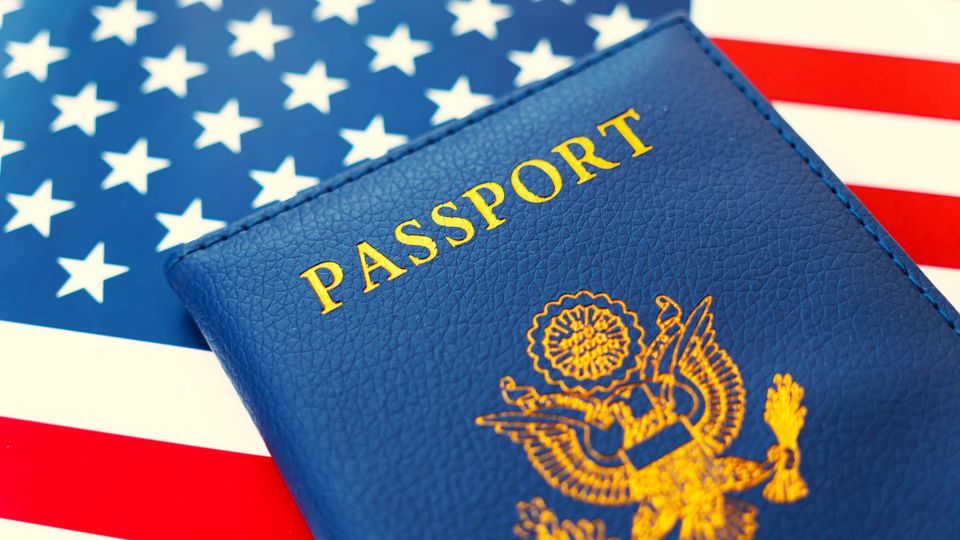
In May, Kathleen was forced to leave the country she had hoped would offer her refuge. She went to the airport, the same one she flew in from. Kathleen approached the counter, with a feeling of relief. She handed her American passport to the border guard, the same passport she had used to enter the country.
It was invalid.
It didn’t expire for another two years, and had no visible damage or significant wear. Still, the border agent kept tapping the passport, attempting to force the machine to accept it.
After leaving to speak with her supervisor for what felt like hours, the agent returned visibly flustered, with a confused and concerned look on her face. She explained that Kathleen‘s passport was no longer valid. She was told she “needed a new passport. The chip is no longer working”. The nervous but kind border guard explained to Kathleen that she would only be let through because she had a legal document issued by the government's migration agency, stating that Kathleen must vacate the country on that day. The guard nervously fidgeted with Kathleen’s passport, noticeably shaken.
She wouldn’t (or perhaps couldn’t) explain what was going on.
None of this was normal. Everyone else at border security got asked basic questions about their travel plans before being let through. She knew then and there that something was off. Kathleen, whose name was changed to protect her privacy, initially thought this was a cruel joke, thinking to herself, “[h]oly shit if I go to the U.S. embassy I might be issued an emergency passport with the gender marker ‘M’ on it, [despite having] a vagina”.
As her flight ascended, she couldn't think of much else.
After two layovers, she reached a new country, hoping this was an accident. She reached border security and he scanned her passport; and the same error occurred. The border police gives the same news: “your passport is no longer valid; you need a new one”. No reason given.
For cis people, all of this can be fixed with a call to the local embassy and payment for a new passport.
Kathleen couldn’t do that.
Kathleen is a trans woman, so even if she was issued a new passport, it would have stated her sex as ‘M’, thus outing her as trans, forcefully disclosing her private medical history, and subjecting her to increased risk for violence, discrimination, and harassment.
She had been in Country 1, a Scandinavian country, as an asylum seeker, having applied for protection from the very country which revoked her passport. When Country 1 rejected her case, she was given a deadline to leave the country voluntarily within three weeks. After exhausting all legal recourse, she did so. If she hadn't, she would have been deported to the U.S. and banned from the Schengen Zone entirely.
Although her passport being invalidated was overlooked while exiting Country 1, no foreign country would knowingly let her enter with an invalidated passport. Not even Country 2, whose airport she was now in. Returning to the U.S. was also out of the question, as she had spent the last year seeking protection from the U.S. government. She knew her life would be in mortal danger if she returned, not just from a bigoted government, but from a years long campaign against her by neo-nazis, spread across three time zones and two continents.
She was in a Catch-22. Unable to enter Country 2, and also unable to leave it, she was trapped in the airport. There was only one way to leave; Kathleen went to the border police and requested asylum.
How does a U.S. citizen have her passport revoked with no warning? And why does a U.S. citizen need political protection from her own government in the first place?
Portland
Kathleen's troubles began in Portland, Oregon in 2018. The Pacific Northwest is known far and wide for two things: its militant anti-fascist organizing, and its neo-nazi communes. Portland is unique because it is one of the few places in the United States where large groups of explicitly anti-fascist collectives and fascist associations live in close quarters with one another, and where both were organized enough to surveil, undermine, and oppose the other. The city was also a testing ground for unprecedented, unconstitutional, and illegal actions to suppress dissent during the 2020 protests. The result was a city that saw some of the worst violence in the country during this time.
Portland was marked by doxxing campaigns of anti-fascist activists by organizations such as Canary Mission, as well as various neo-nazi forums.
In Portland, white supremacists and neo-nazis spread racially divisive and fascistic rhetoric and propaganda. This was likely the intention of the posters that were displayed across Kathleen's university campus, which included phrases such as "White Lives Matter" and “Being White is OK”.
This functioned as both intimidation and provocation. Messages like this aren't just meant to provoke, they foster an environment where racism (and often transphobia) are normalized. This is a crucial component of stochastic terrorism, often disguised as an 'edgy joke'. This can be as simple as "one or more demonising, dehumanising or denigrating statements or utterances... [which] take place in a climate of hostility and exclusion, but do not explicitly call for hatred or violence... [and] may even explicitly distance themself from the use of violence and refer to humour or claim that it was meant metaphorically."
Kathleen, then a student in Portland, saw this as the provocation it was, and felt personally threatened. As a racialized trans woman, she knew that whoever put them there would be a threat to her and to others, and wanted to protect herself and others. Removing the posters was easier said than done. Kathleen knew a number of anti-fascist activists who had warned her that "under no circumstances" should she attempt to remove them herself.
The first issue was her personal safety. Far-right posters, including those in Portland, often have razor blades behind them, meaning that removing them inappropriately is dangerous. The other issue was her security. If she was seen removing far-right posters, she might become the target of the far-right herself.
Refusing to back down, she went to the people who dealt with far-right neo-nazis all the time: Rose City Antifa. She took photographs and provided specific locations via PGP encrypted email. A short 3 days later, they were removed.
Two years later, the Black Lives Matter protests broke out. These were initially sparked by the murder of George Floyd. Kathleen witnessed the city devolve into an active conflict zone, which lasted the entirety of the summer. The "radical left" protesters and their political ideologies were cited by then (and current) president Donald Trump as warranting the brutal and inordinate actions taken by federal government authorities. Federal troops and agents were not only deployed, but they also utilized chemical weapons known to be carcinogenic.
This wasn't just tear gas, itself a war crime if deployed on foreign soil, but much worse.
Those deployments of chemical weapons were deemed illegal by numerous scholars, and heinous by the following administration, resulting in several lawsuits against the Department of Homeland Security for their actions in Portland that year.
Kathleen lived mere blocks from the Portland ICE Facility, in the Southwest Waterfront District. Many nights she couldn’t sleep. She heard the sounds of screams, hexachloroethane grenades, LRADs, and helicopters, that seemed to come from right outside her apartment. Anti-fascist protesters were attacked, maimed, and taken into unmarked black vans by federal troops and agents.
She would often host her cousin Lucas overnight after he had covered the massive protests near her apartment. Lucas told The Needle he often alerted Kathleen when the far-right militia Patriot Prayer was in her neighborhood, and told her to stay inside for her own safety.
He was a journalist at the time, but left the profession for his safety after he was doxxed and received death threats.
Kathleen's cousin Lucas is a Marxist and vocal proponent of anti-imperialism and feminism, whom she has known since childhood.
Whereas protests in many American cities petered out in the weeks following the murder, some cities such as Minneapolis and Portland and even Salt Lake City were still holding near-daily protests almost a year later. To this day, the underlying tensions haven't dissipated; they've just left the streets and found their way into the White House.
At the same time, many of her close friends and family members were being identified, doxxed, threatened, and having their livelihoods ruined.
It was an especially sunny day, a rarity for Portland. Kathleen was sitting in the Portland Rose Garden with her friend Lena, who is both Jewish and anti-Zionist. Lena taught Kathleen about the Haavara Agreement and The Nakba. A few weeks later, Lena sent Kathleen a link to a website called Canary Mission. When Kathleen glanced at her phone, she saw Lena’s face accompanied by a caption describing her as demonizing Israel and Zionism.
A search through their public database shows 49 profiles related to the Portland area, many of which have ties to the specific university where Kathleen was studying.
These events would deeply inform her political worldview.
Around this time, Kathleen learned that trans women were murdered en masse in Dachau and Auschwitz. She learns about Liddy Bacroff, and how trans women were systemically erased from all areas of public life within Nazi Germany.
This is the increasing consensus among historians. Laurie Marhoefer, a historian of queer politics in 20th century Germany, who is currently writing a book on the persecution of trans people in the Holocaust, and whose expertise has been used in legal cases within both the United States and Germany, argues that “[t]he Nazi state reserved its worst violence for trans women.”
Later that year, this violence was targeted towards Kathleen in her apartment's laundry room.
She was moving her wet clothes into the dryer, a vented tumble dryer. This means that air is circulated via various holes in the dryer barrel. With clothes in hand, she opened the dryer door, and was shocked at what she saw. Dozens of used heroin needles had been crammed into the barrel of the dryer, needle side up, wedged into the air holes of the barrel, caked with dried blood, mud, and viscera.
The dryer had been turned into a improvised trap.
Seeing as Portland had a longstanding heroin epidemic, and the nearby Pearl District "was littered with used heroin needles”, these were likely some of the many heroin needles littered throughout much of urban Portland, and placed in the exact dryer she was about to use.
Kathleen is relieved at once, that firstly, she noticed this prior to placing her hands in the dryer. Conversely, she is deeply disturbed. Kathleen was left wondering "who would do this?" and "why?"
Distraught, she took a picture of the dryer and texted it to her landlord. The landlord called the police, who questioned Kathleen. No one was apprehended, nor identified, and the case was closed.
Rose City Antifa, the oldest anti-fascist organization still operating within the U.S., had proven to be one of the primary sources of solidarity and support for marginalized folks like Kathleen in the Portland metro area.
Rose City Antifa is now classified as a Domestic Terrorist Organization by the U.S. government.
Start subscribing to The Needle as a Gold tier supporter, at $15 a month.
Scandinavia
In 2022, Kathleen moved to Scandinavia to pursue a master’s degree. She assumed she was safe, and that this would be the end of her troubles.
A few weeks after arriving, she went on a date with a man named Erik. Erik, whose real identity is known to The Needle, is a supporter of the country's far-right political party, and has an extensive history of sexual predation towards women, most of them trans women and underage trans girls.
The Needle confirmed his extensive work experience as a data center engineer for several large tech companies, meaning he would have access to sensitive personal data.
Kathleen didn’t know any of this at the time.
The night prior to meeting with Erik, Kathleen had a sinking feeling in the pit of her stomach. Something was off.
She couldn’t quite put her finger on it. She called Maja, a trans woman she‘d recently befriended. As a law student, she had access to a background check tool and offered to look him up. The report showed that Erik's residence was registered to a church.
Maja would prove to be a lifeline throughout the events that followed.
On one date, he had made an odd comment during the date which Kathleen couldn’t make sense of, telling her “Oooh you’re a Sami”. She called her new friend Maja to figure out what that meant. Maja gave her a short rundown of the historical eugenics policies and genocide the Sami were subjected to.
Being racialized wasn't especially shocking to Kathleen. She’d encountered racism in the past, belonging to an indigenous ethnic minority whose language, culture, and land rights are critically endangered like the Sami.
After one date with Erik, Kathleen woke up in her apartment with no memory of the previous night. She could barely get out of bed. She felt weak and dazed. She had been drugged and raped. She had bruises all over her body.
Kathleen doesn’t drink alcohol.
She was scared, and told herself that nothing happened. Four days later, she caved, and called her trusted friend Maja, who advised her to file a police report. She did, then blocked him. The police did nothing.
The events that followed mirrored what took place in Portland. Same tactics, same outcomes.
Late one night, Kathleen hears violent banging on her door. Sneaking a look through her apartments peephole, she sees three men standing outside. The next morning, she walks down the same stairwell she always walks down. There she saw three beer cans, in a curious nook perpendicular to the stairwell where she's never seen beer cans before.
All the cans were neatly lined up, faced so that the brand labels were readable to Kathleen, as if on a shelf. One can was from the Scandinavian beer brand "Ey’Bro". Leaving this outside the apartment of a visibly foreign trans woman speaks for itself.
One day, Kathleen leaves her apartment, and sees a man standing outside the corner near her apartment. In the nearby supermarket, she looks up from a shelf, and sees that same man facing her way and staring at her intensely, as he intently types into his phone, furtively glancing up, making no attempt to hide himself.
Months later, Kathleen was exiting her apartment. She glanced up and saw a meter-wide swastika, carved into the wall of her apartment lobby, high enough that a ladder would be required to reach it. Multiple witnesses saw it, including Maja. A police report was filed, but nothing ever came of it.
Maja was there at the time, and corroborated the story with The Needle.
There is no reason to believe her stalking and harassment in Scandinavia is unrelated to her experience in the United States. The militant far-right is not only incredibly organized, they also coordinate internationally. Scandinavia in particular is a hotbed of neo-nazi organizing, with numerous links to aligned groups in the United States and internationally.
Kathleen was unsettled, in a state of constant hyper vigilance, never feeling she could let her guard down. She found it increasingly difficult to focus on her masters program, the very thing that got her out of the U.S..
This threat, as well as the failure of the police to act, led Kathleen to seek out help elsewhere, a decision borne of genuine fear for her life. She contacted her area's local chapter of anti-fascist activists, the AFA. After some back and forth via encrypted email, they promised to protect her where the authorities would not. At night, they kept an eye on her apartment, ready to step in if needed.
At times, members would protect her while out and about running errands, acting as bodyguards. The harassment in Scandinavia ceased entirely.
The group that helped Kathleen is classified as a subsidiary of 'Antifa' by the current administration. 'Antifa' branches within the U.S. would later be declared Domestic Terrorist Organizations by the U.S. government in September 2025. Last November, four European groups which are ideologically aligned with the Scandinavian AFA were declared to be Foreign Terrorist Organizations (FTOs).
Association with organizations deemed to be 'Antifa' can now forcefully render you a suspected terrorist, even if you later cut ties with them.
U.S.
Over a year later, Kathleen is back in the states after finishing her masters, living in her home state. One day, she goes to fetch a load of laundry from the dryer. She starts folding her clothing, and out drops a black balaclava, which she has never seen. Upon inspection, she sees it is made in the UK. A balaclava in a place as hot and humid as it was that time of year is certainly suspicious. This was nowhere near any place where such clothing would be appropriate to the climate. Worse, both the dryer and washer are directly outside of her apartment door, meaning anyone could have accessed it.
Later, as she was falling asleep, she hears three distinct voices from outside her room’s window, one with a distinct accent. They threatened to rape, murder, and cannibalize her.
At this point, the idea that all this was coordinated seemed absurd to her. Kathleen goes to a psychiatrist, saying “What's wrong with me? Is this a psychiatric disorder? I don’t know what’s going on, why is all of this stuff happening to me?” After checking for symptoms, she was diagnosed with “Complex PTSD”.
She wasn't seeing things that weren’t there; she was experiencing the natural consequences of sustained harassment and threats, derived from the very things she’d seen and experienced. She was prescribed a medication regularly used to treat severe PTSD symptoms in military veterans returning from active war zones.
In late 2024, in the lead up to Trump's re-election, the same people got bolder. She remembers hearing those same men begin stalking around her apartment at night. Her aunt heard them as well.
As 2025 went on, and the conditions for trans people deteriorated, Kathleen realized how much danger she was in. The stalking hadn't stopped, and being a trans woman of color, she had no reason to believe that authorities would take the threats against her seriously. She feared for her life.
Applying for Asylum
On the advice of both Maja, and a close American trans woman friend who was residing in Europe, Kathleen was encouraged to “give it a try”. She applied for international protection (a.k.a. asylum) in Scandinavia, arriving in August 2025. Her passport chip was scanned while leaving the U.S., and when arriving in Scandinavia. It worked both times without issue.
Three months later, multiple European 'Antifa' groups were declared FTOs, meaning her past association with 'Antifa' more broadly could now be weaponized against her by the U.S. Government.
Crucially, this means the United States government is authorized to revoke her passport if it deems that her “activities abroad are causing or are likely to cause serious damage to the national security or the foreign policy of the United States.” Perhaps even more vaguely, this can be done if she is determined to be “spreading critical messages through networks of international allies.”
When she next went to use her passport in May 2026, it no longer worked.
Thanks for reading! Consider joining The Needle as a Platinum tier supporter, at $24 a month.
Passport Policy
Kathleen is not the first transgender American to have her passport revoked. Danni Askini transitioned as a minor, an advocate and activist within the non-profit sphere for trans rights. She was subjected to death threats as well as threats of sexual violence by neo-nazis. She is multi-racial and indigenous. After having had her initial passport revoked while still residing in the states, she lobbied her House Representative and received a temporary passport, allowing her to flee the U.S.. Askini was successfully granted refugee status, before returning to the U.S. after Trump left office. Askini never received a clear explanation from the U.S. government as to why her passport was revoked.
Another case from the same year is that of Janus Rose, a trans woman and journalist at VICE, who was denied a passport renewal because she did not share “adequate” evidence of her medical transition. The U.S. State Department had no policy requiring this at that time.
Neither responded for comment.
Officials within the Trump Administration, and their Republican allies, have also put forward proposals that would overtly legalize the kinds of unusual cases detailed in this article. No longer the exception, this practice would become the norm.
Shortly after the Supreme Court approved a ban on issuing correct passports for trans people, the State Department website changed its answer to the question “Is my passport still valid if I have an X marker on it, or if it lists a sex other than my sex at birth?” The answer then read “[a] passport is valid for travel… until we invalidate it under federal regulations.” This wording was redacted shortly after. However, the relevant statutes are still on the books, and the statement is still true as of writing. The fact that the wording was changed mere days after a major Supreme Court ruling regarding trans people's passports is alarming.
Republicans in the House have been pushing a bill that would allow the Secretary of State to revoke the passports of any U.S. citizen who “has knowingly aided, assisted, abetted, or otherwise provided material support to an organization the Secretary has designated as a foreign terrorist organization.” While this sounds like it is narrowly targeted, the phrase ‘provide material support’ has been used by the U.S. government to prosecute people who are simply communicating with or giving advice to a designated terrorist group, foreign or domestic.
If this bill were to be passed, the State Department would possess unprecedented legal authority to revoke passports, virtually at-will, on arbitrary political grounds.
Much of the recent U.S. federal policy, legislation, and newly outlined national security procedures regarding the "radical far-left" and trans people are not only voluminous but exceedingly vague. That's the point.
This sweeping terrorist designation is primarily driven by the 'Antifa' commitment to an ideologically anti-fascist mission and a willingness to engage in revolutionary resistance, entailing a willingness to desecrate private property for a political cause, engage in active physical confrontations with neo-nazis, and provide on-the-ground mutual aid for persecuted minorities.
The far-right's focus on 'Antifa' dates back to its founding in 1932, during the fall of the First German Republic, and the subsequent rise of Hitler. At the time, Antifaschistische Aktion (AFA), was a militant resistance group founded by the German Communist Party (KPD) in Berlin to oppose Nazi street violence. This group is considered the predecessor of contemporary 'Antifa'. Since its founding, the group, and those deemed its 'fellow travelers', have been the frequent subject of far-right conspiracies.
Unsurprisingly, the far-right uses 'Antifa' as a catch-all term for people who resist fascism. They are often framed as a vague, ever-present “enemy from within”, a phrase utilized by Hitler and Trump alike. The sheer absurdity of this framing cannot be overstated.
Their framing, and the self-induced hysteria it has created, have in turn fundamentally altered how the State Department sees left-wing groups writ large.
It has already designated 'Antifa' as a domestic terrorist group, has issued national security guidance to expand the designation to similar groups, and has floated implementing a similar policy to foreign groups under this label. They have recently designated four separate European 'Antifa' groups as FTOs. The most prominent of them, the Berlin based Antifa Ost, was designated as a foreign terrorist group, despite the local government opposing the designation.
On July 16th, the U.S. government issued broad visa restrictions on foreign persons who exhibit what it deems to be "far-left" political ideologies.
The administration also argues that all these groups are part of a nefarious international conspiracy. In reality, these groups have no central command structure, and there is minimal organization between them. For the U.S. Government to call all these groups branches of a global 'Antifa' coalition is fabricating conspiracies that do not exist.
This is all historically precedented. During the Red Scare, the U.S. government wielded wide-ranging powers to revoke the passports of American citizens.
It used this power to suppress the travel rights of dissidents, namely socialists and communists, stating that it was in the public interest to stop travel for people whose activities were deemed “not in the best interests of the United States.” Sam Lebovic, History Professor at George Mason University, asserts that U.S. citizens' passports are a crucial mechanism of control by the U.S. State, stating that passport revocations were mainly targeted at "those Americans traveling internationally as part of anti-statist, or “un-American,” international projects: international communism, international science, pacifism, and international racial solidarity.”.
Drawing on historical examples, Lebovic explains that during this time, one person; “was denied a passport because he had been engaged in “active anti-American propaganda as well as participating in local politics” in Central America. Such concerns explain the curious practice of “grounding” one’s dissidents rather than exiling them—if the issue were simply security, why not remove dissidents from the body politic?"
In internal State Department documents, Lebovic argues that; “the diplomatic embarrassment that could arise from the presence abroad of such a political meddler, traveling under the protection of an American passport, is easily imaginable.”
Here, the State Department asserts that the reputation of the state is more important than a citizen's freedom of movement.
Despite historical precedence and contemporary outliers, up until fairly recently, the U.S. largely adhered to its own laws, particularly regarding the First Amendment. If the administration gets its way, the State Department would have aggressive, expanded, and in force powers to revoke passports, regressing to policies not seen since McCarthyism.
What happened to Kathleen and Danni would be the norm, not the exception.
Making Sense of Her Case
The Needle cannot definitively state what exactly led to the revocation of Kathleen’s passport. However, we have ruled out every common reason for passport revocation, as none of them apply to her. She has no unpaid tax debt, no unpaid child support, and no pending felony charges or subpoenas issued by the U.S. government.
We have also ruled out the idea that her passport was invalidated due to damage to its RFID biometric chip. First, while in Country 1 (a Scandinavian country), her passport was in the the hands of the country's migration agency, and securely stored away for the duration of her stay. Second, neither the border guards nor migration agencies of either country remarked that any damage was apparent regarding the bio-metric chip. Kathleen stated that there was no visible signs of damage to her passport. If the passport had been rendered invalid due to normal wear-and-tear, the EU border police would have noticed, and told her as much.
That none did indicates that this is not the problem.
A State Department spokesperson told The Needle that if a person's passport is revoked, the State Department "sends a written notice containing the specific reasons for the revocation". If the person wants to contest their passport being revoked, the request "must be made in writing within 60 days of his or her receipt of the notice of revocation." Seeing as Kathleen could not inform the U.S. government of her new address, nor country of residence, due to legal requirements related to her ongoing asylum application, she would have no way of knowing if her passport was revoked. This also assumes such a letter was even sent in the first place, which may or may not be true.
The State Department will not disclose any internal details pertaining to Kathleen's case. The same spokesperson told The Needle that they "are unable to comment on or provide information to third parties on individual passport records and information." The only person they would be able to disclose information to is Kathleen. However, given her ongoing application for international protection, the law mandates that she refrain from contacting her country of origin.
If she were to contact the U.S. State Department (or any government agency) for help or clarification, the legal migration authorities of Country 2, where she currently resides, would deem her to be in communication with the very country she is seeking protection from, and therefore, not truly under grave threat from the U.S. government. This would be used to reject her application for international protection, or asylum.
The Needle has concluded that the State Department is likely asserting the power to deem U.S. citizens who they determine to be ideologically "far-left", and who seem to be especially active in transgender advocacy, as "national security" risks, and consequently revoking their passports, similar to policies implemented during the Red Scare.
In Kathleen's case, this was likely the result of her trans-national affiliations, active communication, info-sharing, coordination, and proximity to ideologically 'Antifa' aligned collectives and persons, particularly those anti-fascists that helped her stay alive in Scandinavia. If true, this would put her in a similar legal category to members of groups like Al-Qaeda, ISIS, and drug cartels. All this is despite the fact that 'Antifa', as it is incorrectly understood by the U.S. government, is not an actual international organization.
The Needle is aware of how insane that sounds, but this is the conclusion supported by the most evidence.
Running The Needle requires your support. Support our proven track record by signing up for a paid membership below. They start at $5 per month.
This also assumes that there is any explanation whatsoever for what happened to her, which may or may not be the case. No explanations were ever given regarding Danni Askini, whose passport revocation case is eerily similar to Kathleen's. Like Danni, Kathleen will probably never get a clear explanation. Saying for sure would be impossible without more information.
Regarding her ties to the AFA, Kathleen expressed the following: "Anti-fascist organizing, and the people and organizations that comprise it, are not centralized. Neither nationally nor trans-nationally. Calling the AFA, with which I was previously affiliated, an “organization” proper, is ridiculous. I'm sure the U.S. likely considers them a branch of the world-wide 'Antifa' plot or whatever. It is nowhere near geographically proximate to the United States (thank god!) and its alleged association with terrorism is absurd, especially because the implication by the U.S. government is that such groups operate like centralized groups, you know like ISIS. Insane. It's mostly younger queer and trans people looking out for one another."
The silver lining of all this is that after years of harassment and stalking, Kathleen is finally safe in a new country. The threats have stopped. Her application for asylum is moving forward. She is building a new life for herself. She can finally recover.
If you would like to help Kathleen with legal fees, living expenses and security costs as she heals, please direct funds her way by going to The Needle's one-time support portal and putting "For Kathleen" in the comment field so we know that your support is for her. https://theneedle.news/oncely
If you or someone you know has had a passport revoked, experienced difficulties with passport renewal, or has been targeted in a manner similar to Kathleen, we encourage you to contact us at [email protected].