
This interview is with the head of Trans Rescue, which works to get trans people out of dangerous countries.
The original interview has been edited down for time and clarity.
Jane: I'm Jane Migliara Brigham. With us, we have Anne Ogborn, the head of Trans Rescue, an organization that is helping trans asylum seekers and refugees. Do you want to start by doing a quick introduction?
Anne: Sure. Can I start with a correction? Our mission is to help transgender people, intersex people, and more broadly queer people flee from places where it's dangerous to be trans worldwide. We often do that through the asylum system, but not always. We'll do whatever we need to do. We're not primarily involved with helping people through the asylum system. We're involved in helping people flee.
Jane: Excellent. And how did you get into this particular field?
Anne: Misty Hill and myself met on Twitter back in 2016. We were concerned with the political climate in the U.S. even that early, and we were both planning to get out. Both of us realized that there wasn't much information for Americans leaving, and decided that we would correct that by starting an organization that would provide such information. We had a bit of scope-creep along the way. So we very rapidly realized that Americans were not like our first and most serious problem. We got a rather abrupt introduction to what it's like to be queer in places like Iran.
We became Trans Rescue in 2022 in order to have a proper NGO structure. Our work is deadly serious and needs to be supported by a corporate structure in the background.
Jane: Do you want to talk about the specifics of how trans-rescue accomplishes its goals?
Anne: People contact us. We talk with them, we interview them, we formulate a plan. We unfortunately ask them to wait because we have a considerable backlog. We simply do not have enough money to get everyone out. We have an operations team that formulates a plan to get them out of wherever they are. At the moment, we are working with UNHCR to move people to intermediate countries, and then UNHCR relocates them to western countries as they have slots available.
Jane: And you said that you started by thinking about the US, but then it became very clear early on that most of your work would end up being in far more dangerous countries. Not the countries that were getting worse over time (as in the west), but the countries that have never been good.
Anne: No. We divide countries into three groups: safe, dangerous, and countries of new concern. The latter are countries like the UK, the United States, Poland, that were once fairly good on trans rights, but have decayed significantly. Of course, we have to treat the situation in the United States differently. We cannot do James Bond-ish, high touch evacuation for every trans person in the United States. There are 2.8 million of us. But we believe that if people work in a business-like manner, most Americans can get out.
So instead, we do things like office hours every midday Saturday in the United States. You can call in and talk to one of us, get advice about your situation, and get help planning to get out. We have a number of specialized consultants for certain legal problems- if you believe you are eligible for citizenship by some method- If you are struggling with custody- and so on. We can help with all of those things. We have a roster of experts on those subjects.
Jane: I actually called into one of those last year- right after the last election. It's because of your urging that I'm starting to go down the route for Italian Birthright Citizenship. It's just been like a painful bureaucratic process. I started a year ago and they still don't have all the documents together to send out an application. It's a nightmare.
Anne: We started with trying to get everybody to get a passport. I must say that's about the only part [of our campaign] that was successful. We started surveying, and when we started the campaign, 33% of trans Americans responding on our social media said they had a passport. The last one we ran was 75%.
Jane: The campaign from you and others seems to have worked fairly well. Basically all my friends have passports now. That wasn't a thing a couple of years ago. It's an excellent change.
Anne: Yeah. So lots of folks worked very hard on that. That's what we do.
We have gotten about 185 people out of dangerous countries. We have less good numbers about how many have been helped to get out of places like the United States, because we just don't have as much contact, but we know it's got to be a large number.
We are limited by the amount of money we've got. We exist on private donations. If you are in the business of bringing in mostly brown-skinned Muslim Trans People into Europe, you don't have a lot of institutional support.
Jane: I do want to just hone in on the fact that one of the big things that I got from your organization was the attitude that most Americans have the capacity to leave. It's true. I agree. One thing I keep running into is that this attitude is rare. I've been doing a series where I've been interviewing trans politicians across the U.S. They all say that most trans people are essentially stuck where they are, so you have to help people in place. I don't believe that. Would you like to explain your thoughts on that?
Anne: First of all, close your eyes and imagine a refugee, just a refugee in general. You're probably imagining someone poor. Yeah? The majority of people are not wealthy. The majority of refugees are not wealthy.
Furthermore, there are at least 400,000 people at the moment out on the hippie trail, being perpetual travelers, mostly in South Asia and Southeast Asia. If they can do that, so can you. I know many of those people from my own travels, and none of them have two nickels to rub together.
The truth is that you can get out. If you get the whole package for a passport, which is what we recommend, you get a card and a booklet, et cetera, you're going to spend $160. I know that standing on a corner with a cardboard sign makes about $5 an hour. If you do an eight hour day of it, that's about $40. In four days, you can earn enough to have a passport.
If you have a passport, you can get out. It is the only requirement. It is possible for almost anyone.
There are some exceptions. I know that for anyone who is a prisoner or on parole, it may be very difficult to get out. It's going to be painful for everyone.
I don't think it's going to be easy, even if you're relatively wealthy, and your plan is to get an engineering job in Europe. You still are going to be selling your house, discarding your possessions, and so on. Yes, it's going to hurt. You've got to do it anyway. The trans politicians are wrong. I have a number of volunteers in the organization who got out of the United States with very little money.
Jane: I completely agree with you. The only real difficulty with moving across the US versus going to another country is the visa process and the bureaucracy. Don't get me wrong, that's a pain in the ass…
Anne: We don't recommend trans Americans move to a blue state. Our fear is that they're using up energy or resources to do that. They're going to have to start over in a new place [anyways].
The problem is that while social conditions and crap like bathroom laws may be better in California than in Oklahoma, our real concern is that Trump eventually invalidates passports and traps many trans Americans in the United States. Our model of how this is going down is based on looking at what the Nazis did. We know that they gradually tightened the screws on how hard it was to get out. If you look at a graph of the number of people who got out, it went up sharply and rapidly when Hitler came to power, then it started tailing off, and it got lower and lower and lower, until by the end of the 1930s, it was impossible. This is a closing-jaws situation. The question is not what are conditions today. The questions are what can I get out before conditions make it impossible to get out.
Jane: I agree with that. It's especially important to see that the conditions have been completely different every year for me for the past five years. I wasn't really dealing with transphobia at all five years ago, and now it's just a fact of life. It doesn't matter if you pass, it doesn't matter if you're rich, it's affecting everyone. Obviously not to the same extent, but...
Anne: Furthermore, the United States' policy, their stated policy that they put out on the State Department website has changed several times in the past few weeks.
Jane: It's changed twice in the last week alone.
[Editor's Note: it has since been changed a third time, only a few hours after this interview was conducted.]
 Jane Migliara Brigham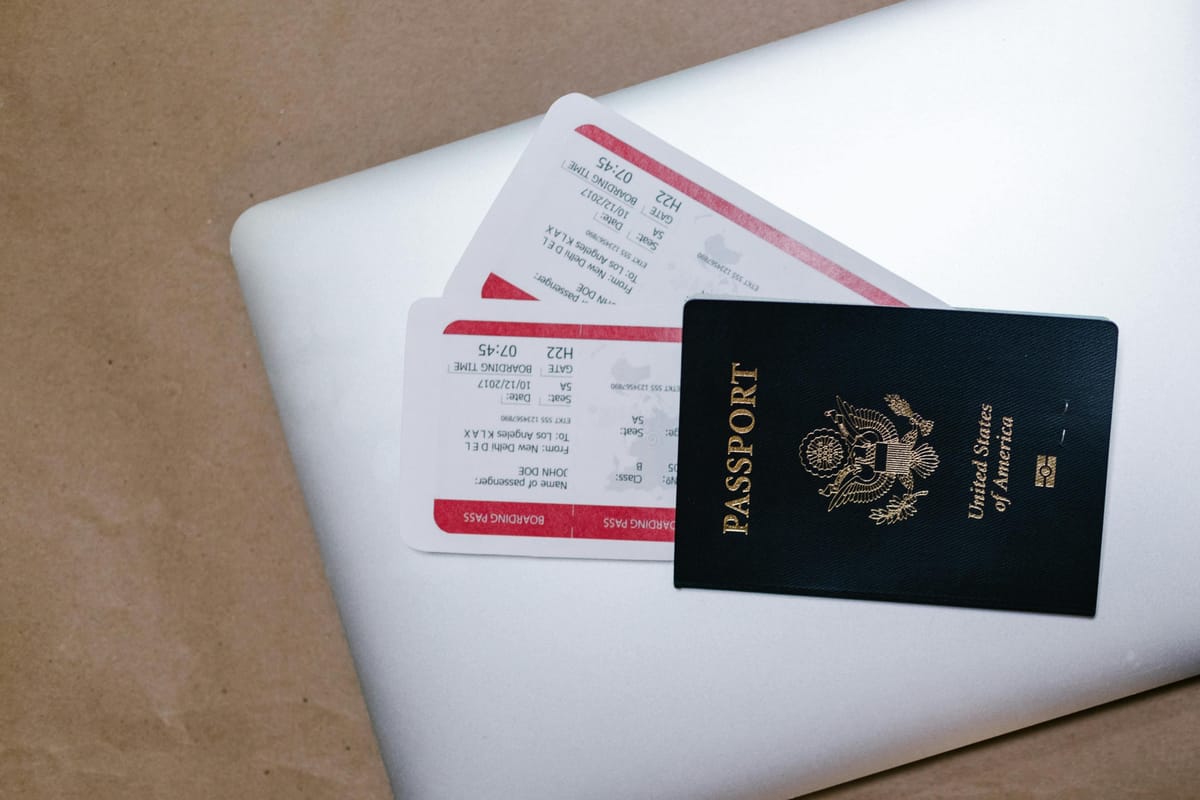
Anne: That gives me real pause. I certainly would be very reluctant to travel to the United States right now, and I spent most of 2023 in Uganda. So I'm not a stranger to going to dangerous places. I'm Trans Rescue’s director, and I end up in scary places.
I would go to the United States right now only if I had some good reason with Trans Rescue to do that. But I would not do it for a less serious reason. And my standard that I measure against is that I spent most of 2023 in East Africa fighting the LGBT genocide there.
Jane: Since you're talking about the metaphor of the closing jaws over time, do you have something to say to the trans people who are like- okay, yes, I agree it's bad, but I don't want to move. I want to say where I am. Or, I just want to move from a red state to a blue state, or from a blue state to a blue city.
Anne: Okay. First of all, every person has to make a personal decision about what they are going to do based on their own perception of the danger. If you don't believe this is dangerous, then fine. However, we discourage being fatalistic, and we discourage just believing that you can't do it.
But if you are staying because you wish to stay and fight, I will tell you that every army, even a guerrilla army, has a front and a rear. And the way an army is not routed is that the army has services in the rear that serve the troops on the front line. So oddly, if you want to stay and fight, your first move is probably to go to Canada. Because there is no way you're going to be able to organize if you are stuck in the United States. That's just not going to happen. That's a good myth, and makes for a great movie, but that's not how things work.
To anyone who thinks the gun is going to save them, I would say sell the gun and use the money to get out. The money is more useful than the gun. If you're thinking you will move to a blue state or blue city, consider that that won't help you to get away from the closing jaws. That will not help you get out before they invalidate your passport. If you are outside the United States on the day your passport is invalidated, you have options. If you are inside the United States, you have far fewer options.
If you are struggling financially, as many trans people are, and you spend the few resources you have moving to a blue state, you may not have the resources you need to get out of the country. Get out. You do not need to take your board game collection. You do not need to take your dog. You do not need to take your furniture. You just need to get out. Put your stuff in your backpack and go.
Jane: I agree with that. When I was living in Europe a couple of years ago, doing my master's, I brought my backpack and two suitcases. That was it. Everything else I bought there.
Anne: I would say, in terms of what you need to get out, it's surprisingly small. It’s some form of transport to a border, and an American passport. There may be consequences. There may be really severe consequences. If you are on disability, there's going to be very severe consequences if you cannot move your disability.
Jane: Yeah, although that's a very small percentage of trans people. And even those of us who need it typically don’t get it anyways.
Anne: I won't speak with any authority on that subject, but I get frequent contacts from trans people who are on disability. There is a myth that no other country will take you if you are on SSDI. That is actually not true. In fact, it may make you an attractive prospect for a country. Some countries appreciate having American expats who are living on disability. However, the US government will allow you to live abroad and on SSDI, not on SSI. It is a rather complicated subject. If that is your situation, I recommend you contact us.
Jane: So now that we've talked about the moral impetus behind leaving, I want to touch on the practical aspects. I want to talk about what specific advice you wanted to give people- the location to go to, how to settle down when you get there- making it more practical, seeing as most Americans have never left the country.
Anne: You touch on a good point. Many Americans have never left the country. And as a result, it seems very scary, and there's a lot of fear in the unknown. I encourage people to get on expats sites or travel videos. There is a genre of travel videos that make the world out to be dangerous, and make drama that way. But as long as you avoid those, you'll find out that you can get pretty much anything you can get in the United States.
There is no one simple general formula that works for everyone. We have an open office hours. It is midday every Saturday. It's an open Google call. You can simply drop in and talk with one of us. And we're happy to answer any questions you have, and help you figure out a plan to get out.
Jane: Excellent. I plan to link these.


Anne: Yeah, you don't want to make your planning based on conditions now, or even on conditions like how much harassment there is on the street. Because those things are not what is dangerous. What is dangerous is that conditions will change so that you cannot get out. And after that, God only knows what will happen.
Jane: Yeah, even if you have a job now, that's not a guarantee that you'll have a job, say, five years from now. For example, I co-founded The Needle in large part because I couldn't get employment anywhere else. [laughs]
Anne: This happened to many Jews in Nazi Germany. All of the restrictions on their lives impoverished people. And once they were impoverished, then they couldn't get out because they simply couldn't afford it.
Jane: Yeah. But as you said, getting out is cheap now. It's just getting out while keeping to the exact standards you're probably used to, that's expensive. But a one way plane trip to Canada, Mexico, or some European country, is not expensive. It’s probably less than one month’s rent.
Anne: I know of a group of four trans women who were in a red state. They got themselves out despite all being young trans people who were struggling. They got themselves out by moving into one of the four different apartments they lived in, sleeping on the floor for a month, and instead, taking the money that they would have spent on rent, pooling it, using it to repair an old car that somebody had, and then leaving the United States with it. You can get out. Everybody can get out.
We have a YouTube channel. Our YouTube channel has a number of videos. One of them is entitled 26 Ways Trans People Can Leave the USA. It tells 26 little short stories of different trans people getting out in different ways. Some are slightly far-fetched, but that is precisely the point. I have known people who have gotten out in very odd ways.
Jane: Now that we are talking about getting out, I do want to touch on the asylum process. As your website makes very clear, they do not recommend the asylum process because countries are not likely to accept asylum claims from the US.
Anne: This weekend, an American woman who applied for asylum in the Netherlands was turned down. In order to have a successful asylum claim, you must fulfill something called the eight criteria test. Those eight criteria include things like, if you were to return to your country, you must have a well-founded fear of death, torture, grave bodily harm, sexual assault, torture, long imprisonment, or conditions intolerable to life. You must be able to demonstrate why there is a relationship between having that fear and being a member of a particular social class.
However, I do not think that you are going to be very successful arguing that in the United States today, trans people are being slaughtered wholesale on the street. That is just simply not the conditions that are happening at the moment. While conditions are frightening, that is not what is going on. I do not believe that an American is likely to succeed in an asylum claim.
Furthermore, be aware that asylum is an inherently political process. If country A accepts asylum seekers from country B, they are saying that country B is dangerous. That is inherently an international political act. It is not something that country A is going to do willingly if country B is the local bully. Remember that the United States military expenditure is larger than the rest of the world's military expenditure put together.
Jane: I forget where I read it, but one person said that historically, the only countries that have been willing to accept the asylum claims of Americans have been those who were trying to thumb their noses at the United States government [such as Edward Snowden being granted asylum by Russia], and that those cases have very little to do with the claims of the Americans in question.
Anne: That is correct. We see this with the dangerous countries we work with all the time. It is more often a measure of how well the country that the asylum claimant is fleeing from is liked [on the international stage], than it is a measure of the person's actual level of danger.
Jane: To sum up a couple of points that you have made over the course of this. You want people to behave not based on the risk they have now, but based on the likely risk they will have at an indeterminate point in the future. However, the asylum process does not take into account those kinds of risks.
Anne: No, it explicitly does not include future risk. It explicitly demands current conditions. In fact, one of the eight criteria is that that risk is ongoing. You cannot say that you left this country because there was some terrible thing going on, and that I would still be in danger if that thing is no longer going on. Then you no longer have a valid asylum claim.
As for people from the United States, we do not recommend that anybody apply for asylum. In fact, doing so will have a damaging effect. As things get worse, such claims will become more realistic. However, if there's been a parade of people who think they're going to get justice by claiming asylum, if we have such a trail of cases, [and those early cases fail], it is going to be very hard to get cases through when it's really needed. So we are actively discouraging people from claiming asylum.
Jane: Yeah, that's an excellent point. I will also be linking your article on why you shouldn't be claiming asylum below.
 Jenny List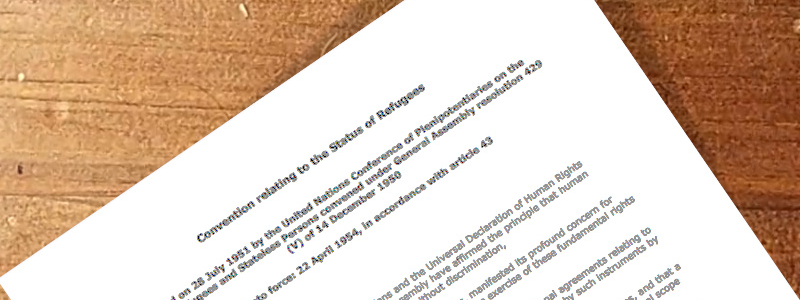
Anne: That's great. We have an article that lays out why it is reasonable to seek asylum if you're coming from Uganda, but not from the United States. We have a blog on our website. There's lots of good articles in it. We have a YouTube channel that's got a bunch of live streams on it. It's got a bunch of pieces that we have made. There's one piece, America’s trans refugees: Where can I go? That explains how the immigration system works, so that people can better understand why they may or may not be welcome in the country.
Do you want to return to the question you had about methods? There are a lot of different methods. They vary- getting a job in another country- going to school. But then also things like a visitor who said, we'll get you out of the United States. There are something like 140 countries where you can just go and get a visa on arrival or where you don’t need a visa, and remain for 60-90 days as a tourist, as an American, because it's still one of the most powerful passports on Earth. So you can physically get out. And if you are outside the United States when the jaws close, you then have more options, because you can continue to be where you are.
And you may be able, at that point, to successfully prosecute an asylum claim. But do not claim asylum at the moment. It is counterproductive. And if your claim fails, which it almost certainly will, you are likely to then be put in a position where you have few choices as to how to leave the country.
Furthermore, if there is any experience on Earth that sucks, it's being an asylum seeker. It is a very hard life.
Jane: Yeah, one of my best friends has had to apply for refugee status, fleeing from Venezuela to Brazil. And their system isn't nearly as harsh as it is in the West.
Anne: Yeah, I have never met anybody who enjoyed passing through an asylum system. And I talk to people who are in asylum systems literally every day. Not a single person has enjoyed the experience.
Jane: I do have one last question- about where people ought to be looking. We've talked about how to go and the methods of going. But what kind of countries should they be looking for?
Anne: What I would say is cast your net broadly. Don't just think, oh, I'm going to go to Germany, or I'm going to go to the Netherlands. There are many places that you can go. In particular, if you have limited funds, don't go to one of the most expensive countries on Earth. Go someplace cheap. You can live quite comfortably on 400 bucks a month in the Philippines. And it's not hard to figure out some way to make 400 bucks a month. Think about South America. Think about Southeast Asia.
Some of these places are not very trans-friendly, but some are lovely. One of our passengers from a dangerous country, we flew to the Philippines. The Philippines is a series of islands, so her last step was to get on a ferry. She went down to get on the ferry, and there was a trans woman working the desk at the ferry, and she was so excited because she'd never seen a trans woman who was just working an ordinary job. The Philippines is quite accepting. It's much better than the US. There's lots of other places that are too.
So don't cast your net too narrowly. Mexico was great until recently. There's been some political upheaval, and now it's become questionable. But it was okay. One thing not to do is to assume to be too scared of places. There are places you shouldn't go to live. I don't recommend Syria. I wouldn't recommend Uganda. Right now, there's violence in Tanzania, so don't do that. But there are many places where you can live that are just fine.
If you get on a site for expats, you will find large American communities who move, mostly because they don't want to kill themselves working.
Here's some methods. Go to school. Get a job in a different country. Get a remote worker visa. If you make a living online, you could be doing it from another country where the living is cheaper and it isn't the United States. For example, many of the countries along the northern end of South America and in Central America offer remote worker or digital nomad visas. Spain also has such a program.
If you are under 26, you can become an au-pair, which is a sucky job, but it gets you out of the United States. And if you're an American, they will snatch you up immediately. You can sign up for a volunteer social year in Germany. And many other countries have a similar program where you are allowed to come and work for basically a stipend for a social good. In Germany, at the end of that period, you can usually convert that into a work visa. Once you have the work visa, you can find other employment and change your employer.
If you have a college degree and you have 5000 euros, you can come to the Netherlands and start a company, which is just filing the paperwork and costs about another 1500 euros. That's the Dutch American Friendship Treaty. That will allow you to live in the Netherlands and work at whatever business you are supposedly starting. That business can be a consultancy, but it could also be almost any sort of business. And if you think about it, many things that are done as jobs could be done as a contractor. You do have to show that you are a highly skilled worker, which either means you have an extensive employment history in that field, or you have a college degree. But that's a pretty broad range of people.
You can get a job at sea. Get a job on a cruise ship. They're not on the land.
If you have some savings, frankly, there are places you can live in this world that are super cheap. Or by doing some pretty marginal things like paint figures and then ship them up to some cis friends in the United States, and have them sell them. Any kind of little craft activity like that. I once had just a hobby, and just for fun, I started making things for it. I ended up making about 600 bucks a month. That's a living in many places.
Jane: And a lot of places have digital nomad visas. I don't know every country, but a lot of places have requirements for digital nomad visas that are less than the United States federal minimum wage. That's not even including the state wages, which are higher.
Anne: Sometimes the income requirement for digital nomad pieces is that you have an income that is constant, which is rarely how people who have a remote worker position work. Even if you work remotely in the United States that can be an obstacle sometimes. But there are some countries that don't do that.
And more countries all the time are figuring out that that's a silly restriction. You know, if you are a contract graphic artist, and you have a bunch of clients, they ping you when they need work, and your income is going to go up and down. But if you can demonstrate you've got money, that's fine.
But even if you have a remote job in the United States, they probably will let you move to another country or some kind of remote worker visa and keep your job. I speak to large numbers of people who do that.
Jane: And most of Central and South America are in similar time zones to the United States. So that you wouldn't be that hard to coordinate.
Anne: Actually, if you look at a map, you'll find out that South America is not actually directly south of North America. It's a bit to the east about one time zone. And that's great, because nobody in the United States wants to be the person who takes that early morning helpline shift. Americans aren't morning people. In Suriname, that may be the 10am shift. So yeah, Suriname, Columbia, etc,. Americans probably think Columbia is full of murderers and drug lords. But the truth is that that's not true.
Jane: Americans tend to get their news about non-white countries from crime dramas and such. So that colors people’s perceptions.
Anne: Yeah, don't do that. Treat this seriously. If you've learned any research skills, now's the time to apply your critical thinking. You don't want to say, I would never move to Germany, it's getting taken over by the right wing. Well, Germany is politically leaning to the right, but it's not the United States.
The truth is that we're hearing a lot of people making excuses. I invite people to examine what they're doing here, because we want y'all to be healthy and happy and safe. And alive. The United States does not look like the place where that's going to happen. So we would encourage everybody to get out. And if that means you put your stuff in a backpack and you go out the front door and you don't look back, do it.
You can get out.
Jane: That covers all of my questions. Any parting words you'd like to leave with?
Anne: Yes. We survive on your donations. We do need your financial support. We're also looking for volunteers. Anybody would like to volunteer with us. We have a variety of things you could be doing with Trans Rescue. But we need money because what we do involves airline flights and it's expensive. But it saves lives.
Thank you. Thank you so much.


 Annie
Annie
If you have the time and money, please consider donating to or getting involved with Trans Rescue. Every little bit helps.