
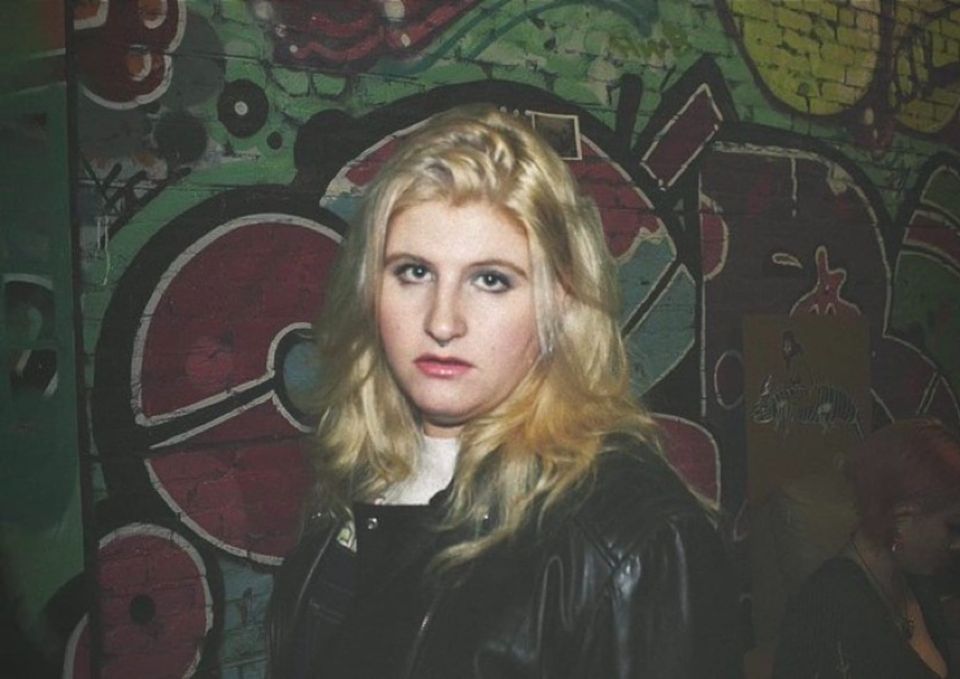
The filmmaker speaks to The Needle about trans culture and trans cinema.
By Jane Migliara Brigham
One of the latest, (and as I have argued, one of the greatest) recent pieces of trans cinema is Louise Weard’s Castration Movie Anthology II. For The Needle’s culture coverage, I spoke to Weard at length about the film, what got her into film making, and other things.
Weard's director statement for the film opens with this paragraph.
“I sit with my co-producer co-star Dakota Blais with my Sony TRV330 pointed at my 720i Sony TV’s screen.
We are in the midst of filming the backing track to a scene that complements our characters’ prior moment together in the RV for Chapter 3 of Castration Movie.
On the TV, Trump signs executive orders one after the other for hours on end. I hurriedly ask Dakota to toss me another Hi8 tape.
A few minutes later, as co-producer co-star Aoife Josie Clements enters the apartment, we yell Shush! as we hear the words “Defending Women from Gender Ideology…” and I zoom the camera in on the pen.
Trump lets out a deflating “Oooo” and then everyone on TV is ushered out of the room. No fanfare or comment for the biggest rollback of transgender rights in the USA to date.
We watch this unfold knowing that our country will be soon to follow.
I wanted to ensure I had that moment, in its stark lived entirety, captured on camera to place exactly where we begin with the second half of Castration Movie as the narrative jumps forward a year later from the events of Part 1.”
To understand more surrounding the woman behind the film, this article is Part 1 (of 7) in The Needle’s series of articles called “14 Weird Questions with Louise Weard.”
In the style of her work, I have done the minimum amount of editing needed to immerse the reader in the conversation.
Question 1
Jane: So how did you actually get into film making?
Louise: I've been in the film industry since 2013. I spent a lot of time when I was younger as a huge cinephile. I really fell in love with movies at a young age, and really connected with horror films specifically, especially underground horror, because it was one of the few genres where you could look past production limitations, and not having movie stars in it.
I would go out to a lot of little indie horror festivals and stuff and see who the faces were in Western Canada that were doing weird indie horror projects. And when I ended up moving out to Vancouver, a big part of that choice was because of other filmmakers who were a decade older than me who kind of said, “oh, Louise, if you end up in Vancouver, we can maybe hook up the job or something”, right?
So I ended up going to film school in Vancouver, Canada, where there is quite a film industry. I was also working as a production assistant on Hallmark movies and bad Netflix and Amazon TV shows and stuff, really learning a lot. And a lot of the job was smoking, sitting on generators, just like in part one of Castration Movie.
Jane: So Turner's role as a PA was inspired by what you actually did for a job?
Louise: Yeah, because I did that job for years, almost a decade. And what was so funny about it was I'd worked with other PAs who'd been doing it so long that they would start to consider themselves creatives, but they'd been doing that job so long, they thought that job was the most interesting thing in the world. So there's that one speech that Turner gives where he says, like, oh, what if we did like film school, but it was like Hogwarts. Like, the PAs are the heroes, we just do all this stuff about how great PAs are.
That was kind of a joke because I'd end up working with people who would be like, oh man, like, have you ever thought how interesting it would be to make a show about PAs, or make a movie about a P.A.? And I would always go, that is the dumbest, most boring idea ever. Dude, we don't do anything.
We just sit around and we take out the garbage. There's nothing, there's no hijinks. There's nothing interesting there. You have the same thing as everybody, you do your job and once in a while it's interesting. You think there should be a movie about it. You feel the same way if you're working as a plumber, which would be even more interesting than taking out the garbage every day.
Jane: I always thought about it differently. That wasn't really what I saw in the movie. I saw a guy who's a total shithead, but at least he's creative, and he dreams about using that creativity in a way that he never gets to use. Because if he didn't have those scenes, he'd be completely irredeemable.
Louise: Oh yeah, no, 100%. He wants to be creative, but I think that’s the problem. He doesn't have enough life experience to really have a voice that would make his work interesting. All of Turner's pitches are based on pop culture or the most shallow things ever. His great screenplay he's working on is a really bad Tarantino crime movie knockoff. He wants to be creative more than he actually has talent, you know?
Question 2
Jane: I'm coming at this from the angle of trans culture. I reached out to you because I wanted to ask you about the cultural influences that led to this.
Louise: So this is where the movie came from. All this underground horror was important to me. And it was important because that was one of the few places I remember seeing trans characters in the movies I was watching. Usually it was for very transphobic depictions. My old mentor Ryan Nicholson made a film called Gutter Balls, which has a tranny getting castrated as a big kill in it. When I was younger, I was like, holy shit, there's a trans woman in a movie. There was something interesting about how that was the representation available to me.
Jane: In a place where it's safely siloed. For a lot of people in my generation, the first trans woman you ever see was in porn.
Louise: Exactly. Probably the first trans woman I ever saw was Femboy/Trap/Thirst pics on 4chan where they were dressed up as Nazis, which is where the character of Michaela comes from. So once I was in the underground horror thing, Computer Hearts was a film that had a test duration in it. I made another short film called SIDS that had a test for an orchiectomy in it. So I've been doing these movies that had a masculine character and castration as central images.
So I'd started compiling like a list online of every dick mutilation in cinema history. And there was a fantastic fest in Austin that wanted to do a show. So that was a mixed tape of like castration scenes from movies. So I was like, hell, yeah, I'll come do that with you guys. So while I was compiling the show, going through clips, that was where Castration Movie really came from. Because I was using all these clips and I was making the thing called the 100 Best Kills Texas Birth Control Dick Destruction, which is on the Gumroad page for Computer Hearts as a bonus feature. The the show was so interesting to me because when I was compiling it, I got thinking about all this castration, it got me really excited about filmmaking again, because I was seeing all these underground horror films, but also, there's a whole section in it that's devoted to depictions of transsexuality through the lens of cast. There’s these castration scenes like in Doris Wishman's Let Me Die a Woman where you have the medicalization of, oh, if we deny surgery to a trans woman, she'll take it into her own hands and cut her penis off.
Jane: Listen, I tried as a teenager. Didn't work
Louise: And then, there’s another great film that has the same thing, where the ending is that a trans woman does self mutilating with her penis. So what happens with Hundred Best Kills is, the first 75 percent of it is just a fun mixtape of all these goofy clips from horror movies. But then I switched the tone on it, and I kind of reflected to the audience where I'm like, oh, well, you know what movies always have this. And I show them this montage of all these trans movies that show trans characters cutting their penises off, and then kind of spin the show into this interrogation of the imagery itself and what all this means.
It was a really bold thing to do at a mainstream film festival, because it was extremely mean spirited towards the audience. But it’s also doing my weird stuff like in school. I kind of focused my studies and writing on film semiotics.
Question 3
Jane: So for the audience, film semiotics is what exactly?
Louise: It's the study of the space of the cinema and the apparatus and the camera and the projector. And then how the viewers are all interacting with each other. So I engage with a lot of Freudian and Lacanian analysis of the screen image and how we relate to what's going on on-screen.
For a quick example, Lacan talks about the idea of the mirror stage as a way of our first self identification, where we recognize ourselves as unique entities. When we watch a movie, we have the idea of shot, reverse shot, which is characters both talking offscreen towards one another. So they're kind of looking to you where you are identifying with the character being spoken to in a way. It brings you into the movie.
It creates that sort of separation. But then you can actually lose yourself in the act of watching a film. So it's all trying to study that side of filmmaking. Unlike a psychoanalytic level, how do the tools of cinema actually work with the way people are engaging with it and wanting it?
Jane: I find that really interesting because my first experience with Castration Movie was me sitting alone to watch it, and I'm at the scene of Turner reading this poem to Brooklyn. And it's like, this is just so painful. I can't watch this. And then two months later, I'm at a party. I met these women who I overheard talking about Castration Movie. I say I had tried to watch it alone. And then she's like, oh, yeah, I was in that and I made the trailer. So I had to try watching it again.
I found the only way I could watch it was when I could hold my girlfriend. Holding her was the only way I could deal with my whole body cringing.
Louise: I'm really enjoying the amount of discomfort I'm creating in this space. So, Castration Movie was about, what if I made a castration similar to this castration show? But it's a horror movie only through having to watch people be awkward. It's horror through the lens of cringe. What if I wrote it where every character is going to be saying every horrible and intrusive thought that they have.
And it creates a horrible atmosphere where everyone's just bitter and mean to each other and socially failing. And I think it's really funny, but it's also really hard to watch.
Jane: Yeah, it's the anatomy and the tension of a horror movie and the awkwardness of a cringe comedy. But yet there's so much heart to it. Between Michaela and Circle and to a lesser extent Turner, you have these people who the audience will deeply empathize with even as they're shit.
Louise: That was the big idea. I wanted to do this story and the initial concept came from wanting to revisit the tone of the short film I did called SIDS, which is about an androgynous character who who's discovered that they're going to father a child, and has anxiety about it and wants to get their balls cut off. So I want to revisit these ideas around the body and the interaction between the body, ideology, and masculinity. The point is I just wanted to revisit a lot of the themes from that short film but in the real world. It was mostly the themes I wanted to revisit. And that short story was kind of inspired by this article from that was published by Topside Press back in the early 2010s called How Not to Get a Sex Change by Sibyl Lam. It's about Sibyl Lam grabbing a guy off of the TME BDSM forums who had a castration fetish and saying, hey, do you want to meet me in a hotel room and you can cut my balls off? I was like, yeah, I want to do a DIY movie that builds up to a DIY or a TME.
But the main point is that all of these things came together. And then right after I started kind of shooting that initial idea. I was going to add every bad trans trope into this film as well to make the representation as bad as possible, as like a parody of how other movies depict transness all the time. What if every single thing went wrong when you tried to transition, like in the Michaela story. So I thought that was quite funny.
Jane: I don't think it’s a failed transition. I connect that idea with Circle, with all that shit going on with her.
Louise: That's the same thing. Circle is very much inspired by the ways trans women are mean to each other online.
Jane: I remember watching the cult scene and just felt very, very tumblr.
Louise: That's the era of the internet I grew up in. tumblr, late 2000s, early 2010s culture.
Jane: I remember I came out in 2014. I looked at that and was like, OK, why are these bitches so fucking annoying? And then I ended up hating for years.
Louise: Yeah, no, I was similar. I mean, I was in like this relationship in university that was repressor straight T4T. So me and my partner at the time both ended up transitioning years later. It was interesting because I feel like we were both online, and there was a degree to which tumblr made it seem so annoying and gatekept in a way that just didn't speak to my personality.
Jane: If you interact with trans people through tumblr, you would think that every trans person is Michaela or the cult members in Polygon or some shit.
Louise: Well, that's what the movie is about, right? What if the internet was real life? It's a joke I've been making forever, which is that the internet keeps becoming real life.
Jane: I mean, it just is real life at this point.
Louise: Yeah, no, now it is. So that's what the movie is. All the worst qualities of the internet are now real life. That's the thing that's funny. It's very rare that you find people using online terms in real life. But the idea of getting actors together to use terms like Passoid or Hon or Brick…
Jane: Like with Mel's character in part two. She's talking with Circle saying you don't get it, I'm in the basement because I don't have to feel like a brick. And it's like, I know you in real life and I know that people like you. What the fuck?
Louise: Well, that's the thing. Everyone's character is always playing very heightened archetypes of trans women that they have some relation to the insecurities of. I think it’s an important thing about the project. We obviously cast in a way where I know that the actors are going to be capable of playing those roles, and I work with them on really deepening the character, and we will collaborate to come up with that story. The people I'm collaborating with will bring their own ideas and feelings. Just giving the actors the permission to be their worst selves. I think that that's like one side of it. But also there's a lot of actors who are just like not their characters at all.
It's a different process for everybody, but definitely for some people it is. I mean for me, I don't feel like I'm like Michaela at all. But she's like such a scary abstract thing, like a demon. Michaela is this sort of shadow I would hate to cast. I'd be so scared of being like Michaela. That's why it's fun to write her.
Question 4
Jane: I’d like to shift gears a little bit and talk about the cultural influences. That's originally why I reached out to you; you seem to have talked a lot about this. And in one of the interviews, there's a specific quote. "It doesn't matter what country you're in, what area, rural or urban trans communities laugh at the same joke, you relate to the same things." Has that affected the way you've been making things?
Louise: No, not at all. I was keeping it hyper specific. The thing about this movie is it's made for one audience member exclusively, which is myself. I just want to represent stuff that I observe in the community and in my own perspectives on my own transition, my own anxieties, stuff like that, and then put it into a movie. And the thing is I think that making it so specific allows for there to be room for people, no matter where they are in the world, they can find little kernels of stuff that relates to their experience and the emotions or the themes in this project.
And that's what makes it so universal. Stuff in the movie that is trans is more incidental in that that's the environment we're filming in. So we end up with stuff that ends up depicting very universally relatable things for people. I just picked a setting. I want to make a movie that takes place in spaces occupied by trans people. And then everything that comes out of that is really just the nature of the collaborative way that we make these movies.
Question 5
Jane: You say that you're not specifically making a trans movie. But you yourself say that a lot of the main characters are based on playing the worst archetypes of trans people.
Louise: I think it definitely is a trans movie. I think I just push back against the idea of the canonization of what a trans genre would be or a trans film movement would be. I think that it's all too new in terms of the focus on trans filmmakers versus a history of erasure and the lack of canonization of trans filmmakers. So it's hard to look at it within the scope of trans cinema and then say, is this a trans movie? So I think it's more just a semantic designation. Obviously the movie's about trans people. I wrote it to comment on the screen depictions of trans people. But I think that I would be hard pressed to say Castration Movie and the Danish Girl are the same type of movie.
Jane: Yeah. They both have trans main characters and that's where the similarity ends.
Louise: But at the same time, you can look at Louis Elton and Dana Stroll, and the way that that movie depicts trans people. Like, oh, I want to have a little mirror and it ends up killing her. Or desire to have completeness that is related to fertility. And then you have these scenes in Castration Movie where Michaela is talking about wanting to have kids, and expressing a need for surgery as a response to not being able to have children.
Also, I do lots of intertextuality where the trans woman sex worker in the crying game is wearing the same red silk gown that Michaela wears. It’s throughout the film. So the movie's very dense. I definitely went into it. As much of the film is improvised, the movie is extremely tightly structured in terms of all these pieces to make sure that there's a lot of literary depth with contextuality and meta-textuality.
Question 6
Jane: So I know you shot the first one in your native Vancouver, and you had a lot of your friends in it. You shifted gears for Part Two and set the whole thing in New York City. Why?
Louise: It was because I was sitting outside talking with Aoife Josie Clements, who plays Adeline. I was like, fuck, I exhausted everyone I know in Vancouver to be in this movie. And Aoife was like, well, why don't you just go shoot in New York. You know a ton of people in New York.
So I was like, ha, ha, that's a great idea. So we rewrote the transsexual separatist cult from the Pacific Northwest to New York, which changed a lot of it. It honestly made more sense in New York, because New York has such an interesting trans community. I don't know, as an ethnographer or something, it's interesting to come in and look at the way that the trans community operates in New York.
Jane: And we are our own thing. I mean, there's a reason the term transsexual, as being different from the old transmedicalist thing, started in New York City specifically. It's not quite separatist, like they're not gonna start cults like in the movie. To be perfectly honest, I'm part of this culture. There's an ethos that We are our own thing, we have our own culture, we have our own stamp on things, and this is how we do things here.
Louise: I think it is really interesting that there's in and out groups. And the ways in which the culture operates socially in New York does remind me a lot of how the internet operates, especially social media. I wanna hear more about that. And that's because social media operates as a microcosm of how humans naturally operate.
But what I mean to say is New York is great because it's such an insular community that you can really see the ways in which those two things are similar, and how one is a microcosm for the other, because they are both small communities in which people have all of those base tribal instincts that are very prominent now online.
Jane: It's interesting with the setting in Bushwick. Listen, I've been to nine countries. I've lived in three countries. Bushwick is a very unique place. It's the only place I've ever been where you can see clocky trans women walking down the street and they don't get a second glance. It's very different from anything else that's out there. And that's why a lot of trans women will flee there. There's often this joke about trans women returning to their homeland when they move to Bushwick or Ridgewood.
Louise: Yeah. I do call it the trans Mecca. That's why it makes sense to go shoot this story there to me. That's what the movie is, right? If you're living in a location and environment where trans is normalized, what are we? If you end up with this trans separatist idea, which we're using the cult as a metaphor for, what does it feels like to be in New York and in a place like Bushwick or Ridgewood?
Where does the conflict then stem from? What is eating us away? Is that loneliness still there? That's what the movie's trying to get into. If you're in a group of trans people, are you still pushing an idea of conformity that feels antithetical to transness itself?
That's what the movie's trying to look at. I think it comes from the times I visited New York. I think that New York's a wonderful place. I love the city so much, and it's the best city in the world. But as an outsider, I could see the ways in which the New York trans community operates. It's so small, but also so big. So big in terms of the trans people there, but then like such a small world in terms of the way that the…
Jane: Yeah, it becomes a bit of a monoculture. What was interesting to me was the in groups and out groups of the New York scene and the ways in which those also interact with the impression of New York from Twitter or Instagram or Bluesky or whatever, that you might get as a younger trans person looking in. So then making a movie about Circle, who comes into town, and then after two months finds herself in a trans separatist cult because she needs housing; it’s funny but sad. The sad thing is there are actual cults like that in New York City. We just don't like to talk about them because they're embarrassing.
Louise: No, no, 100%. I mean the thing is, it happens in the Pacific Northwest too. There's probably more diapers in the Pacific Northwest version.
Jane: Yeah, the big thing over here is blood sports and impact play.
Louise: Yeah exactly. That's what I've heard. The Pacific Northwest is much more into puppy play and age regression, which is really funny, because that's where part three makes the comparison. and then we put that stuff into the third part of Castration Movie because it’s very Pacific Northwest trans culture, at least in Seattle. It's a little bit in Vancouver too.
Jane: I don't know. I've been around. I've lived in England, I've lived in Germany, I've lived in the US, which is my home country, and I really don't see these that much in the way of regional differences with trans people.
Louise: No, what I mean to say is I think in terms of the impression given off culturally. I think that New York has a very specific vibe it gives off. The Pacific Northwest has a specific vibe that it gives off, not in terms of like… I think that these are all the same. And I would assume that especially in terms of like kink stuff or types of people in the community, there's similar types all across the board, probably at similar percentages. But online, you would definitely have the joke of the Pacific Northwest puppygirl cult.
Jane: Meanwhile, you have these people who can move between these places, or have somebody who just rolled into town from some backwater, and as long as they're online, they can slot themselves into the culture in a way, and a lot of people there will seem familiar. And I think that's a very big thing about how Bushwick and places like it have been able to stay culturally relevant, because you could just go there. And as long as you're kind of online, you already know the culture. I drive in and I understand all the cultural references despite the fact that I live in New Jersey.
Louise: What would you say are the cultural references of Bushwick?
Jane: I don't know. Do you mean local things or the overall culture?
Louise: Is there anything that's local to New York? Because the one I always go to is… So the funniest thing about screening Castration Movie all over the World is there's one joke that I didn't write as a joke. I didn't even write it into the movie at all. It's the opening of chapter two in part one. My friend Penny got her orchiectomy, and I said, I'll give you a ride to the hospital, but I wanna film everything around your orchiectomy that I'm allowed to. So we film her in the waiting room, then we film her immediately post-op in bed, laying down with ice on her. And she lays there for like two minutes. I was just shooting it fully documentary style and I was just like, okay, I'm just gonna tape you suffering here. And this is one of the biggest laughs I always get in the movie. After two minutes, she sits up and then reaches for her Blahaj and gives it a hug in the bed.
I've screened that movie all across North America, the UK, and Australia. And everyone laughs at the fucking Blahaj. And it's funny because I didn't write the Blahaj into it, but every trans woman in my life had a fucking Blahaj. We all had one. And it's such a funny trans cultural signifier because it is a very universal image solely because of the internet. I don't even think anyone knows exactly where the joke started.
Jane: I got no idea.
Louise: I think that etymologically, no one actually can trace how it became a joke. It’s just been part of like 4tran and Tumblr for at least five or six years. But my question is, is there anything that you think would be similar to that, but just for New York? Like just a New York joke?
Jane: Honestly, no. So much of what makes the New York trans culture distinct from the area around it is also shared with so much of the other English speaking trans areas. That's why I do think there is such a thing as a trans culture that you can understand.
Louise: You know what, it's interesting you mentioned the English speaking thing. Because the thing I never would have expected with this movie is the number of people who are watching this who are international. I get messages and emails from people in Ukraine or Hong Kong or France or Sweden or the Netherlands who are saying they want to screen this movie locally.
Jane: Yeah, doesn't Rio de Janeiro have a screening coming up soon?
Louise: Yeah, it’s screening in Rio next month or next week or something, I can't remember. I'm not going to that one unfortunately. Unfortunately, Louise Ward is not coming to Brazil. But I should check. I wonder how much it will cost me to fly to Brazil on short notice.
Jane: About a thousand bucks. I checked. I got a best friend there.
Louise: Shit, that's good. But I will say that like the surprise I felt at just making things so specific while I'm shooting in Vancouver and shooting in the locations where me and my friends have occupied for years and years and years, and it’s crazy that it's become such a wide-reaching thing, you know?
Jane: Honestly, I'm not surprised. The more you learn about trans people across the world, the more you realize it's by and large a very similar set of cultural references, a similar set of cultural experiences. And that's true even for people that don't speak English. A lot of the English stuff gets translated into local languages. A lot of their stuff gets translated into English. A lot of this stuff is shared across the world because you have these people who don't relate to the people around them, but might relate to trans people in faraway lands who don't speak the same language as them. That's where these people get their sense of community from, that's where they get their sense of imagined community from, and that's where they get their culture from. That's becoming a really big force. So stuff like yours and other things like it that are seen as trans art for trans people also get seen as international, even if the creators tend to think of their work as being very local.
Louise: Yeah, that makes sense.
Question 7
Jane: I did wanna ask about the theme of self-hate and self-consciousness, particularly in part two. I think about this character, the one played by Mel. She's scared of the outside world. She's looking in the mirror, she's doing her makeup. And it’s the most stereotypical trans makeup possible, pale as fuck foundation with the black lipstick, which is the trans makeup style. And then she says hello this is me mirror and then slaps herself until she can do a girl voice. I feel like that's kind of like a microcosm of all of part two.
Louise: That kind of pays off when her character says to the AI, like, oh fuck I'm still doing Fag-cent, or whatever. There's a distinction between how to act with other trans people versus what she has to do in the outside world. What's interesting is that she's still talking with other trans people. If you think about Castration Movie 2, Circle's the only character who interacts in a meaningful way with any non-trans people. The only non-trans people in the movie are Izzy, played by Evelyn Bass, who's Ivy's roommate, and Natalie. So that’s only two cis characters in the entire film, which is crazy.
Jane: I think about this character Keller. Her entire shtick is being a former they-fab, and saying, well it didn't work out for me, therefore you should give up on transition. And that's her entire character.
Louise: Yeah the thing about Keller… Keller is transgender. She's just back to repressing, and wants to share that pain with somebody. When someone who's not transgender reminds every single person she interacts with over a night that she used to be non-binary, it's like, if she wasn't non-binary, she wouldn't have to frame herself constantly as being someone who was non-binary. On top of that, the whole buildup of the movie is to put Keller and Circle in a position where Keller's taking the cowboy hero pose with the gun to save the damsel in distress. The whole movie is building up to them conquering their repression in this very metaphoric way that even they wouldn't be fully cognizant of. Sometimes gender expression isn't a surface level thing. It's operating within the constraints of the plot and what these people are doing for each other in each other's lives that it becomes the representation of this repressed gender.
Jane: That's what I was picking up on towards the end. There is the second to last scene where Keller is trimming Circle's hair. It's this heartwarming scene. I think it's like the only time I remember Circle having a genuine, non-awkward smile. Circle seems genuinely happy. Cut to the next frame. Oh fuck, Circle just detransitioned. Well, there goes the happy ending.
Louise: I think in a way, it is a happy ending for them, but like you have to remember that it's still just one basement to another. These movies are all about empathy and loneliness and the ways in which people fail to connect with each other. And I think the happy ending of part two is that for a fleeting moment, Keller and Circle feel connected to each other. But it's fleeting. It goes away at the very end, but for a moment they felt close to each other. It's really sad.
Jane: That ending hit me harder than anything in any of your movies.
Louise: Yeah that makes sense. I'm crying just thinking about it. It's profoundly depressing.
Jane: You made a trans woman cut her hair.
Louise: I mean, Lex wanted to do it anyway.
Jane: Fair.
Louise: But it was interesting, that scene especially, because there is a tenderness between them. But I think for some people watching Circle’s hair getting cut is an act of violence. Like me, I have a really strong trauma around haircuts. I haven't changed my hairstyle since high school and I'm 31. I've not had a haircut since I was 25 years old. That's how it is. So I think that that's me writing some personal trauma around haircuts and sharing that with Lex.
Sorry, back to what I was initially saying. I think it's really interesting that there really isn't any real interaction. I guess the other cis character is technically Betsy's undercover fed, Casper.
Jane: Oh, yeah. I remember watching that being like, why is there a cis person here? And then we get it at the end. It's like, Oh, this is fucking weird.
Louise: The thing that's funny about it is that you have to ask yourself what even is trans if this woman is down there? The way I directed Betsy, I told her not to play it any differently than she would play any other character, because trans women are women. So you just have everyone acting completely normal and it is not being acknowledged the whole time. If you're a trans separatist cult, what would it matter? Would you even be able to tell if a cis woman snuck in, because it wouldn't make any sense to think that would happen? I think it's an interesting character choice, but it does throw it into contention. Would you consider Betsy's character cis?
Jane: When you're in a majority trans space, and it doesn't come up, the distinction breaks down. Whereas when Circle goes to the outside world, that distinction is all anybody ever talks to her about.
Louise: Yeah, exactly. I think that that's the thing that's so interesting. I think that that's the dichotomy of the movie. We have a trans dominant space and we have the real world, and it's a fascinating comparison.
Jane: Funny how even in a cult that has total control over its members and completely cuts them out from the outside world (except for for the fed), not even they police gender quite as harshly as complete strangers that Circle meets on the streets in New York City. I think that's a really interesting way of looking at it.
Louise: Well, the thing is, I don't think anyone is policing gender at all in the cult. There's no policing of gender presentation or anything. Everyone dresses the same, there's no makeup. It's a very utilitarian cult that says that everyone only gets what they need to survive on a daily basis. Like one hot dog. It's very simple. And I think that that's part of the joke, there's like almost an appeal to eradicate gender in the cult.
Jane: Yeah, so gender abolitionism.
Louise: But at the same time, they still all have to take their hormones together. It's just regimented to the point where it's like, now is the time for us to take hormones, and everyone takes them, and they have to do it together. And in the first movie, Michaela has a sort of ritual around taking her hormones, right? There's a moment when Michaela shoots up her hormones and we get to see that.
And we see Rocco shooting up hormones, and they're both very different experiences. Michaela does it alone. She does it all the time. There's a song by Alex Walton playing that's kind of like her internal monologue in that moment. And then we see later, there's a comforting moment between Rocco and Adeline where Adeline injects Rocco's testosterone, and there's like a bit more connection to it. But then in the new one, everyone does the hormones like normally, but there's like a power to it, right? Within the nature of the cult, there's a way that taking hormones is almost being used as an act of violence against Circle. There's a forced conformity where she's starting to express hesitations and Meredith holds her down and splashes it on her on her tits. Very intense.
Jane: Wait, the water. That's the hormones? I'm going to be honest, I didn't make that connection until just now.
Louise: Yeah, no, it's Estradiol Gel.
Jane: Maybe I've just because I've never actually seen Estradiol Gel.
Louise: Okay, that makes sense. It just looks like hand sanitizer. Yeah. It's just like an alcohol solution or whatever.
Question 8
Jane: You have this kind of protection over like a common transness, and yet at the same time, it's completely divorced from any of the broader trans culture that's going on just one, two stories above where they are. Bushwick is the biggest center of trans culture in America, and they would rather just isolate themselves to avoid being perceived.
Louise: Yeah. I think that the opening with Donald Trump signing the executive order on gender essentialism kind of speaks to the idea of it being like a response to the fear of the administration in the U.S. and culture more broadly. I think it's saying that the crackdown on trans expression is so strong in the UK and the U.S. and is spreading rapidly all over.
Jane: And they fear being avoided. I can tell you from my own perspective. I haven't had a single cis person go out of their way to spend time with me since Trump got into office. It just completely shut off.
Louise: I'll be honest. Being in Canada, it was interesting, because we got sheltered a little bit. Canada is an extremely right-wing country through most of it. We have some of the worst white supremacists organizations in North America. A lot of what picks up really big in the U.S. is tested in Canada first, in terms of neo-nazi shit. We have a really strong neo-nazi history in Canada. The point is the general population of Canada is pretty malleable. So when Trump got elected people were like, oh, we don't want to do that. So our government stayed centrist.
Jane: Like there was that big wave of Canadian nationalism right after Trump talked about annexing it, and there is a kind of contrarianism.
Louise: Well, that was the thing was it was because when Trump did that, it was really fascinating because our right-wing party had been trying to say, oh, we're the Canadian Trump, right? And that was like actually doing really well for them in the polling. Like they were going to have a landslide victory but then of course Trump says he's going to annex Canada and all of a sudden these guys who are so pro-Trump don't have a response to that, right? Yeah. Oh, we don't want him to annex Canada, and they all look like crazy hypocrites. So then we had a new party leader, because our black-faced man Justin Trudeau left. That's the main thing everyone in the US knows him for.
Jane: Well, he also said that if you kill your enemies they win. So there's that too.
Louise: Yeah, well, Justin Trudeau is now dating Katy Perry, which is really fun.
Jane: [Laughs uncontrollably]
Louise: So Canadian politics are actually super cool. But the new guy we brought in is a banker. Like he's just like an economist. So we'll see if I am really curious because it's like, okay, we'll just bring in like the most responsible guy. Like one of the most respected people in the English-speaking world. And if he does a bad job, I actually think we should just abolish the government.
Jane: [Chanting] Anarchy! Anarchy!
Louise: I'm very much against government interference in anything personal. So let's see if this guy can run the economy good and just leave everything else the fuck alone. That’s my ideal politician.
Question 9
Jane: I wrote this big review, and the subheader was "the horror of being perceived". it feel like a visceral part of the whole story. In part two you have everybody watching each other. It starts in the cult. You go outside and everybody's watching Circle to police her gender. You get a visceral sense of it because there's this camera which is obviously outdated. It draws attention to itself. I almost think the viewer is like part of the perceiving in the.
Louise: Yeah, 100%. I said this with part one, and it's even more true with part two, which is that the camera is the viewer is the camera, they're just not acknowledged. With part two, I had more fun with it. There's two moments like in part one where I look in the camera on purpose both during the last sex work scene, to kind of be like, oh, is this what you like watching? Making a quick gaze with the audience.
With part two, we pushed that harder. I directed Jamila Sondota, and said, hey, you are aware of the camera, and you will not hesitate to look down the viewfinder. I told her that she can look at the camera when it feels right for her, because you're aware of the fact that you're all being watched. There's a big quality of surveillance in part two, which I think is to comment on the first one having this undercurrent of a home video aesthetic that feels almost too intimate. And then the other moment is when they meet up with Brody the detransitioner, and they're walking into his apartment. He says excuse me to the camera, like we're bumping into the camera operator. Those little pieces are there to keep the audience immersed, and remind them of where they are.
Jane: I mean you open up on everybody's watching of everybody else, and you take that vision of it with you.
Louise: I think that it speaks to that idea of making a movie about the trans body. There’s the perception you're talking about which is like, I'm going to put the trans body so front and center on screen. My big question coming into this project was, how do I avoid the tourist gaze? I find so much work, even that produced by trans people, has this tourist gaze, which is to say, catering to a non-trans audience. Cis viewers give them a kind of framework to watch the trans body that's inspired by this historical representation that has an almost freak show quality. Yeah, like come look at the gender deviant. Even if it's sympathetic, it often has that quality of, oh, come look at this freak. But sometimes, it's like, oh, look at the poor freak. Other times, it's look at the freak freak.
For me to approach it is to try to challenge that inherent tourism of the gaze when you're filming a marginalized person. I think that it would fit in similarly with the way someone might shoot disability, or certain to a certain extent like race. There's definitely levels to which cinema has such a long history from its onset of attraction and exploitation. Everything that you want to shoot on camera is exploitation in some way. You're exploiting the scope of feel, the urge to look. This sort of sexual excitement that someone has from voyeurism is what cinema is all about.
So you're trying to fill the frame with something that people want to look at. You know as a filmmaker that it's trying to problematize that, and find ways of unpacking the way that works, around trans bodies especially.
Jane: Part one is interesting in that respect. The sex is really dry and boring, even though it's all the same stuff you would expect in porn. You can literally film yourself getting pissed on and the shock value is gone. It's not even played for laughs. This is just a thing that happens.
Louise: The joke of the scene where I'm being pissed on is that you have the other two girls in the room arguing about how they should shoot. It's very literal. I'm literally telling the audience what I'm doing. I have two actresses having to figure out on a smaller scale, how am I supposed to shoot this.
Part two is really funny, because the sex scene that opens it is a parody of the response to part one. The way a lot of people wrote about it was that part one had all this lurid unsimulated sex. I agree with you that the sex is so mundane. There's nothing actually horny about it. It doesn't turn you on.
Jane: No it doesn't. unless you're libido's on a hair trigger, there's nothing in part one that I would describe as sexy.
Louise: So then opening part two with the worst orgy of all time was kind of a joke, because it was like, can we make this even funnier? It’s also my appeal to realism. That's pretty close to what an orgy actually is. Very light touching, no one's actually going all the way, it's mostly just an excuse for people to do drugs and hang out and cuddle and make out or whatever. I've definitely been in some situations like that. Representing it that way is so funny because the first 10 minute orgy scene that kicks off part two, I think to some people that will be crazy, and then to others, I hope that they get the joke that it's like, oh yeah, this is a really bad orgy.
Jane: Yeah. Nobody looks like they're having fun. Why is there a creepy mask-man face? I'm a very online trans woman, so I understand what you're going for, but I struggle to put myself in the perspective of somebody with an average libido, average exposure to sexuality. This would be the craziest night of their life. I'm just like, no, that orgy is mid to bad.
Louise: It’s honestly really funny to think about it in those terms.
Jane: Yeah. It's just one of those things where I don't think this kind of stuff would be filmed in this way, or at all, if you weren't playing to a trans audience, because I don't think cis people would get the joke.
Louise: The other aspect of the trans tourism thing I was talking about is that I make these films for me as the primary audience member. I'm trying to make movies that I want to watch. That's the only reason I make movies, I'm not seeing movies I want to watch at the cinema right now so I'm going to make movies for myself. I'm a trans woman cinephile film theorist, so that's the audience I'm catering to. I am making it for myself. That basically means that like when I look at these films, it's weird that they've had the amount of success they have in terms of reaching out because I think that they are so insanely singular that I can't even wrap my head around it.
There's of course other trans people that are going to get at least 80% of it. Presumably, terminally online trans people probably 90% of it. But I can't imagine a cis person watching either of these movies, especially part two. I think that part two completely forgoes anything in part one that could have made the film watchable by like a cis audience member.
Jane: I disagree. I think I feel like as far as things that don't have equivalence in cis society, I feel like part one is a bit more out there, where there’s a sex worker and an incel being the main characters, and I feel like that's like so much further away. I feel like cis people have probably seen stories about cults and such. But with incels and the on screen unsimulated sex, I feel like that's farther away from their typical experience.
Louise: I'm not sure. Part one was a great success among cis film critics and cis audiences. I think that what really helps is opening with the incel character. I would say that each chapter trains you how to watch the next one, where you should always be thinking about how things interact and bounce off of each other. Chapter one is following this incel character who is struggling with his gender, struggling with his masculinity, and feels like he's being emasculated by his girlfriend. Part two is the opposite. Now we have a trans woman struggling with her gender. Then part three is someone who is struggling with their gender and considering detransition. Every chapter is like upping the conversation around that more and more. They're all following the same things. The fact that part one is a guy struggling with his gender and masculinity and ends up having to break up with his girlfriend who is literally named Brooklyn, and then chapter three is a trans woman who is struggling with her femininity and has to decide whether or not to leave Brooklyn. The movie is always iterations on the same thing.
Jane: [In her worst George Lucas Impression] it's like poetry, it rhymes.
Louise: I'm very pretentious. I like having all of these things mirroring each other.
Jane: Yeah. You need to have your deep lyrical rhyming in between throwing hot dog water onto a woman trapped in a cage.
Louise: We love the hot dog water. And there's a juvenalia to it too. It's a juvenile joke that circles between hamburger and hot dog. That's the joke. The joke is that hamburgers and hot dogs can also be genitalia. So it's like, I've had too many hot dogs, I need to go get a hamburger. There's a low brow nature to it.
Jane: Yet another castration in this castration movie.
It's interesting just how much material there is for this trans juvenile stuff. You can find it if you're very online like me, but I've never seen this in this format before. I feel like even in the subcultures that I was a little less familiar with, like the 4chan stuff, I got it instantly. There's just so much there that I instantly get because there's a common cultural canon for trans culture.
Question 10:
Jane: What's the plan for the future? I know you're working on part 3: year of the hyena. What's the future looking like for that?
Louise: So with part 3, we've got about 50% of it. I think it's 4 hours long or something insane. We are getting prepared to do a crowdfunding campaign to raise some money, mostly just because I have to fly a few actors out to get it all wrapped up. So we need like another little bit of money, so I'm gonna run a crowdfunding campaign later in the month.
It returns to a lot of the characters that we've seen before. It takes place in between part 1 and part 2 to fill in all those gaps. I think it's the bleakest of all of them so far, but also maybe the funniest. Definitely the most brutal cringe comedy we've seen in the series. The first three hours of it are maybe the bleakest film ever made, but then it gets funny again for a little bit, and then goes back to being totally miserable.
Question 11:
Jane: You're saying that you're working up to a castration. The coming soon section opens up with talking about the DIY orchiectomy. I really want to see what's going on with that.
Louise: The movie provides multiple ways in which someone could perform a DIY orchiectomy.
Jane: You can't tell me, can you?
Louise: What I'll say is that the version of a DIY orchiectomy which is discussed in that video clip is a version by which you inject everclear into your testicles with a syringe in order to cause your testicles to shrivel and die, and then once they do you enter sepsis, and you can go to the hospital, and they'll be forced to remove them to save your life.
Jane: no no no no no no no no no
Louise: That's one route that the movie uses.
Jane: For the people reading this transcript, there are other better ways of doing this. Please do research.
Louise: The thing is it's really funny. It's taken from a DIY orchi thread on 4chan's lgbt board. Once in a blue moon you'll get a thread on how to do a DIY orchi, and there's a full infographic on how to do it this way, and I think it struck me. It's so psychotic that I was like, I need to make sure I include this one in the film, because it is such a crazy way of doing it.
Jane: You're not going in and removing the testicles like they do in actual surgery?
Louise: No, it's self harm. I think that's very fascinating. I definitely thought it was a good one to engage with. The only problem I have with it is that I have it planned that I'm gonna actually do it for real. For one shot of the movie, I’ll actually inject a syringe into my testicles, because I want to have a real reaction to what that feels like, and I'm very nervous to shoot these things.
Jane: Oh, how irrational of you.
Louise: I don't know why I'm nervous, It seems like such a normal social behavior.
Jane: Oh yeah. It's totally normal to try to remove your testicles. Listen, I had a fucking plan at 16. I had the fucking kitchen knife from my parents kitchen. I was like, alright, I'm gonna lay my fucking thing on the counter…
Louise: Yeah. I mean, the actual DIY orchi that ends up occurring in the film, which will be in part 4, is more so based on a lot of great videos online of trans women who have done fully DIY orchis on themselves, usually with some degree of medical or nursing experience, and who have some understanding of it. So that's where the final part ends up.
Question 12:
Jane: So you have all this pain in these movies, but there's also a deep part to it. Is it gonna be pain all the way through? Cause you have the literal castration that comes after all this symbolic castration. Feel free to not answer if you don't want to spoil things, but do you have an idea what it's all building towards?
Louise: You're asking if there is a happy ending. I think what I'd say is I love these characters, and I think that so as not to spoil anything, I would say that I want what's best for them in the end. It's a hell of a bleak journey, but I myself am a very hopeful person, so I think the whole point of this project is trying to reach something beautiful and sublime through all this. There's a point to all this suffering.
Jane: And people have to believe that there's a point to suffering if they're gonna be functional human beings. That's part of life.
Louise: Fair enough. The funny thing about the fourth part is it's written where it requires such an intense amount of budget to pull it off in the way it's all scripted. We have ideas for every single character in the movie to come back and play a big role in the fourth part, but there's 150 actors in this film. So it's a lot of work to try to pull all that together. Currently, me and Aoife Clements are both working on the story, trying to figure out what makes the most sense for the conclusion.
Jane: Balancing your ambition with your budget and all that.
Louise: Well yeah. We have the big budget version, and then we have the no budget version. It'll be interesting to see which parts of both end up coming out
Jane: You said that's all in the future for now?
Louise: Definitely. We'll have part three out next year, and then I assume part four will be out. It'd be cool if we got them both out next year, but it seems unlikely.
Question 13:
Jane: After Castration Movie, do you have a vision of what happens next? You've made this massive sprawling project. Do you have your vision for ideas after?
Louise: I'll get this done and then I can die… No, I'm just kidding. The idea is to adapt the novel Little Fish by Casey Platt next. I have the rights to that, and Casey has written an amazing screenplay, so that's the next project on the docket. And then, I don't know, I should throw my hat in the ring. I'd love to do the Detransition Baby adaptation that's getting put together right now. I love trans literature, so anything that feels adjacent to that, I definitely want to be involved in. But at the same time, if I got a meeting with a film studio, and they were to say, hey, we want you to do a movie at a studio level, I'd be like, fuck yeah, you know. I'd love to reboot Tremors or something. There's so many movies. I also love normal movies. I'm just a movie fan. I'll do anything. I mean, I was gonna go interview for a job to direct Hallmark and Lifetime movies, so I don't really care. I'm kind of movie agnostic. I'll do anything.
Jane: Interesting. Can you talk about the idea of adapting existing trans literature for a while. I thought that somebody should do the Sisters of Dorley. I don't know if you know it.
Louise: So I've never read Sisters of Dorley. The funniest thing is, when I was in Glasgow screening Castration Movie around this time last year in October, Alyson Greaves was doing a book signing in London at the same time my movie was screening. So I had someone come up to me at my screening and say, hey, all of my friends are currently having this book signed, But I'm here. so I don't feel left out, would you sign my copy of the book? So that was my introduction to it. I signed the copy of it, and I looked it up and followed Alyson on Bluesky. I haven't read it, but it sounds very interesting, and I've seen a lot of people make comparisons between it and part two.
Jane: I was about to go into that because they're both stories with trans people getting stuck in a basement. Yours is a bit more negative in tone, whereas Sisters of Dorley has this idea of, yes, this is obviously the world's greatest human rights violation, but also there's a light at the end of the tunnel.
Louise: What is it about? Because like she's still writing it right? It’s a very big ongoing project.
Jane: So the premise of it is that it’s a parody of forcefem pornography. There's this repressed trans woman who investigates a secret force feminization facility in an attempt to sneak into it, because she can't afford to get her hormones through the NHS.
Louise: That's really funny. That's really funny.
Jane: And then she ends up getting indoctrinated into the ideology of the organization.
Louise: Fascinating. That's really funny. I'll have to go to read some of it. It just seems very long.
Jane: Oh, it's longer than the bible. I'll give that warning. And it's not done yet.
Louise: She's still writing a chapter a month or something?
Jane: Yeah, and the chapters are 40,000 words.
Louise: Holy shit, what a psycho. That's amazing. Good for her.
Jane: And she's posted multiple other books on the side, It's fucking insane.
Louise: Yeah, good for her. That's amazing. I think that there are comparisons to be made between the two. I wasn't familiar with the plot or anything of Sisters of Dorley, but I do love that there's a comparison being made between the two. I mean, there's definitely lots of jokes about force feminization, and I have all the sissy hypno imagery in part one and two, so it's definitely stuff that I like to poke fun at as well. I think that it’s interesting to see those comparisons being made.
Jane: It's interesting. Just yesterday, I read this article about trans stories about seceding from the world and starting over again, and the problems involved with that. There's so many trans stories where the premise is that we just want to break free and do our own shit, we just want to be ourselves. It just keeps popping up again and again and again, and everyone has their own takes.
Question 14:
Jane: Is there anything you want to add?
Louise: I'm just really excited for people to keep watching Castration Movie. It's been really fun to see it getting the degree of conversation it's stirring. I think it's really awesome. There's now a lot of diverse perspectives on it. It's fun to make a movie and have people talking about it. I definitely follow all of the conversations as close as I can, because I just love to see what people's perspectives are.
Jane: The reviews have been overwhelmingly positive from both reviewers and common people. There's a reason it got big from word of mouth alone.
Louise: What is really interesting is that the movie is almost a Rorschach test as well, where a lot of people’s impressions of it are very much a self reflection. When I have very harsh critics against the movie, I often will try to reach out and talk to people if they end up on my radar in some way. It’s always interesting to have conversations about what their takeaways from the movie were, because a lot of the time, it just comes down to personal feelings about how my approach to representation made them feel. Some people have very valid criticisms, but there's certain people where I think that there's a psychological profile that I can build based on their reaction to the movie, and I find that to be very fascinating as well.
Jane: Yeah, because the big thing that puts people off is the low budget look and the length. I'm gonna be honest, I watched part two over two different days.
Louise: I've said multiple times that I approach these like YouTube videos. You know, Jenny Nicholson released a video that was like, My Experience of the Star Wars Hotel, and it's a five hour video essay of her talking about being at the Star Wars Hotel, and it was one of the best movies I saw last year, and it's five hours long. I think I watched over eight sittings. You can just put it on, you watch a part of it. It's split up in a way where you have different topics that are similar to the way I approach things. You have lots of good stopping points. That's what I relate this movie to. I think that my movie has a lot more in common with YouTube then it does with the cinema you're seeing at the multiplex.
Jane: I mean, that just seems like what people are watching in their free time these days. And as a result, what the professional artists are doing is like that as well. One of the best pieces of cinema I saw last year was this movie called Parkour Civilization. It's a series of Minecraft videos strung together.
Louise: I think that I saw better stuff. But I think that what Parkour Civilization does is just be a good kids movie. It has a very simple theme, it's presented in a very straightforward way, it's very engaging, and has very identifiable stakes. It's the sort of thing you watch and you're just like, well, fuck, this is a movie. I think the fact that it's made for YouTube and through unconventional means is fantastic, and I think a lot of younger audiences are engaging with this stuff. I think that my movie is very similar. It’s how you watch it online. So I guess I gotta go put these up on YouTube, see how that works
Jane: You gotta add vine booms after everyone talks to build tension. Do it Parkour Civilization style.
Louise: You know, that's a great idea.
Like our coverage? The Needle relies on the support of readers like you. You can subscribe to our newsletter below (free!) or choose a paid subscription on our Patreon.