

The Needle sat down with a lawyer whose current work is helping people, especially marginalized people, leave the US as consciously and ethically as possible while also getting to safer shores.
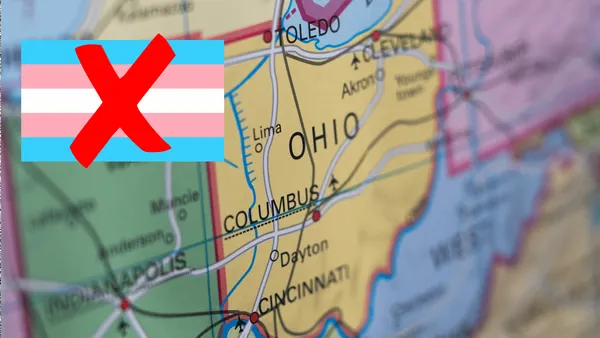
Given the recent election results from the midterms on Nov. 3, some people might think it is time to ‘lib out’ and there has certainly been a lot of social media posting on Twitter/X and Blue Sky surrounding the idea that ‘woke is back’. However, the same blue tsunami that gave Democrats a large share of both the U.S. House and Senate and virtual control of both chambers come January also saw some of the safest states pass bills that amount to state-sanctioned molesting of girls, trans and cis alike, to make sure no trans girls can play sports.
In a word: segregation.
The same blue wave that has seemed to have brought a lot of people hope or feelings of rationality ‘returning’ to U.S. government also had the voters pass by direct ballot awful legislation that creates a permission structure and mandate for sexual assault of children, all under the guise of ‘protecting them’ from their trans peers.
Because of this, some in our community might still be wondering about ‘getting out’ of the United States. While our previous coverage shows that “you can get out” and argues that “every trans women who leaves the U.S. or UK is a victory, not a betrayal”, the ground-level of such processes are far more nuanced and individual.
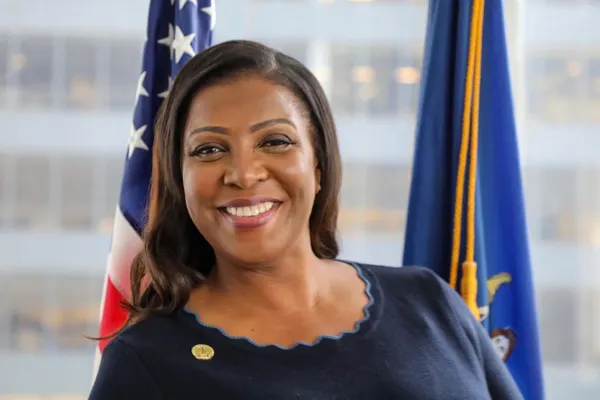
To understand those processes and their impacts, The Needle spoke with Elizabeth Silleck La Rue of the legal consulting organization known as Conscientious Emigration.
La Rue is notable for having gotten out herself and for her Substack blog where she discusses and gathers resources and information for those looking to leave the US. She’s also a lawyer by training who helps her clients find ways to leave the US without contributing to “international gentrification” and the negatives of US “expat culture”.

Start subscribing to The Needle as a Gold tier supporter, at $15 a month.
When I asked La Rue to tell me about herself and her story, she opened with,
“I am originally from New York. I moved to Mexico, to the Riviera Maya region in 2022 with my husband, and I come from a background of, actually, in undergrad I was single mom in an interracial family. I have an adult child who I had when I was 15 years old. And, so, obviously being a teen parent in an interracial family sort of gave me a lot of perspective and insight into marginalization because, you know, I was exposed to a lot of of different sort of cultural backgrounds.”
“Where I grew up, I would say the majority of the people where I grew up were immigrants, or first generation, the kids that I went to school with were first generation US from immigrant families across Latin America and the Caribbean. That definitely colored my perspective on immigration in general, on migration, on sort of cultural syncretism, I guess you would say. And then I raised my daughter as a single mom and when I went to college, I studied women's studies which now would probably be gender studies, right?
But back then it was women's studies and anthropology which further shaped kind of my perspectives on gender and systemic oppression and all of that. And then after several years working in sort of like domestic violence counseling, social work with homeless families, a lot of kind of social work basically, I went to law school and I started, I got really engaged in environmental work.”
La Rue went on to explain how in law school she specialized in environmental law and that led to a career doing environmental advocacy.
She also said she thinks a lot about the fascism in the United States. La Rue told me she is “kind of concerned and empathetic and alarmed, I guess, at the extent to which people who are really on fringes of U.S. society are vulnerable to, you know, the fascism that we saw start to roll in probably a lot earlier than 2016, but 2016 is when I recognized it.”
“Fast forward, my husband and I decided we really needed to leave the United States. I did a lot of political activism, trying to get, you know, progressives elected and all of that. And until now, right, it didn't feel like we were making much headway.
So we left and moved to Mexico.”
La Rue also told me that when she immigrated to Mexico, she did all the heavy lifting herself. Her training as a lawyer and formal studies in both immigration and environmental law, plus her own experience navigating helping her prior husband get his green card, or permanent residency in the U.S., equipped her, she says, to handle this process for her and her now husband.
“I should mention that I was married before. And the man that I was married to before was an immigrant from Latin America. So I got very familiar, actually, and my daughter's grandmother and my daughter's father were from Jamaica. So I had this experience with the immigration system. I helped my ex-husband get his green card in the U.S. and gathered all the processes.
I got very, very familiar with immigration in general from policy and pragmatic perspectives. And when I was in law school, I studied immigration law as well. So when we decided it was time for us to get out of the United States, I did everything, right? Like I didn't hire any lawyers. I didn't hire any facilitators. I just figured it out because I could, right?
And so we did that. We left. And, you know, given the education I had around, you know, kind of colonialism and systemic oppression, I was also concerned that, you know, I knew that there were these issues around international gentrification, and you know, just sort of the ugly American stereotype, and you know, severe, severe economic inequity and passport privilege and all of that, particularly as it relates to Latin America, the Caribbean."
"I was like, okay, we're gonna move, but like, I don't want to be one of those people, right? I don't want to be a problem. I don't want to come and create or exacerbate these problems of inequity. So you know, let's be really intentional about the way we do this.”
She also told me about her journey from doing this herself for her own family to helping friends do the same. Eventually she realized that “I can do this better than a lot of the people who are out here advertising ex-pat services because I have this background and this legal expertise and then obviously the experience.”
Now, she runs her consulting business called Conscientious Emigration and does that work day in and day out.
Thanks for reading! Join The Needle as a Platinum tier supporter, at $24 a month. For a limited time, you can get 60% off your first three months!
Platinum (and above) members can be credited as a supporter!
La Rue and her consulting firm are very clear that they only take on clients who are “committed to emigrating with their behavioral, economic, environmental, and cultural impacts on their new home in mind. We do not discriminate based on race, gender, class, sexuality, religion, age, ability or other markers of identity, but may give preference to those who feel unsafe in the US due identity-based discrimination.”
La Rue also was very clear in our interview that her client base “tends to be, you know, mixed race families, queer folks, particularly trans folks.”
“I've always been sort of really concerned about trans folks because of the extent to which they are, you know, a minority and the extent to which they can get frozen out of even queer spaces.”
She also explained how a lot of services for those looking to leave the U.S. cater to a specific type of potential immigrant from the U.S. and how a lot of people fall through the cracks because of it,
“I really wanted to work with people who felt like they were not included in all of these expat services that already exist.
There are like tons of expat consultants that do that target high net worth individuals or that target retirees or that target digital nomads, you know, And then there are some identity specific consultants, particularly like there's quite a few consultants that specifically target black, single black women who are professional and able to be mobile, which is great, but I was like, well, I'm not a single and I'm not black.
There are other people that don't fit that bill that have identities that need attention.”
Of course, there are problems with leaving the U.S. in terms of finding the resources, not just navigating the process. La Rue stressed this herself.
“There are always going to be income requirements and or asset requirements, you know, bank account figures or whatever that you need to meet. But different programs have different parameters about where that money has to come from, whether it should be earned or passive, whether is liquid or in, you know, tied up in retirement, there's a lot of nuance around visa qualification.”
Overall, La Rue believes it is possible for most people, including those of us who are trans, to find a way out of the U.S. She seemed to understand how difficult it can be and throughout the interview I felt a large degree of warmth and empathy from her, despite our interview being conducted over a screen and across national borders.
La Rue has written extensively on these topics of how to leave, how to do so ethically, and how to do so in ways that are mindful to your new home.
She also told me that she’s currently able to offer discounted consults to marginalized people for a limited number of clients due to the generosity of one of her recent clients who is “paying it forward”. She explicitly includes trans people in the eligibility.
Some of her other writings talk about not just how to leave but how to be mindful in the new country and avoid perpetuating harmful American behaviors.
Another of her articles discusses everything involved in trying to leave due to marginalization as “the unofficial refugee experience”.
To learn more about leaving with Elizabeth Silleck La Rue's help, you can browse her firm's website HERE. To learn more about the resources she's made available online, you can browse her Substack HERE.
To learn about her limited-time/limited-seat matching promotion, you can read the article she wrote about it HERE.